

Before You Buy A Truck, Check Your State Registration Costs First
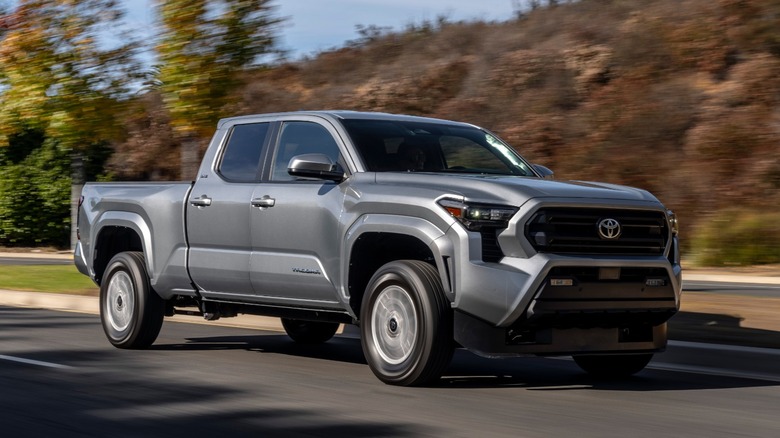
There are lots of reasons to buy a truck, although getting hold of one is no small task — not because they're uncommon, mind you, but because they can get pricey. The cheapest new pickups will still cost upward of $30,000, and even some old trucks can be quite valuable, too. The sticker price is just the start, though, and you'll also have to account for extras like vehicle tax and registration costs. Unfortunately, depending on where you live and what you paid for your vehicle, they can get rather high.
Trucks are often subject to higher registration costs than other passenger vehicles. These tend to be based on their weight classification and attached state-specific pricing. For instance, in Texas, trucks between 6,001 and 10,000 pounds pay a $54 registration fee. Lighter ones pay $50.75, while fees for those between 10,001 and 80,000 pounds start at $110 and can go up to $840. Meanwhile, New York's passenger vehicle registration fees range from $26 for vehicles under 1,650 pounds to $140 for those weighing 6,951 pounds or more. Mississippi, however, is much cheaper, at $14.00 for first-time registration.
As for sales tax on vehicles, New York state taxes are around 4%, plus city and county rates, while Texas residents pay a flat 6.25% on vehicle purchases. Mississippi taxes are either 3% for trucks over 10,000 pounds used for carrying property, or 5% for those under 10,000 pounds. Thus, it's crucial to look into your state's tax rates, vehicle registration fees, and other up-front costs — like plate and inspection fees — before buying your truck. Otherwise, you may find that your dream truck costs more than you may have budgeted for.
Other truck ownership costs to keep in mind

There are more costs to consider after buying and registering your truck. Gas can be a significant long-term burden, since even light trucks are less fuel-efficient than the average car. According to data from the United States Department of Energy, the average light truck gets 17.80 mpg versus 24.40 mpg for an average car. Some larger trucks may also run on diesel, which tends to cost more than gasoline, even in states with comparatively low fuel costs.
Insurance is also a key financial factor to consider when using a truck as a daily driver, and some sources, such as The Zebra, suggest that truck owners will pay slightly higher premiums. Either way, you'll want to be aware of the factors that can influence said premiums. These factors will include vehicle age, model, make, and type – SUVs are generally cheap to insure, for example. Your driving record and location will also affect how much you pay. If you're buying used, you'll also want to know your truck's accident history, as this can increase insurance costs or even prevent coverage altogether. Safety ratings and features are also important, as they can encourage providers to offer lower rates. Still, expensive-to-fix safety elements could mean higher repair costs after an accident, somewhat negating these savings.
There are pros and cons to getting a pickup truck, with the total financial outlay being a good reason to think twice before buying one. Still, if the numbers work out for you, then there's no shame in going for one.