

Lincoln's New Aviator Turned More Heads Than I Expected, But They Were Right To Stare
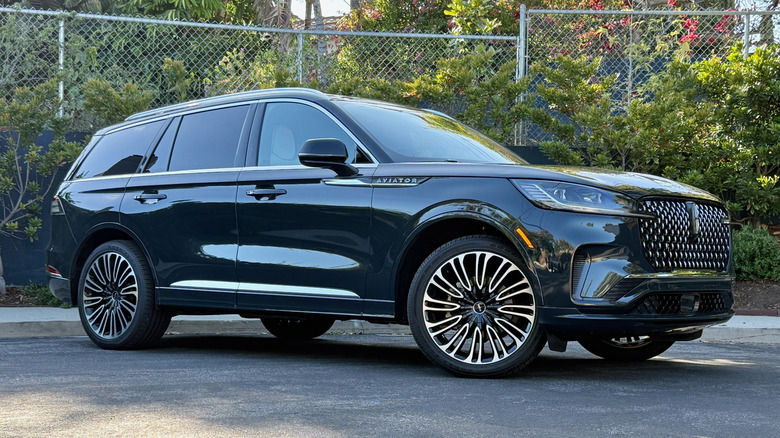
Generally, when I'm driving around in family SUVs, I don't expect to get noticed much. Such vehicles aren't exactly a rare commodity in big cities, and even in some high-dollar SUVs, you fit right in an expensive metropolis like Los Angeles. But just about everywhere I went in the new 2026 Lincoln Aviator, I received compliments on my transport for the week.
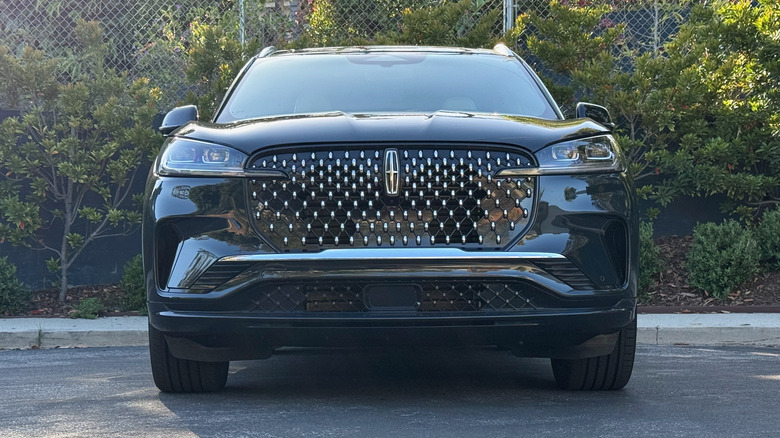
After loaning me the beefy Navigator and the smaller Nautilus, Lincoln filled in the gap between with the three-row family hauler that's roughly in the middle of their lineup – the Aviator. Maybe my barometer needed to be reset, but I was used to the luxury transport after a few weeks with its siblings, so I wasn't expecting the Aviator to receive so much attention. Whether it was the styling that caught the eye of friends, the optional paint that grabbed a stranger's attention at the gas station, or the well-appointed interior that had my neighbor giving it praise while I tested it out, the Aviator was a hit.
More than just good-looking, the Aviator is spacious, built with high-end materials, and it feels properly premium on the inside. It doesn't have some of Lincoln's latest tech, but that might be a blessing in disguise. And high-tech or not, it's a powerful SUV that does more than just haul the mail.
Pricing is a pretty simple structure, but it goes up quickly
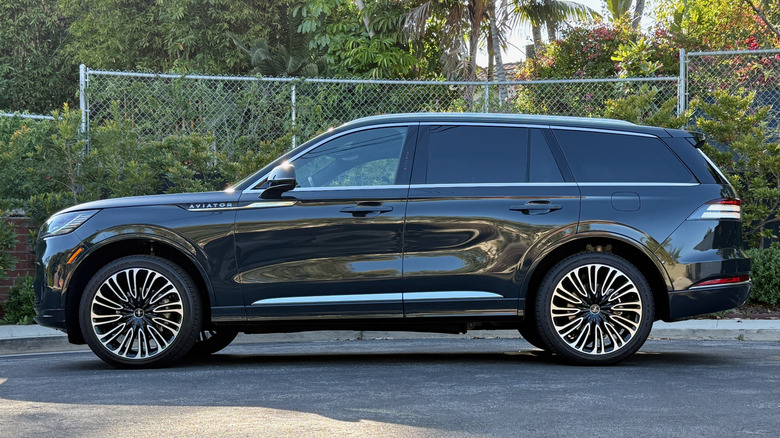
Much like Lincoln's other SUVs, there's a pretty simple trim-level structure for the Aviator. The three available levels are Premier, Reserve, and Black Label. As often happens with luxury automakers, Lincoln sent me the top-trim to make a bold impression, but the other trim levels are noteworthy, too, offering the same robust powertrain and lots of standard features. The Premiere, for example, starts at $59,430 (including $1,695 destination fee and $825 acquisition fee), and it includes adaptive suspension, full LED exterior lighting, tri-zone interior climate control, a heated steering wheel, and a 10-speaker stereo.
Go up a notch to the Reserve trim, and you get an elevated price of $69,250, which brings with it extra features like a panoramic sunroof, leather upholstery, ambient interior and exterior lighting, and a 14-speaker stereo. The Reserve also allows access to some upper-level equipment options, much of which is standard with the entry fee for the flagship Black Label.
 Travis Langness/SlashGear
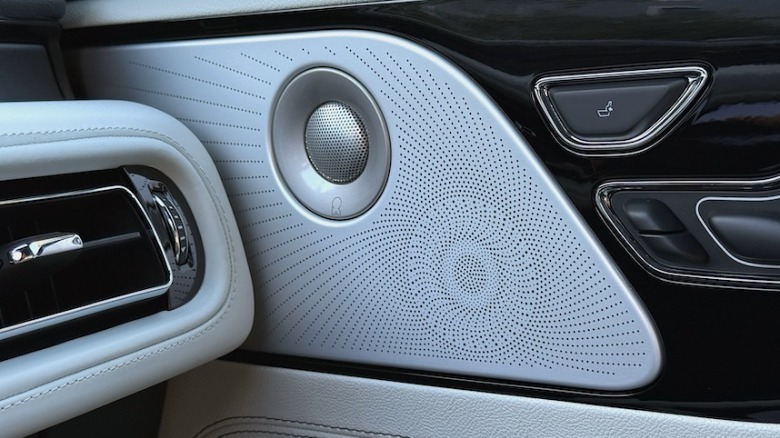
The Black Label starts at $88,430, which is a big leap compared to the Reserve, but it comes with some pretty high-end features: 30-way adjustable front seats with massage capability, a 28-speaker Revel stereo, heated and ventilated rear seats (on top of the heated and ventilated front seats), and upgraded leather. Black Label also means a few extra ownership benefits like unlimited car washes, and a pre-paid maintenance plan. There are still some optional extras available to top it all off, like air suspension or a blackout package for the trim, and it's pretty easy to price the Aviator right up to the $100k mark.
Hustling right along in the big three-row hauler
For a three-row family SUV, the Aviator feels surprisingly light on its feet. Through corners, it's relatively nimble for its size, and it changes direction with ease. And, thankfully, the Aviator has a round steering wheel, so I didn't have to fumble with the oblong version found in the other Lincoln products I tested recently.
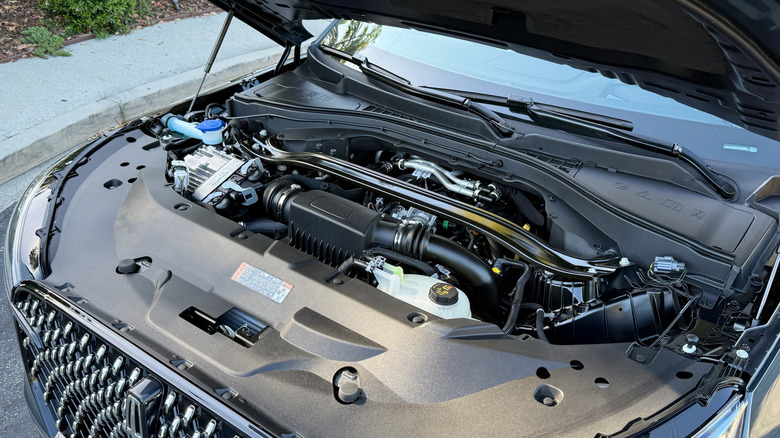
The Aviator gets its power from a turbocharged 3.0-liter V6 that produces 383 horsepower and 415 lb-ft of torque. A 10-speed automatic transmission sends power to either the rear wheels or all four, and my test vehicle had the latter. The nearly 400-hp available at the disposal of your right foot is a prodigious amount for the Aviator. Genuinely, I was pretty surprised with how quickly the big SUV moved forward the first time I gave it a shoe-full of throttle. The 10-speed auto makes quick downshifts and goes up through the gears with ease while you're accelerating from a stop.
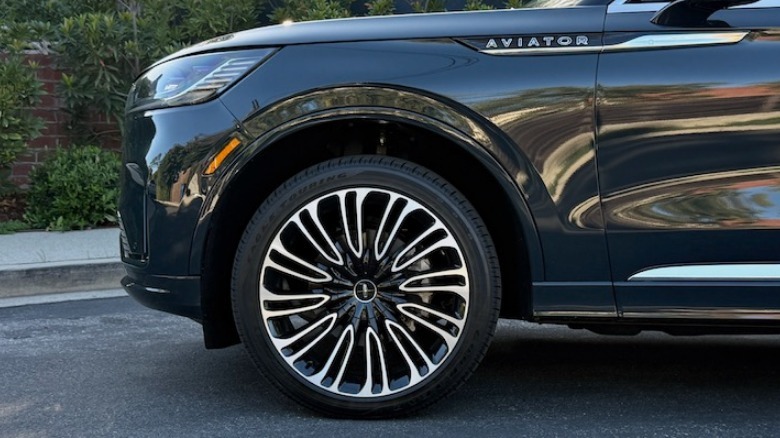 Travis Langness/SlashGear
Fuel economy isn't exactly impressive, especially when you're having so much fun with the twin-turbo V6. I averaged around 18 mpg during my week of driving the Aviator, and the EPA estimates that the all-wheel drive version of the Lincoln will return 20 mpg combined (17 city/25 highway), with the rear-wheel drive version upping that estimate by 1 mpg.
An interior that's easy to settle into
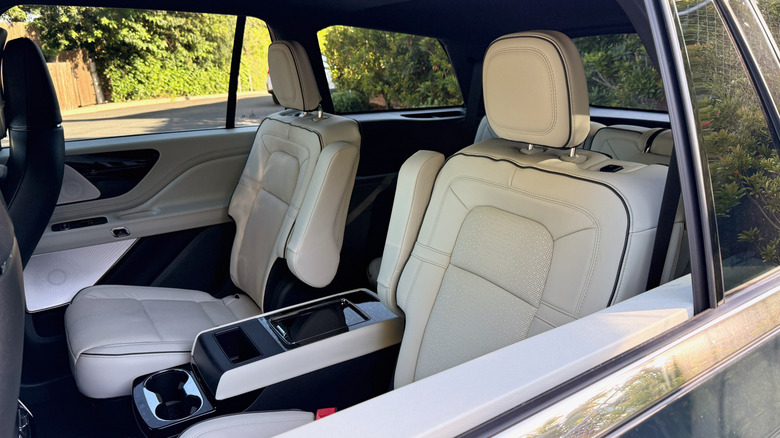
With the combination of light leather seating surfaces and dark carpets, the Aviator's cabin felt airy and lightweight. Lincoln calls this interior style the Moonbeam Theme, and it's one of three available color schemes for the Black Label. Sure, my blue jeans are likely to rub off on the light leather, but the dark carpets won't stain as easily if I track a bit of mud or dirt in. The dashboard is low enough that it's easy to see over, and the driver's seat has plenty of range so you can sit high enough for a thoroughly commanding view of the road.
Over the broken city streets and stiff concrete highways that line Los Angeles, the Aviator was quiet and comfortable. Only a small amount of road and wind noise made its way into the cabin, making this the type of vehicle I'd happily spend long hours in. The seats equipped with the Black Label trim are Lincoln's 30-way Perfect Position seats. They are supportive, highly adjustable to your body (thanks to the 30 different adjustments, of course), and they're well-padded.
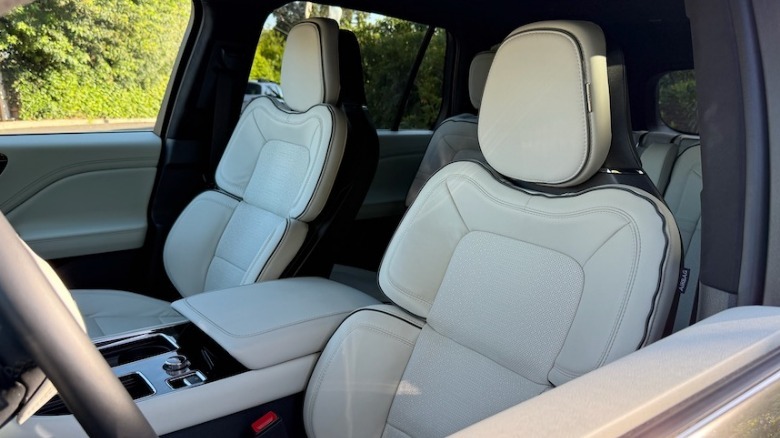 Travis Langness/SlashGear
More than just easy to get comfortable in, the Aviator's interior is a really good-looking space. The Black Label is expensive, but there wasn't a mis-laid stitch, a squeaky panel, or a poorly-lined-up section of interior trim to be found. There are a few places with piano black plastics that will easily smudge, but that's a relatively common feature these days, and not one that detracted from the experience of driving the big SUV.
Cabin tech leads the way
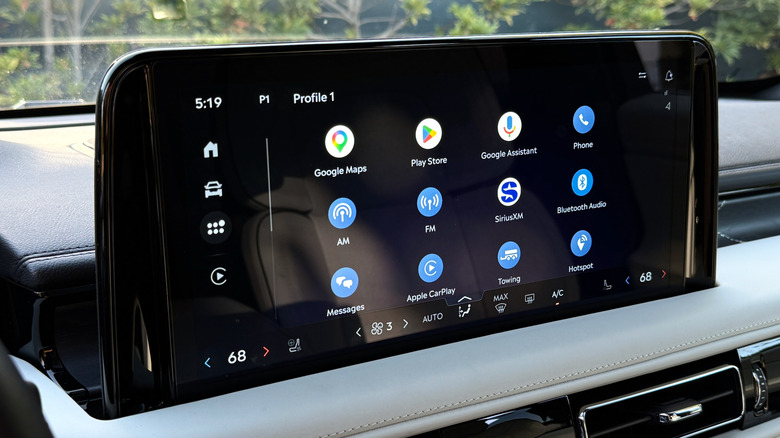
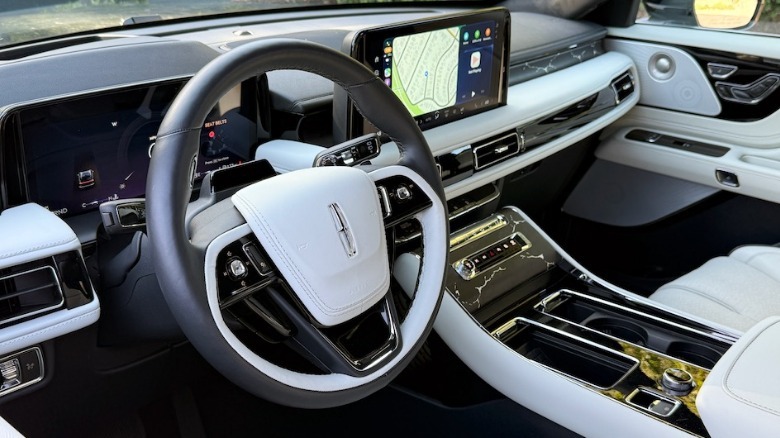
Even though the Aviator doesn't get the ultra-super-duper-wide screen like other Lincoln SUVs I've driven lately, it does have an aesthetically pleasing and easy-to-use interface. The driver display is a 12.4-inch screen that has all the relevant information you'll need while driving, and the center screen is a 13.2-inch touchscreen that doesn't dominate the dash, but it's plenty large enough for my taste. It has impressive graphics, the touchscreen is quick to respond to inputs, and there's a good contrast between the icons and the black background.
 Travis Langness/SlashGear
Earlier, I mentioned the lack of tech in the Aviator being a blessing in disguise. Specifically, I was referring to the steering wheel. In the Aviator, you get a regular, circular steering wheel instead of an oblong one. Also, the buttons operate like normal buttons: nothing haptic or touchscreen-style here. Clearly labeled, the steering wheel controls are relatively easy to use, especially good if you don't want to rely solely on the touchscreen. This is the sort of system that feels like it values function over form. I'm not sure if Lincoln plans to replace the Aviator's steering wheel with the oblong one that they're currently using in the Navigator and Nautilus, but I'd advise against it.
A bit of help from driving aids
There's a long list of driver aids on the top-trim Aviator Black Label, so I won't go through all of them, but I'll mention a few highlights. The adaptive cruise control, for starters, kept a reasonable — albeit conservative — distance from vehicles ahead. Parking sensors, the high-resolution parking camera, and lane-keep assist all did their jobs admirably.
The automatic lane-change feature was less likable. Designed to go around other cars when they're traveling slower in front of you than your cruise control is set to go, it was a bit overzealous for my liking, often initiating lane changes when I was already doing my set speed. It also tried to steer me into a few lane positions that weren't the best, like going into paid-access toll lanes or carpool lanes when I didn't have the pass or passengers to do so.
Lots of room for stuff and passengers
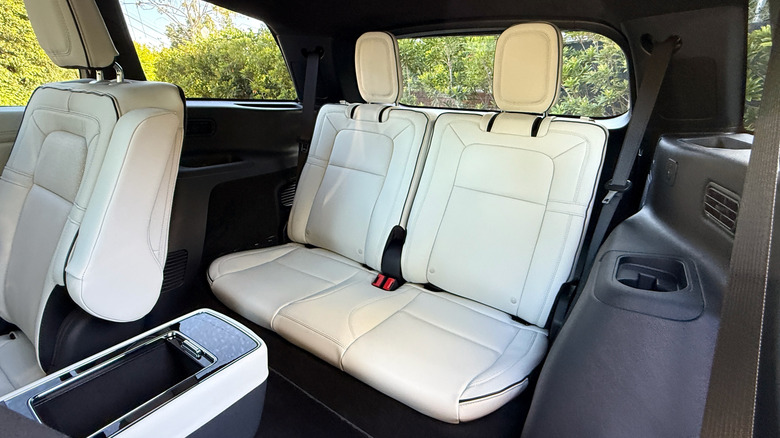
Spreading out on the inside of the Aviator is easy. All three rows have plenty of headroom and shoulder room for adults. The third row is a bit restricted in terms of legroom (common for this class), but it's easy to slide the second row forward and load in or out. Expect to use the third row for kids, and you'll be just fine. There are lots of USB ports, cupholders, and storage cubbies for all your stuff, too.
 Travis Langness/SlashGear
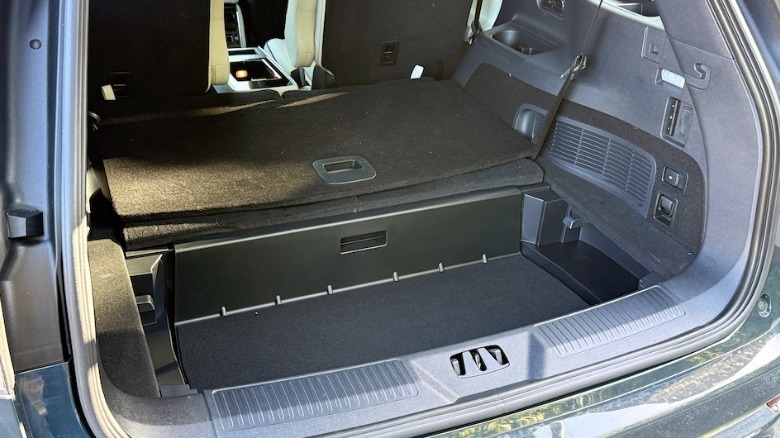
Behind the third row, there's enough space for a few carry-on pieces of luggage and maybe some duffel bags loaded on top: 16.5 cubic feet of cargo space to be exact. The drop-down floor in the third row is a bonus that can accommodate lots of grocery bags or a few carry-on-sized items, a helpful addition if you've got three rows of seating that are upright and in use by passengers. Fold the third row down, and storage space expands to 39.9 cubic feet, eventually going up to an impressive 75.9 cubic feet with the second row folded as well.
2026 Lincoln Aviator verdict
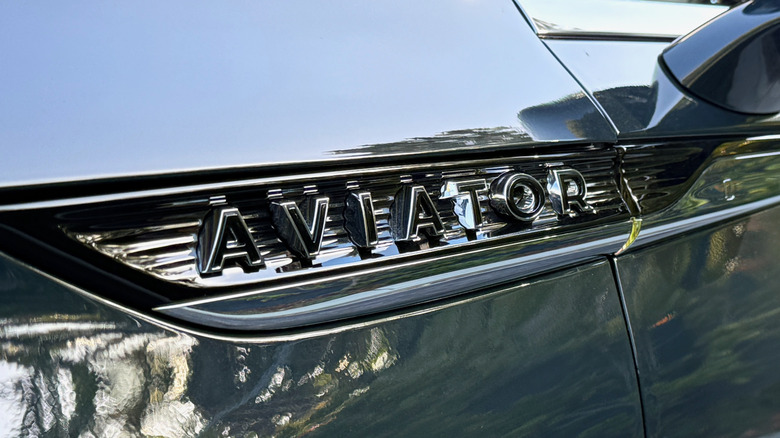
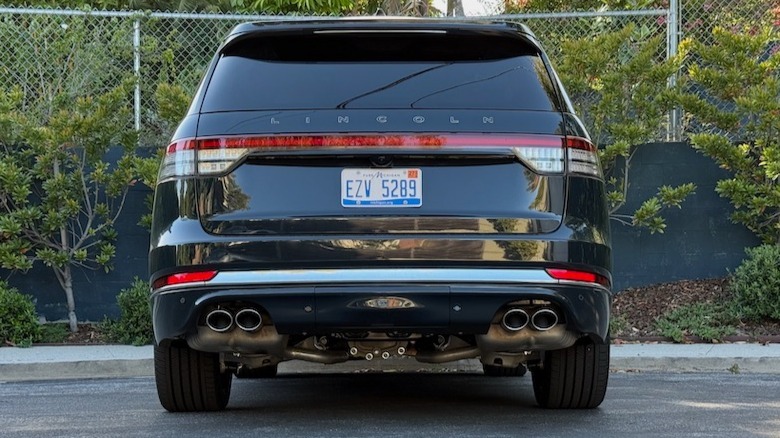
Even if the Aviator is your first big, three-row SUV, driving it will be easy. It feels smaller than its size would suggest, and nimble to boot. The powerful twin-turbo V6 under the hood isn't particularly efficient, and a hybrid option would be a welcome option if Lincoln introduced one, but that doesn't keep the Aviator from being enjoyable to drive. There are some three-row rivals, though, that are particularly appealing and that give the Aviator a run for its money.
 Travis Langness/SlashGear
The Audi Q7 and SQ7 are more entertaining to drive, even if the third row is somewhat cramped in both. The spacious Lexus TX is a better option for buyers who want top-notch fuel economy, and it has pretty competitive pricing for the feature set. There's the Acura MDX as well, which is a bit long in the tooth, but still a premium choice with lots of space.
If you do decide to go with the Aviator, and it's not a bad choice, I'd go with the mid-level Reserve instead of the Black Label. The Reserve has better value for the money, and you can pick and choose the options you want to add without easily inflating the price into the six-digit range.