

5 Cars With Better Resale Value Than The Toyota 4Runner

When you think of reliable car manufacturers, Toyota likely springs to mind. Reliability means low maintenance costs, few (if any) surprise breakdowns, and, hopefully, a tidy premium when you sell on the second-hand market. The latter's especially important in light of the wave of rising car prices. We just saw the cost of buying a used car climb to its highest figure since 2023, and new cars aren't faring any differently.
There's no indication that these pricey marks will plateau any time soon, so if you're looking out for a new ride, you're probably going to need all the extra dollars you can get. If you drive the Toyota 4Runner, for instance, chances are you'll recoup a significant percentage of your initial investment. CarEdge reports the mid-size SUV retains 68.8% of its residual value, or in other words, loses 31.2%, after seven years.
However, as impressive as that mark is, the 4Runner isn't the best value holder in the automotive market. In fact, there are six car models that better retain their value. For this article, though, we'll only discuss five — one vehicle, the Chevrolet Silverado 3500HD, only edges the 4Runner by 0.1, so we won't discuss it here.
Toyota GR86
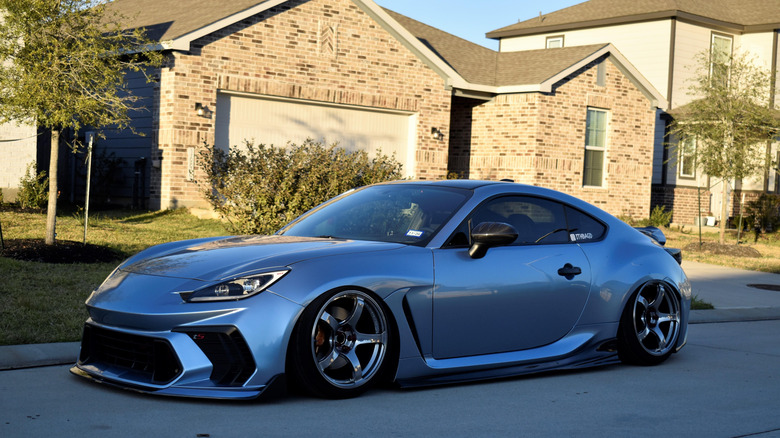
The GR86 appeals to a specific type of driver: one who likes to squeeze the most performance out of an engine while operating on a budget, which, when you think about it, is a pretty large customer base. Sports cars are traditionally expensive to buy, and the maintenance costs are similarly steep. For instance, a 2026 Corvette Stingray, the least costly of the Corvette lineup, will set you back $72,495. The GR86, on the other hand, retails for a more digestible $32,595 MSRP for a 2026 model.
Automatically, that price gap appeals to a wider audience. A sports car on the cheap is hard to find, and there's bound to be healthy demand for it on the used market compared to pricier exotic cars. Couple that with Toyota's reputation for reliability, and you have a sports car that beats the steep depreciation curve you'd expect. According to CarEdge's calculations, you can expect the GR86 to retain 73.4% of its residual value seven years after purchase. Of course, the likelihood of this figure translating to real life depends on your adherence to maintenance schedules, how often you drive, and other factors.
Subaru BRZ
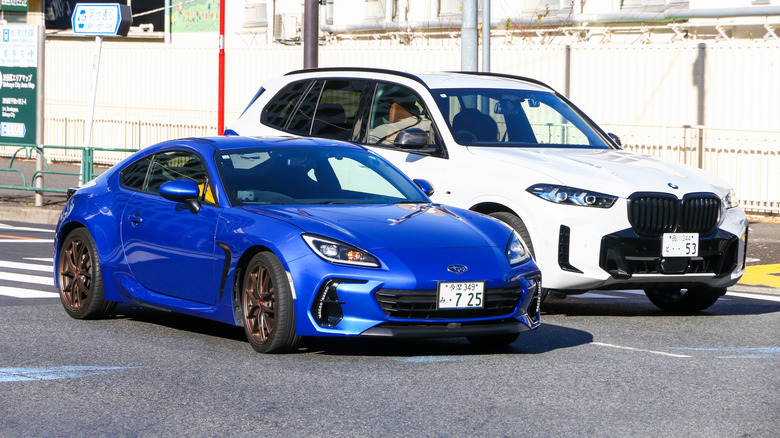
The Subaru BRZ is similar to the GR86: it's light, fun to drive, and most importantly, relatively cheap for a performance vehicle. With a 2026 MSRP starting at $35,860, it's slightly $3,200 more than the Toyota, despite little to distinguish them. They both have 228-hp flat-four engines, with the GR86 hitting 60 mph just 0.1 second faster, according to Edmunds. We carried out a head-to-head analysis of our own of the BRZ and the GR86, too.
However, you might find the BRZ's interior a bit more agreeable with the standards you'd want from an exotic car; it's outfitted with Ultrasuede upholstery. The jury's still out on whether the stylistic difference is worth that price difference. On the topic of resale value, though, Subaru is also near the apex of the reliability pyramid. According to Consumer Reports, Toyota still makes the most reliable new cars in the industry. Subaru isn't far behind at all — in fact, the Japanese automaker is second on the list.
CarEdge's depreciation curve for the BRZ looks very similar to that of the GR86, and that's a good thing. The Subaru sports entry is also estimated to retain 73.4% of its value after 7 years of use. That mark outstrips the 4Runner by 4.6%.
Toyota GR Supra
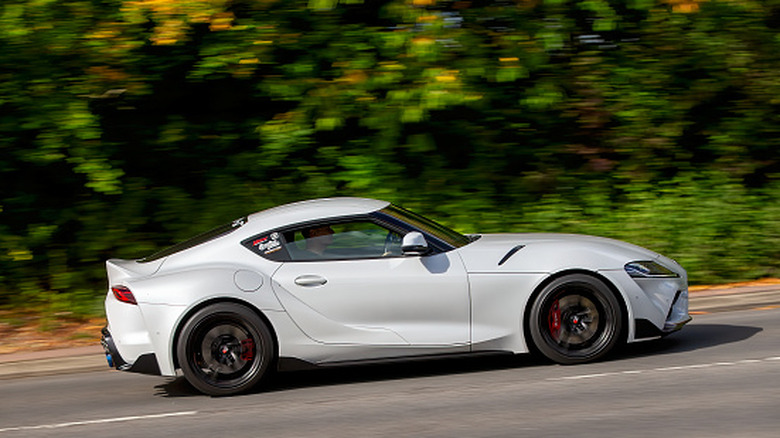
The final sports car to earn better resale metrics than the 4Runner, the GR Supra has the same formula behind its value retention as the GR86 and the Subaru BRZ. However, the Supra has an advantage over the other two: the long-term continuity of its models. The 2026 GR Supra is essentially the drawing of the curtains on the fifth generation of the Supra line, as the manufacturer gives its fun sports coupe some breathing space. It's not the first time Toyota has done this; the Supra went on a 22-year development hiatus before it returned for the 2020 model year, which kick-started the fifth generation.
There's no concrete timeline describing when the Supra will return, though. We'd like to think it wouldn't stretch as long as the last production pause, but we can't say for certain. With this in mind, if depreciation is among the top factors in your decision-making, that's actually excellent news for you. Fewer units on the market and the cultish following the Supra has among performance enthusiasts means that you're essentially insulated from what should be a predictable depreciation curve.
Speaking of depreciation curves, you're not expected to lose more than 4% of your Supra's value in the first two years of owning it — an anomaly in the automobile industry. It, too, has a 73.4% value retention over a 7-year window, although with the production pause, that number could realistically see some uptick.
Toyota Tacoma
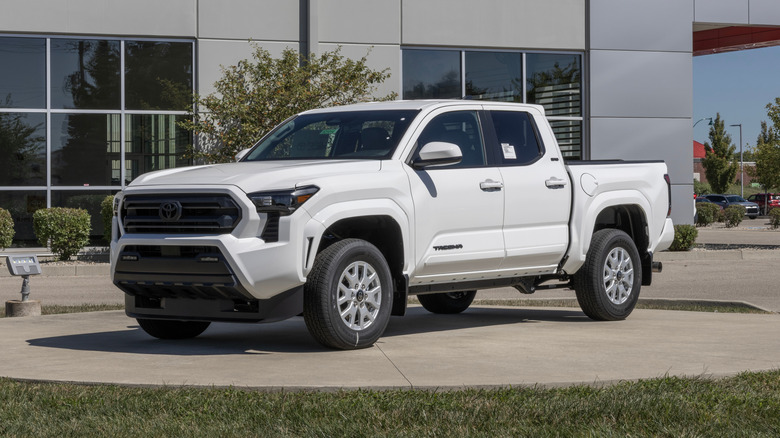
Another Toyota on the list, the Tacoma has a more similar profile to the 4Runner than any of the previous entries. Like the 4Runner, the Tacoma is viewed as one of the most reliable models in the midsize pickup market. Or, at least, it was, before the 2024 redesign came around. As with any model that ushers in a new generation, the 2024 Tacoma had its issues: transmission and Apple CarPlay/Android Auto connectivity, to name a few. That's to be expected, though, and according to online chatter, the problems appear to have gotten less persistent in the subsequent 2025 and 2026 model releases.
In a way, the reason the Tacoma retains much of its value resembles that of sports cars. Pickup trucks are popular in America for multiple reasons: tailgating traditions, off-roading, and hauling. The versatility means you can rely on your truck not to break down when you drive across a few rocky paths on the way to the lake for fishing on the weekends, and you can still perform your regular commute.
For the Tacoma in particular, some used Tacomas were actually retailing for more money than the newer ones. Part of that was surely driven by the mistrust in the newly overhauled models, so you shouldn't expect a repeat in the coming years, but it underscores the value retention. After riding it around for 7 years, you can expect your Tacoma to lose only 27.7% of its value.
Dodge Ram 3500
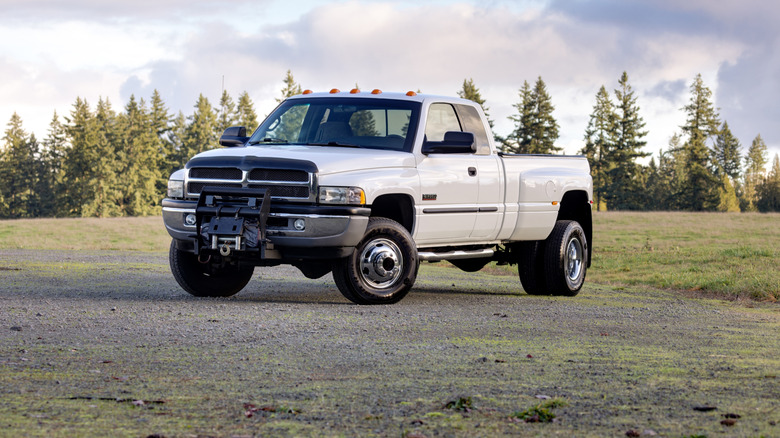
The Dodge Ram 3500 is the last model to outstrip the 4Runner by a statistically significant margin. Its value retention is only slightly below that of the Tacoma, coming in at 72%, where the Toyota pickup registered 72.3%. That's a bit surprising, especially if you take the performance of the fifth generation into account. Before 2019, the 3500 had a pretty pristine reputation for dependability — it wasn't uncommon for owners to clock north of 200,000 miles since it rarely broke down.
However, from the 2019 redesign, it's been topsy-turvy for the 3500. Online chatter shows the model is polarizing; those who love it really love it, and those who don't are quite vehement. Apparently, units from 2019 onwards are liable to spend a lot of time in the repair shop, and there are build quality complaints. MotorTrend's value evaluation of the truck back in 2022 reflected user complaints in this regard — it found the Ram 3500 to have one of the worst retention rates in the pickup market at 58.6%, right with the likes of the Honda Ridgeline and Ford Ranger.
If you could get your hands on a pre-2019 Ram 3500, you'd probably see a better depreciation curve and more demand to go with it, but the numbers from CarEdge also indicate decent expectations if you're eyeing a more modern model.