

This '70s Motorcycle Truly Has Become A Modern Classic Collector's Item
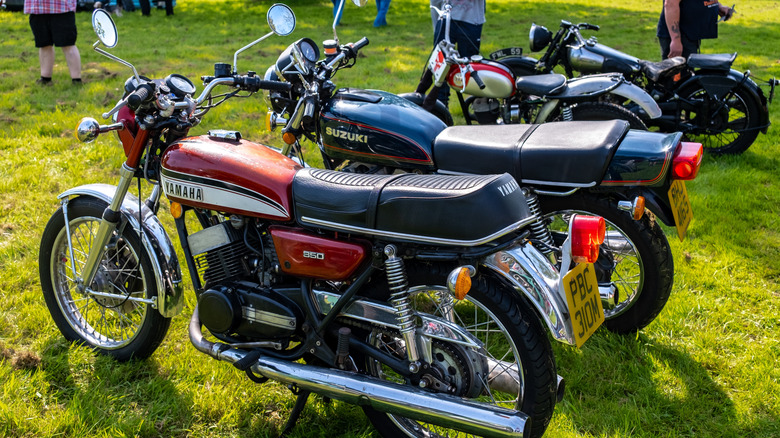
The jury is out on just how many of today's motorcycles will be considered collector's items in the future. After all, retro bikes can be more desirable to collectors than modern rides, simply because of their style. Maybe that's why older bikes like the legendary 1970s Yamaha RD350 are considered such a valuable item. But there's actually a bit more to it than that, beginning with the way it combined the best of everyday riding with race-inspired engineering.
Thanks to this approach, the RD350 delivered an unfiltered, high-revving riding experience. In fact, bikes like this came along during a time when fast, lightweight, two-stroke street-legal models were pretty common. But what made the RD350 part of the time period later made it special, thanks to the evolution of motorcycle design. Four-stroke engines and increased emissions standards became the industry norm, and as a result, the RD350's simple formula became less common.
That's why the Yamaha RD350 remains a standout from that era, as it represents a kind of motorcycle that just doesn't exist in the same form anymore. But even with its preferred status among many collectors, the RD350 is a classic Yamaha model that is still affordable. For example, a 1975 RD350 sold for $6,200 in a 2024 auction. A 1973 model sold for just under $5,500 over one year later.
The origin and evolution of the Yamaha RD350
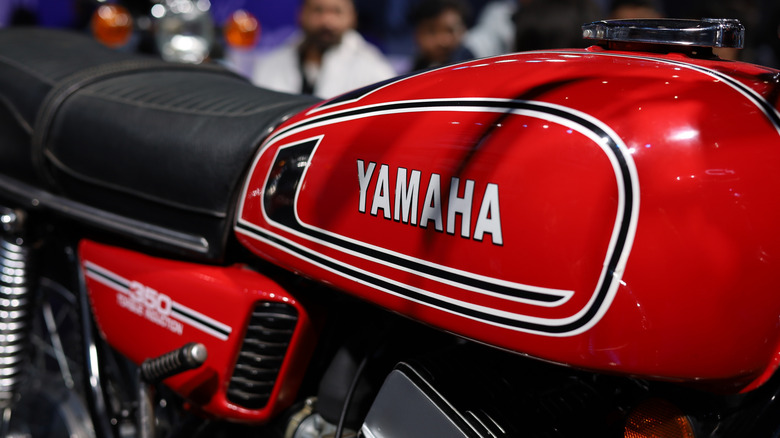
The Yamaha RD350 was built on a lightweight frame weighing about 342 pounds and featured a 347cc air-cooled, two-stroke parallel twin design. It could achieve around 39 horsepower at 7,500 rpm and used a six-speed transmission. The bike also had an oil injection system, which means the fuel did not need to be mixed with the oil before riding. But this bike didn't come out of the blue, as it was a natural evolution of Yamaha's R5 platform.
The R5 was Yamaha's first modular 350cc engine. It utilized a unique crankcase design that allowed major components to be assembled on a shared production line. From this platform, Yamaha moved to a reed-valve intake system, replacing the earlier piston-port setup of the R5. This paved the way for the introduction of the RD350 model in 1973, marking the direct transition from the R5 into the RD series. So essentially, it was the same basic engine overall, but updated with a newer design.
But the RD platform continued to evolve in 1976 past the RD350, with the RD400, one of the coolest Yamaha motorcycles ever made. It featured a larger 398cc two-stroke engine, producing around 44 horsepower and increasing torque while using the same lightweight design. It also introduced updated features such as cast aluminum wheels on certain versions. But even with these changes, the RD line remained true to its original purpose as a simple and fast performance motorcycle.