

What Does JD Power Do & How Does The Company Determine Its Ratings?
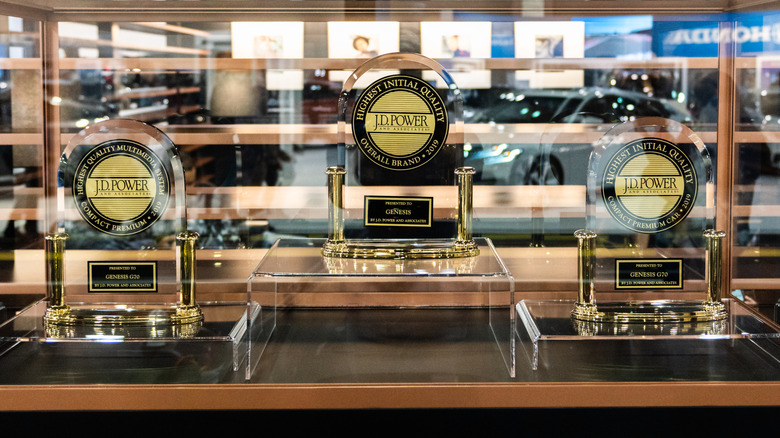
If you are looking to get yourself a new car and are reading up on reviews and statistics for certain vehicles, chances are you've come across J.D. Power. You could be looking for the most dependable cars you can buy right now, or hearing about a car being awarded with a certain accolade, and that name is bound to crop up. This organization has been around since 1968 and has embedded itself into the common parlance of automotive culture. While you may hear the name a lot, you may not know exactly what J.D. Power does.
This company specializes in analytics and data, specifically based on real-world customer and owner experience. With this data, J.D. Power aims to turn these actual opinions into insights to bring back to the companies being judged, with the ultimate goal of helping them improve their products. Although J.D. Power is best known for its work in the automotive industry, it also releases customer data for many other industries, including healthcare, insurance, travel and hospitality, retail establishments like home improvement stores, and more.
When it comes to cars, J.D. Power doesn't just survey owners at random, though. It has very specific parameters for the sources of information, and it doesn't just ask for overall, general opinions. Instead, for its automotive surveys, it asks for their thoughts in several different categories in order to get the overall rating.
J.D. Power's ratings methodology
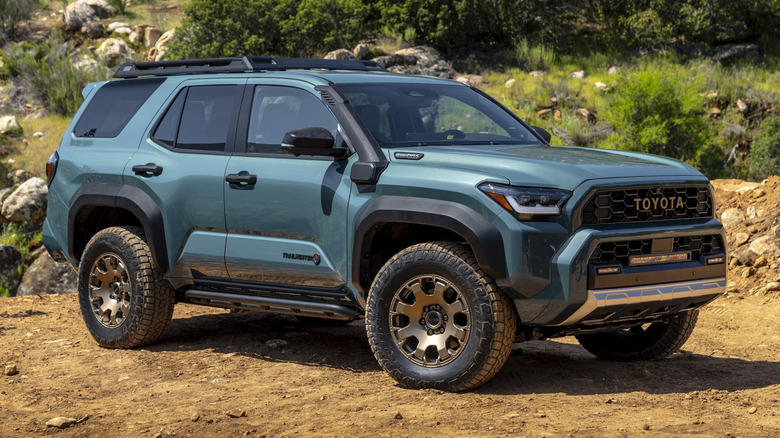
J.D. Power ratings are broken down into four specific categories. The first is quality and reliability. This is where drivers are asked about their vehicle's defects and malfunctions, as well as any inherent design flaws, covering every single element of the vehicle. Secondly, there's the driving experience. Along with factors like handling and performance, this also encompasses the vehicle's safety and technological features. The third category is resale value, which has J.D. Power estimating the vehicle's depreciation over a three-year period. Lastly, it collects opinions on owners' dealership experiences. This includes their time both purchasing the vehicle and having it serviced.
Each of these four categories is scored individually with a numerical rating from 0 to 100. Based on the number it gets, it is placed in one of four tiers. At the top is "best" with scores of 91 to 100. Below that is "great," ranging from 81 to 90. A score from 70 to 80 gets you an "average" designation, and finally, a 69 or below means you are considered "fair." J.D. Power has no "poor" or "bad" rating designation, but you obviously don't want a low score. When combining these scores for an overall, quality and reliability are the most important, making up 40% of the aggregate. The other three get 20% apiece.
J.D. Power surveys its certified owners at two specific points. At first, it's after three months of ownership. The second time is after three years of ownership, giving the company both short-term and long-term results. J.D. Power then breaks down the results by vehicle type, by both size and luxury.