

If You Thought The FCC's Foreign Router Ban Was Confusing, Check Out The Exemption Process

Update 4/27/2026: Netgear has reached out to SlashGear to note that all of its routers are exempt from this rule, not just some models as this article previously stated. We've updated the article to reflect this correction.
On March 23, 2026, the Federal Communications Commission (FCC) announced that foreign-made consumer routers would be part of the institution's Covered List: a collection of communications equipment and services that "are deemed to pose an unacceptable risk to the national security of the U.S. or the safety and security of U.S. persons [...] following a thorough review by a White House-convened Executive Branch interagency body with appropriate national security expertise." This decision is under the umbrella of the Secure and Trusted Communications Networks Act, which was passed by Congress back in 2019 to prevent communications equipment that might be deemed a threat to national security from entering U.S. networks. Ultimately, this means the FCC has initiated a ban on any new internet router that isn't made in the United States. The decision has resulted in a massive upset to the market, as approximately 60% of U.S. routers are made in China alone. The ban doesn't just apply to foreign brands, either. It also applies to American companies that have their routers manufactured overseas.
Two weeks after the decision, the FCC and the Homeland Security Bureau announced on April 14, 2026, that certain exceptions had already been made, allowing some brands to continue selling foreign-made routers. The list of products that had received conditional approvals to be sold in the U.S. included several drone systems, a tactical data link software, an aircraft system, and routers from three brands: Adtran, Netgear, and Eero. The thing is, the FCC hasn't explained why these routers were approved, nor do we know the exact criteria that warranted these specific models to be allowed to be sold.
What does the exemption process look like?
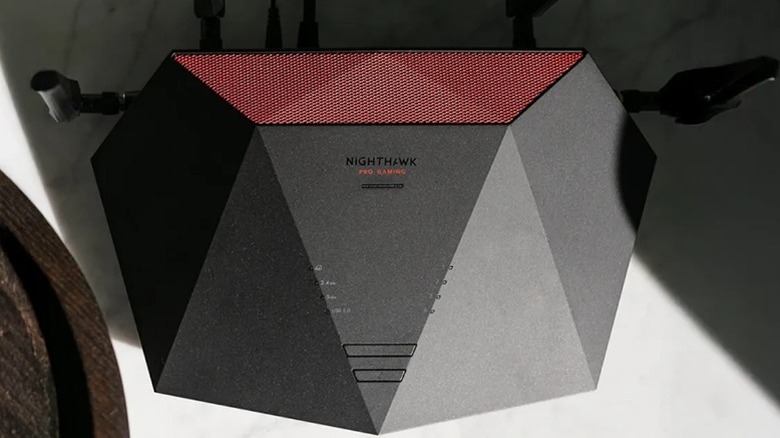
The FCC has clarified that items can be taken off the restriction list if the FCC receives a directive from a "qualifying national security authority" to remove them. The FCC cannot remove products or services from the Covered List on its own, and it's prohibited from approving new models. The FCC website states that foreign-produced routers pose an unacceptable risk, "unless Department of War (DoW) or the Department of Homeland Security (DHS) transmits to the FCC a specific determination that a given router or class of routers do not pose such risks." So, it appears that one of these institutions needs to give a router the green light just for it to get a conditional approval, but there doesn't appear to be an abundance of transparency as to the exact criteria for what makes a router acceptable to these institutions.
Router manufacturers are asked to email the FCC a list of information about the company's corporate structure, the manufacturing and supply chain of the routers, and a plan for the company's intention to move manufacturing to U.S. soil. This information is then forwarded to the DoW or DHS, which makes the decision. The guidelines for what is or isn't acceptable to these institutions are unclear, and several major wireless router brands have yet to receive an exemption.
Those deemed safe may receive conditional approval, as Adtran, Eero, and Netgear did. This isn't a permanent solution, however, as the terms of the conditional approval for both brands specifically state that they only last from April 14, 2026, to October 1, 2027. Given the nature of the information requested from the brands by the FCC, it can be deduced that the companies are expected to use this window to move manufacturing to the U.S.