

What Is The 90-Minute Rule For Concrete?
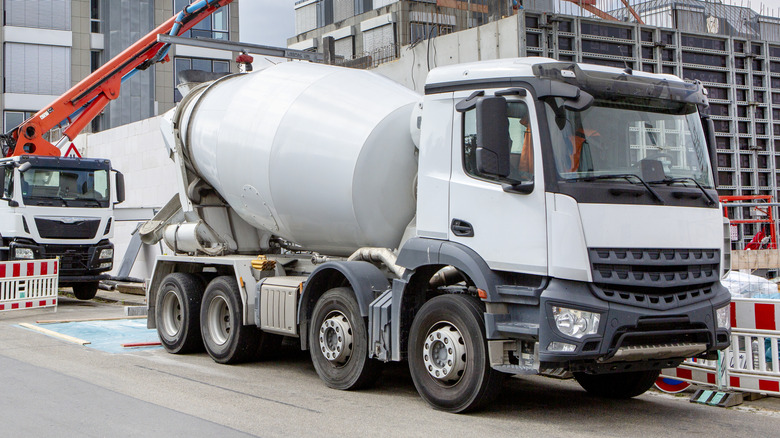
Mixing concrete for industrial purposes often requires heavy machinery. Specifically designed trucks are used to prepare the mixture, the volume of which is determined by a calculator. It is then poured to lay everything from a city sidewalk to a residential driveway. But there's more to the process, as workers often follow the 90-minute rule, which means that prepared concrete must be emptied from the mixing truck within 90 minutes after mixing begins.
The reason for this is due to how the mix behaves over time. A concrete mix is kept fresh with a consistent texture thanks to the spinning cement truck. The truck does its job by preparing the concrete to be poured, and once it's ready, the operator can release it accordingly. But after the 90-minute window closes, the mix isn't what it used to be and if poured after the fact, there's no guarantee it will set properly.
The 90-minute mix time keeps the cement loose, and easily workable, as the hydration process takes place. Without that process, the cement would become less fluid and eventually it could get firm, essentially "setting" in the truck's mixer. However, temperature fluctuations can also cause the same effect. Moisture loss is another problem for the mixer's contents, as it can directly affect how easily the concrete is poured. In the end, the longer the mix is in the truck, the more challenging everything becomes.
Concrete timing is more flexible than it used to be
The 90-minute rule regarding the mixing of concrete has been in place since around the 1930s. It is a long-standing guideline set by the American Society for Testing and Materials (ASTM). In fact, ASTM C94 governs ready-mix concrete standards used throughout the United States in construction projects. The rule has been well established over time thanks to both building codes and state highway associations. It was originally based on older production methods, as well as shorter transportation distances overall.
But the 90-minute rule isn't as rigid as it was once. That's because today's standards allow for more flexibility based on the actual condition of the concrete at the time of placement. As of this writing, updated ASTM guidance no longer enforces a strict time limit. Any adjustments are instead allowed during transportation or at the job site itself. As long as the concrete meets its required expectations, workers can safely pour and it should be effective.
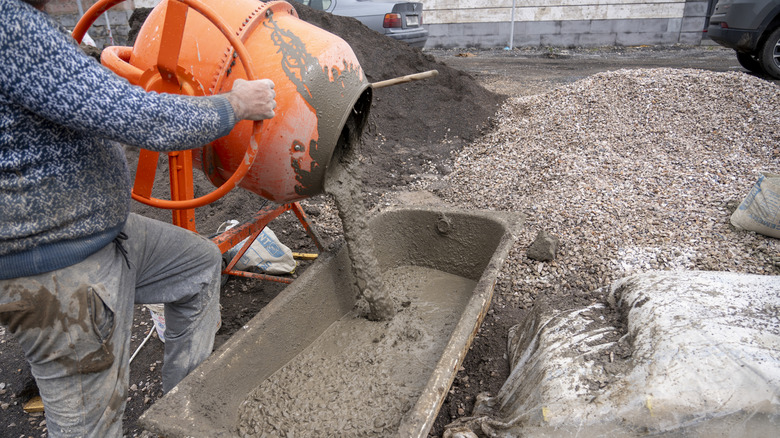
Because of this different approach, and due to preexisting standards under ASTM C94, the 90-minute rule is mostly connected to ready-mixed concrete instead of hand mixing. So even if you're using a portable mixer or doing it yourself by hand, there's no real hard and fast rule like the truck delivery standard. Of course, wet concrete mix shouldn't remain in a holding state for long as it will eventually begin to harden.