

Why Did Most Major Brands Stop Making Curved TVs?
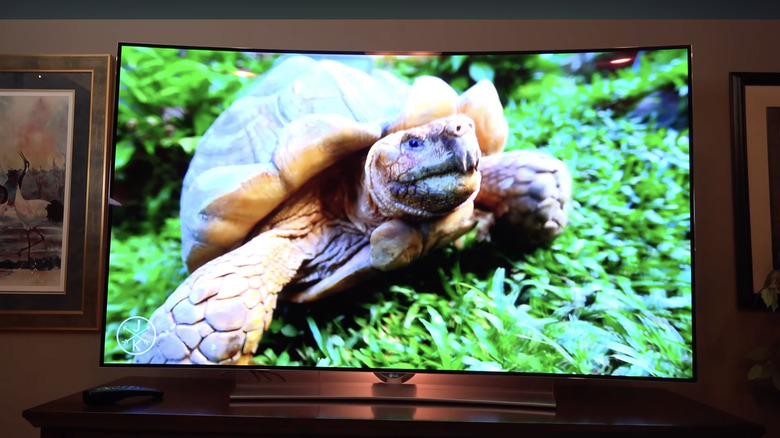
When curved TVs first landed around 2013, companies touted them as the future, saying they brought the wraparound experience of massive screens like IMAX to the living room. Everyone promised greater depth and a viewing environment suited for 4K video. And for a while, the concept seemed to be succeeding, too, riding on that initial wow factor. However, that enthusiasm quickly vanished from the consumer side of things. In fact, even after three years of marketing, the share of curved TVs in the global TV market stood at a mere 4% in the final quarter of 2016, according to data by IHS Technology. In fact, this was the highest share ever recorded.
So by 2017, the very companies that had shown off their cool concepts were already abandoning the dream. For instance, Samsung's flagship Q9 model for that year was completely flat. Both LG and Sony killed curved TV production that year. Samsung did stick around a bit longer with the budget TU8300, released in 2020, but it too called it quits after that. Today, while a dedicated few may still seek out the curved TVs, the industry itself has moved on. Brands have accepted that buyers prefer more traditional layouts, and for good reason.
Why people stopped buying curved TVs
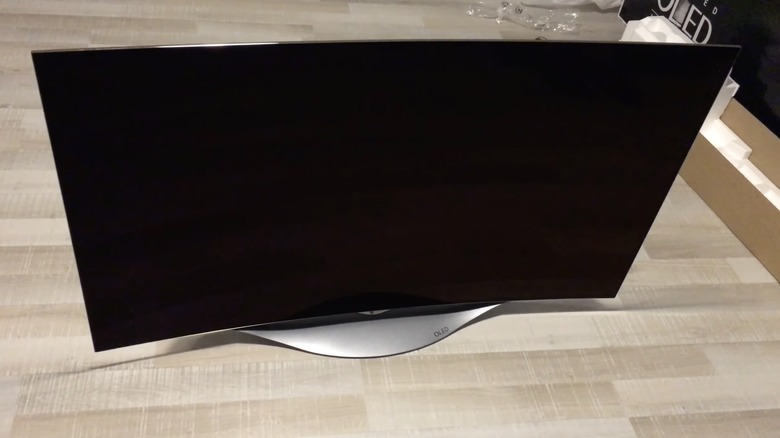
One of the biggest problems was how inconvenient curved displays were for anyone beyond that one viewer who was sitting in front of the exact mathematical center of the screen. Step outside that, and the picture degrades instantly. Unlike monitors, televisions are designed to be a family experience. So, for instance, during a Super Bowl party, anyone sitting on the edge of a couch would experience problems like color distortion.
A big problem with curved screens is how they handle reflections. Any ambient light — like a nearby reading lamp or a sunny window — stretches across the surface, ruining the image quality. These problems are prevalent across the most popular sizes, like 55 or 65 inches. But for the curve to genuinely wrap around your vision, you'd need something way bigger. And bigger is expensive. It's not like brands were unaware of these shortcomings either. In fact, at CES 2017, LG's home entertainment chief, Tim Alessi, admitted to the Financial Times that the curve never actually improved picture quality.
Curved units also clashed with interior design trends. Mounting a concave chassis creates a chunky silhouette that doesn't exactly blend in, given that its edges jut into the room. Ultimately, consumers figured out that curved displays were more of a gimmick, with their drawbacks heavily outweighing the benefits.
Curved displays are not completely dead, though
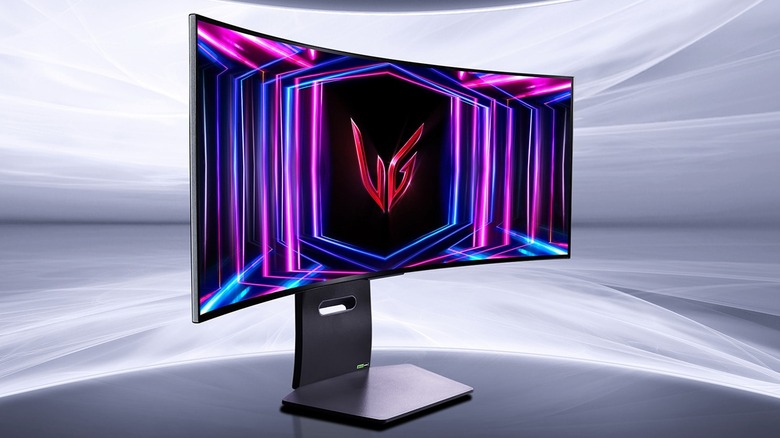
Today, there's no doubt that the TV market has reverted to flat screens. Still, not all has gone to waste as companies have applied the same technology to curved PC monitors instead. Unlike TVs, which are designed to be viewed by a full household, a PC user is typically alone, sitting roughly two feet from the screen. So those previously restrictive viewing angles turn into an advantage.
The wraparound shape naturally matches human peripheral vision, too, meaning the edges of an expansive workspace sit at the exact same distance from your eyes as the center. During long coding sessions, such a design actually minimizes neck strain. And for gaming, they provide a far more immersive viewing experience with a more realistic field of view – it's why curved monitors are widely considered better for gaming. Samsung's massive 49-inch Odyssey G9 boasts extreme ultrawide resolution and a blistering 240Hz refresh rate, and pretty much every major brand selling monitors offers premium models with curved displays.