

This 30-30-30 Braking Rule Can Save You Money And Peace Of Mind
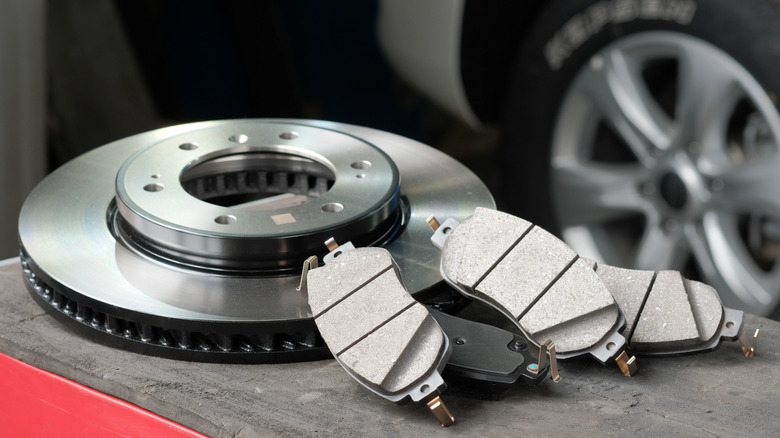
You may have heard of the engine break-in process for a new car, but there's also a break-in ritual for brakes that most people tend to skip. It makes a real difference, too, helping the brakes last longer and improving their performance. It's called the 30-30-30 rule, and it's about as straightforward as it sounds.
This process will take between 20 and 30 minutes and is best performed in an empty parking lot or a road with barely any traffic. The idea is to get your car to about 30 miles per hour before applying firm and steady pressure on the brake pedal to slow down to roughly 5 or 10 mph. Without stopping completely, you then coast or drive gently for about 30 seconds to let everything cool off a bit. Then, you repeat the whole thing about 30 times. Once you've finished all 30 cycles, you'll want to drive around for another 10 or 15 minutes at normal speeds without braking much, just to let things cool down evenly. After that, take it easy for the next few hundred miles.
While this may look like you're performing a stunt to a bystander, this process is important to preserve your brakes because it deposits a thin, even coating of pad material onto the surface of your rotors. This layer is sometimes called transfer film, and it's what gives the brakes a consistent grip. Without it, the pads and rotors don't really bond properly.
What happens if you skip the 30-30-30 rule
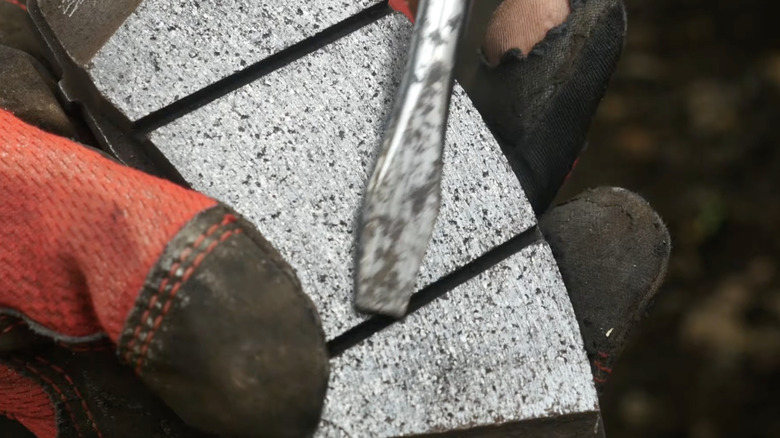
Of course, your brakes will still work if you don't bother with the break-in. They just might not function at peak performance. Without doing this technique, the pad material could end up transferring unevenly onto the rotors, creating hot spots. These lead to vibrations that you can sometimes feel through the steering wheel or the brake pedal down the road. Additionally, you may get an annoying high-pitched squeal coming from your brakes at some point. This technique also helps slow down the process of glazing, in which brake pads get hard and shiny, significantly reducing friction.
The 30-30-30 rule can also help you get through a process called "green fade," in a controlled setting. This is essentially early-life brake fade, which happens when brand-new pads hit high temperatures for the first time and release gases from their bonding resins. That gas creates a barrier between the pad and the rotor, which drops your stopping power.
That said, if you've already driven a few hundred miles on fresh brakes without doing any of this, don't panic, because they do eventually settle in themselves through normal driving. Not following the rule isn't necessarily a deal breaker — the goal is to just get the most out of your purchase. It's also worth noting that the same rule cannot necessarily be applied to every pad type in the same manner. Some cars may need a more aggressive procedure while certain ceramic pads actually need a gentler touch. It's best to check what the manufacturer recommends for your specific setup.