

5 Power Tools You Should Never Try To Use Indoors
We may receive a commission on purchases made from links.
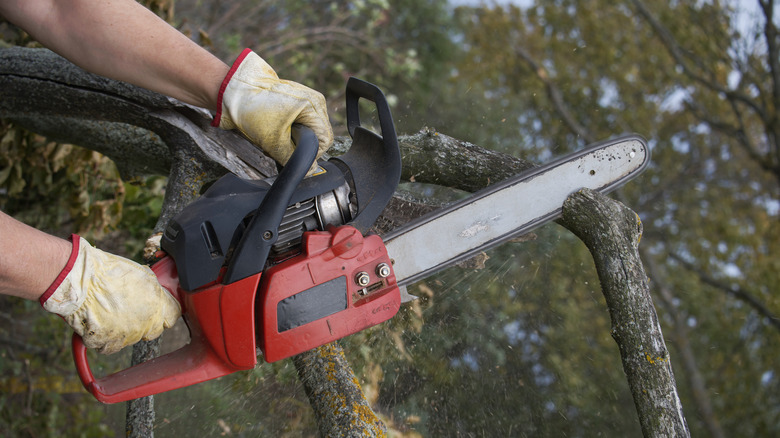
Power tools can transform a difficult project into an easy task completed in a fraction of the time. That said, not all power tools are created equal. Some can be safely used in both your home and garage, like drills, oscillating multi-tools, sanders, and saws. However, other power tools should only be used outdoors — or at the very least, in an extremely large indoor garage — because they generally pose a safety risk.
For example, using gas-powered tools in a closed space can cause carbon monoxide poisoning or an accidental fire. Also, using certain power tools on a metal surface could generate dangerous sparks. Other power tools may simply be too powerful for indoor use, and possibly cause damage to your home's interior. Of course, there are exceptions to every rule, but broadly speaking, here are five power tools you should never try to use indoors.
Wood Chipper
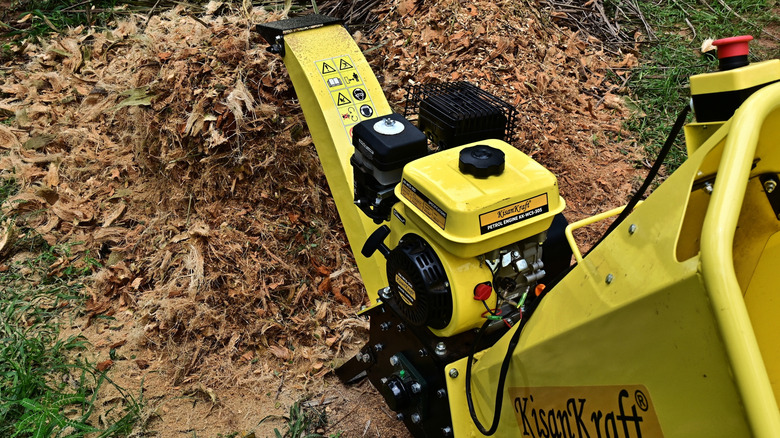
Perhaps one of the most dangerous tools to use, even for seasoned professionals, is a wood chipper. They use incredibly sharp blades at high speeds to transform logs, tree branches, and other large pieces of wood into chips or fine mulch. The immense power needed to quickly chop wood into fine pieces means that the wood chips coming out do so with a lot of speed and force, posing a potential injury risk to anyone nearby. These risks are greater with gas-powered wood chippers, but the risks are definitely still there with smaller electric wood chippers, too.
If you were to use a wood chipper indoors, you'd be subject to the risks outlined above and then some. As with any wood-cutting tool, a wood chipper produces a ton of sawdust. When you're in an enclosed space, it's difficult to filter out the sawdust faster than the wood chipper creates it. Plus, lots of sawdust mixed with an overheated wood chipper engine equals a major fire risk. And for gas-powered wood chippers, specifically, there's also a risk of carbon monoxide poisoning via the exhaust fumes.
Then, with any wood chipper, you have to consider noise pollution as well. Even when you use wood chippers out in the open, they're loud. Bringing it indoors greatly amps up the noise and can potentially damage your hearing.
Concrete Saw
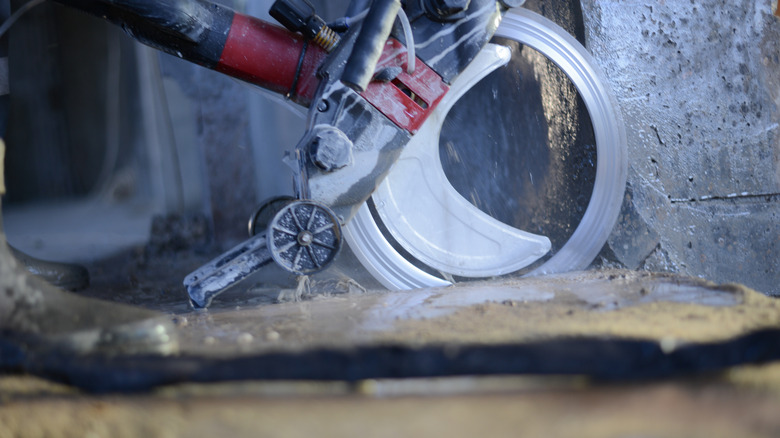
If you take on heavy DIY renovations, you might need a concrete saw. Like many tools, there are electric and gas-powered models that differ in price and overall power, but both variants can easily cut through more than just concrete. For major DIY projects, concrete saws are very useful. However, if your project is indoors, think twice before firing it up.
According to OSHA, the dust that concrete saws create can be a big hazard, potentially leading to "silicosis, lung cancer, chronic obstructive lung disease (COPD), and decreased lung function." Professionals working with these tools must be trained and use a dust reduction system to prevent sickness. DIYers may not have this same awareness. Gas-powered models are especially dangerous, as they create carbon monoxide in your space.
That said, some renovation projects are made a lot easier by using a concrete saw. If you don't have a good way to ventilate your space and keep yourself protected from the risks mentioned above while working, it's worth hiring a professional or opting for a slightly less powerful, electric model instead. Even this sub $300 Electric Concrete Cut-Off Saw from Evolution Power Tools can slice through granite, bricks, natural stone, paving blocks, reinforced concrete, and other masonry materials, up to 4.5 inches deep.
Angle Grinder
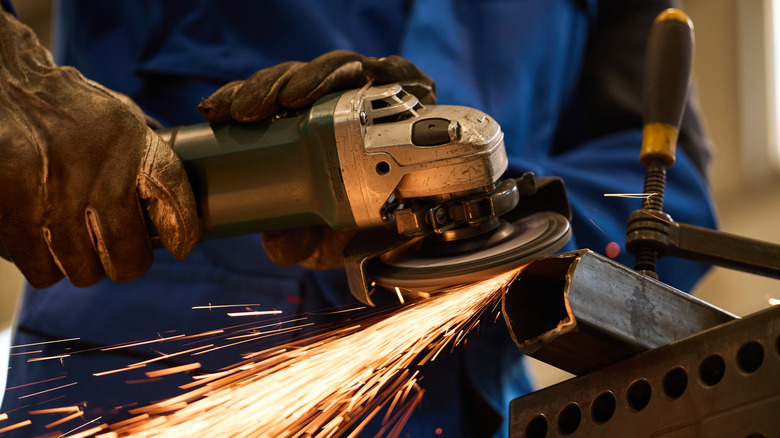
Angle grinders are among the most difficult power tools for beginners, thanks to the surprising learning curve of using their steel cutting discs safely. If you're using an angle grinder, chances are you've used another tool with a spinning circular blade before, but angle grinders in particular are quite finicky.
Even professionals get nervous with angle grinders because there is so much injury potential. Angle grinder discs are prone to shattering when they're used up, old, or simply tilted or wedged the wrong way, so it's no surprise that angle grinders were ranked the third most dangerous tool, with over 5,000 annual injuries, according to data from the Royal Society for the Prevention of Accidents' Accident Surveillance Systems.
The shatter risk is present no matter where you use an angle grinder. However, if you're indoors, there's less open space for shattered debris to escape to, so there's a bigger possibility that you could be hit by a rogue steel blade piece or five. And depending on the material you're using an angle grinder on, it may create sparks. If you're working in a furnished home, these sparks could easily settle on a couch, pair of curtains, or another flammable material in your home and start a fire.
Pressure Washer
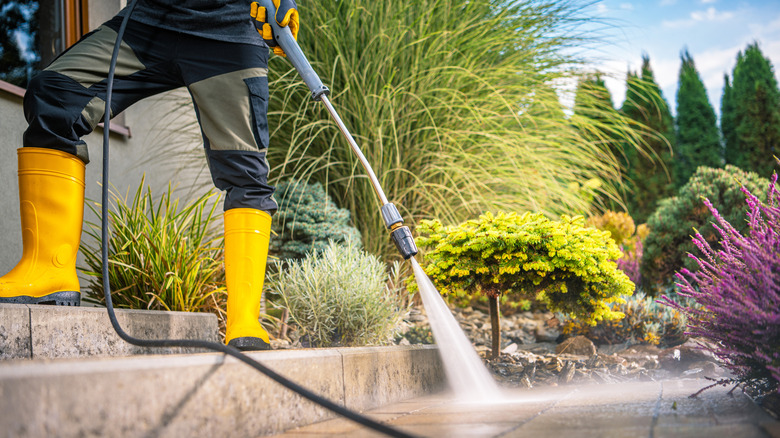
Pressure washers are so fun to use, there's even a well-reviewed PC game that's all about power washing various environments. That said, this tool should really be reserved for outdoor use. The sheer amount of power some pressure washers use to clean away grease and grime with only water would wreak havoc on many in-home materials. That said, there are pressure washers made for lighter use that can be used on your vehicle, windows, and other less sturdy surfaces, but with an untrained hand, even these pressure washers can cause damage to paint, drywall, or your belongings.
On top of the cosmetic damage pressure washers can cause in your home, they can also potentially cause water damage, which can escalate into a hidden mold situation pretty quickly. For example, if you're pressure washing your tile and there are holes in your grout, chips in your tile, or gaps under your baseboards, you're forcefully pushing water into those areas where it can't escape or be cleaned up after you're done. Plus, if you don't properly block off your electrical outlets and switches, you run the long-term risk of electric shock or your electrical system shorting.
Any Gas-Powered Tool
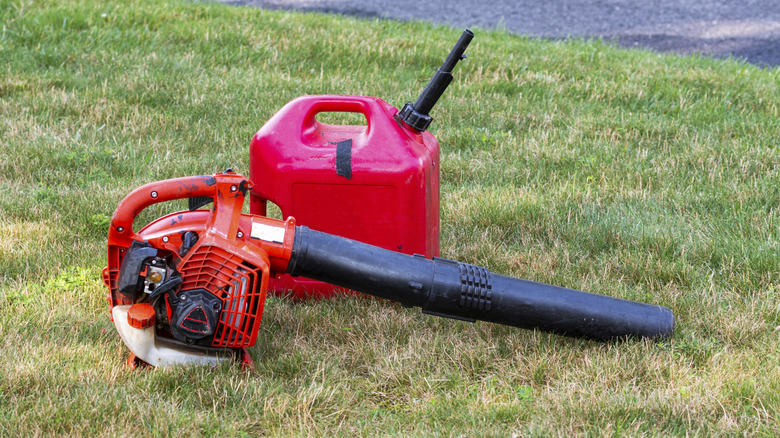
Using any gas-powered tool indoors isn't a smart idea for the same reason you're told to turn your car off after you park in the garage and close the door: carbon monoxide poisoning. It's all too easy to forget to properly ventilate the enclosed space you're working in, so it's best to avoid bringing gas-powered tools inside. Carbon monoxide is odorless, invisible, and impossible to detect with your senses. You can (and should) invest in a carbon monoxide detector, but if you must bring power tools indoors, opt for electric versions instead.
Efforts for gas-powered leaf blower bans are growing across the U.S., along with bans for other gas-powered lawn equipment, because of noise and air pollution. When you use any of these gas-fuelled tools in your home, you're bringing all of that noise and air pollution inside (on top of the carbon monoxide we mentioned above). And even if you have one or two air purifiers in your home, there's only so much they can do for your air quality in a short period of time.