

Is It Legal To Change Lanes In An Intersection Or Can You Get A Ticket For It?
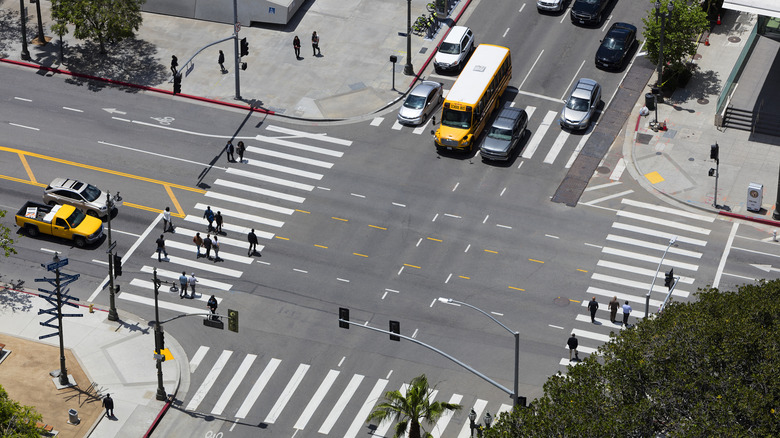
Rules of the road are something that are ingrained into all of us when we're young and eager to earn the privilege of driving a vehicle. Over time, we learn even more driving rules and norms as we spend more time on the highway. Some rules are intuitive; others require a fair amount of practice before we get them right. Still others are downright strange. Then there are rules that we hear about, and seem right, but aren't necessarily grounded in reality.
It's common knowledge that you are not supposed to change lanes while you're in an intersection, but where that rule comes from is elusive. There are certainly no-passing zones where you're not supposed to overtake another vehicle, and you're definitely not supposed to block an intersection, but changing lanes is a different story. It's one of those rules that is grounded in both myth and reality, with a healthy dose of "old wives' tale" thrown in for good measure, because as it turns out, there is often no rule that explicitly states that you are not allowed to change lanes in the middle of an intersection. However, it's not necessarily cut and dried.
The reality is, few states have a specific law that says you can't change lanes in an intersection, but that doesn't mean you can't get a ticket. The bottom line is, if a police officer determines that you were not driving safely, the fact that there's no specific law against it won't protect you.
The loop hole
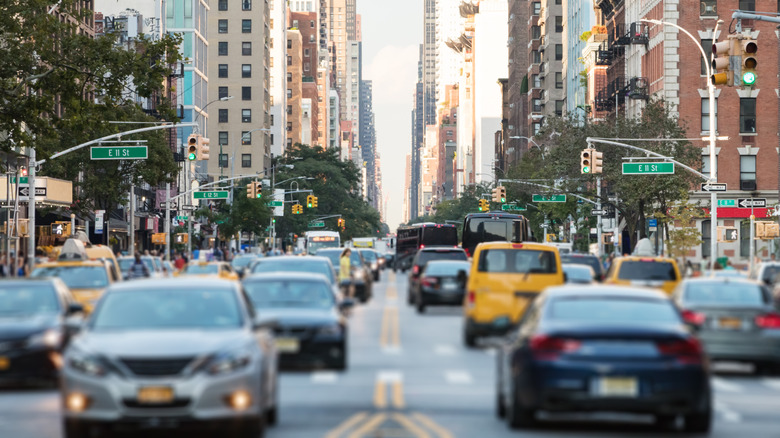
Every state has laws on the books that prohibit unsafe driving and unsafe lane changes. Most other states prohibit lane changes across solid white lines on the road (like those that indicate turning lanes, for example). Still others require you to have your signal on for around 100 feet prior to changing lanes. Put all of those together, and there's a good chance you are breaking one of those laws if you change lanes in an intersection.
Even if not, a police officer could interpret your actions as unsafe driving in general. Police officers have a lot of discretion when it comes to issuing citations. It's also likely that if you change lanes in the middle of an intersection, and there is an accident, you will be held at fault.
At the end of the day, intersections are extremely busy places. They're the part of the road where you meet other drivers not moving in the same direction as you. Therefore, the risk of the crash skyrockets, and if you change lanes during that chaos, you're only adding to it, and increasing everyone's risk of having a bad day.