

Stackable Washers & Dryers Have Hidden Downsides You Should Know
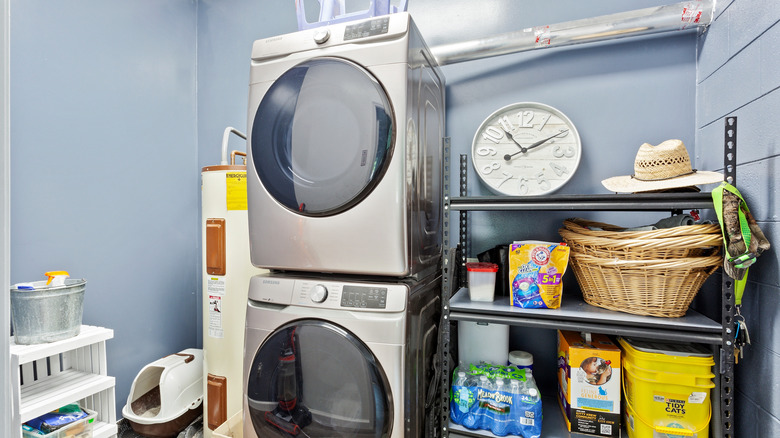
Learning to sort the whites from your colorful laundry is a rite of passage, even with modern tools and machines. Laundry may be a rather boring chore, but it's an essential life skill, and having your own laundry facilities inside your apartment or home is like hitting the jackpot. No more laundromat or shared service. If you're living in small-footprint space, however, you may be considering a stackable unit.
A stackable laundry unit is exactly what it sounds like. It's a washer and a dryer stacked vertically, rather than placed side-by-side. They're a great option if you don't have the space for a traditional set-up, or if you want to put your laundry facilities inside a closet rather. Before you invest in a set, however, you should consider the pros and cons.
Not every washer and dryer are stackable, so buying a stackable set means shopping from a limited market, which also means you lose the option of mixing brands. This is bad news if you need to replace only one appliance, or you're thinking of mixing brands based on user reviews and your own needs. It's simply not advisable to stack units from two different brands — stackable options are specially designed to sit one on top of the other.
Stackable appliances may be smaller than standard units, though this may work for you if you have a small space. Full-size sets are also available, but are only offered with front load washers. If you want bigger units, avoid laundry centers, which are smaller and permanently attached, and look for individual units that are stackable. Here's what else you should know.
Understand the limitations
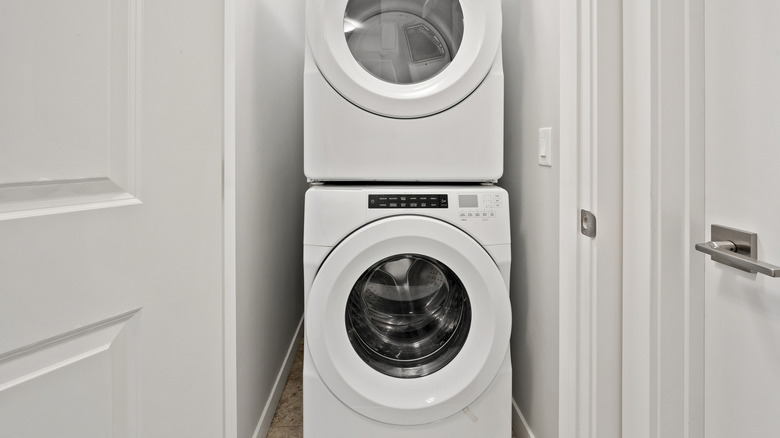
Shopping for new appliances can be nerve-wracking. You've probably already set a price point, mulled over brands, and determined your specific needs. If you're looking for a stackable set, you should be aware that they tend to be more expensive, partly because the washers are front-load. When stacked, the washer must go on the bottom due to its weight and plumbing requirements. You'll need to tie the washer into your water supply and drain, and those hook-ups are typically situated lower on the wall. You'll also pay for the stacking kit and installation, which may cost more because the job is more complex.
Cleaning and maintaining the units can also be more complicated. Stackable appliances must be installed carefully, with the necessary clearance between each other and the wall. They should also be cleaned regularly to avoid mold and mildew build-up, and be careful to note if any moisture from the washer is transferring to the dryer, which indicates a problem.
If you're small in stature or you want your kids to help with the laundry, a stackable set may pose a problem. These sets tend to be tall, especially if you opt for a base or drawer underneath. You'll also want to child-proof any front-load washer if you have small children. Finally, consider your layout. Almost all front-load washers are hinged on the left and are not reversible, so be sure that works for your space.