

Why Do People Fill Engine Blocks With Concrete?
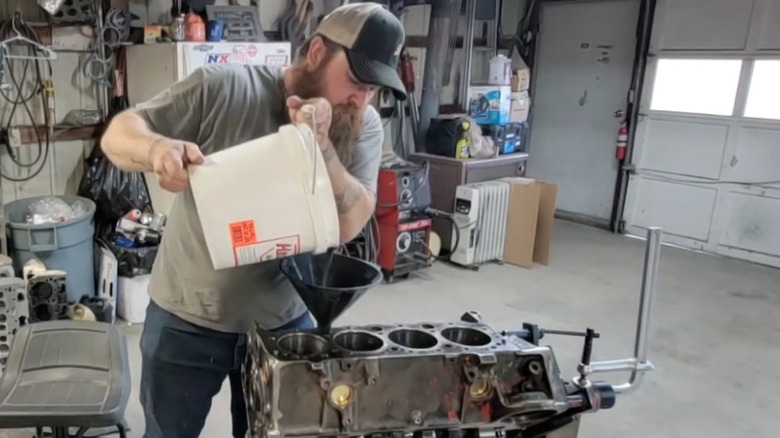
If you see someone pouring concrete into their engine block, it's not what it looks like. No, they're not trying to destroy it — with high-performance engines, pouring in concrete can actually do it some good. It sounds counter-intuitive (if not catastrophic), but it's a way to reinforce the engine's structure to handle more intense driving. It's a technique that can actually help prevent engine failure.
As weird as it sounds, it kind of makes sense. As horsepower climbs, so does the amount of internal stress on the engine. This is especially true within the block, which goes through the most intense heat, high pressure, and constant vibration. So, drivers fill it with concrete (or a concrete-like substance, such as Rokblock) to avoid signs and symptoms of cracking.
The material seeps into the engine block's internal cooling passages, filling the space originally intended to help circulate coolant. By getting rid of that empty space, you create a more solid foundation that helps the cylinder walls keep their shape under stress. Without it, even the most minor distortion can compromise the piston ring sealing and cause performance losses or even outright mechanical failure.
More strength where it counts during performance driving

Inside a normal combustion engine, regular operation creates tons of pressure and heat within each cylinder. At the same time, the rotating assembly sends vibration throughout the block. As that happens, the engine's empty spaces (like the cooling passages) can start flexing. For everyday driving, that flexibility is totally fine. But in high-horsepower situations like drag racing, even slight flexing can become a major liability fast.
Filling those cavities with something like concrete transforms the block into a far more solid structure that's less prone to flexing. This extra rigidity keeps cylinder bores true and allows piston rings to maintain a proper tight seal. It also cuts down on harmful vibrations (also known as harmonics), which can accelerate wear and cause dangerous cracking.
Engine builders figure removing the weak points with concrete-like material means the entire system becomes stronger. But filling an engine block is not without its problems. As mentioned, those passages getting filled are there to circulate coolant. Removing or reducing that cooling capacity means an engine can only air-cool, and that can lead to much higher operating temperatures. In other words, you should probably only ever do this with specialized builds, not a car you'll be driving to and from work.