

30,000 New Drones: Pentagon Names Winners Of Air Dominance 'Gauntlet'
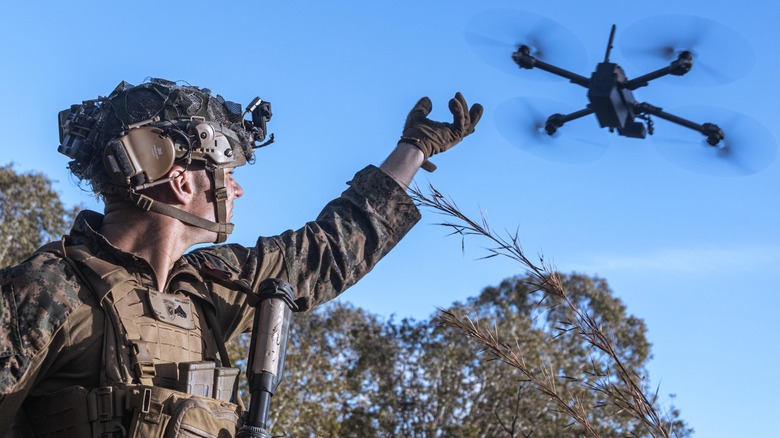
If the 21st century has revealed anything about the way wars are fought, it's that drones are the path forward. Since the United States redesignated the RQ-1 as the hunter-killer MQ-1 Predator, making it a combat aircraft, drone warfare has become commonplace. There are all manner of drones that fly, crawl, run, and swim, and the most recent innovations in the space involve designing smaller, more versatile machines with multiple capabilities.
The Department of Defense has launched several initiatives to seek out all manner of new drone technologies, with so-called "Drone Dominance" as the name of the game. In March 2026, the department revealed the winners of the Gauntlet I uncrewed exercise, which pitted numerous platforms against one another in a series of tests. The goal of Gauntlet I, which saw 25 drone companies converging on Fort Benning, Georgia, was to identify the best one-way drones for various military operations and then order 30,000 for future use. The top three performers were Skycutter, Neros, and Nepatree.
Skycutter is a U.K. contractor that produces 3D-printed drones of all kinds, including heavy-lift, fuel-cell-powered, and ISR units that fit inside a backpack. Similarly, Neros develops small, lethal kinetic-strike drones of various types that are highly versatile. Nepatree's Bumblebee and Hornet drones have already been identified for outfitting the Washington National Guard, and it scored well in the competition alongside the aforementioned contractors.
Gauntlet I and the US' drone ambitions
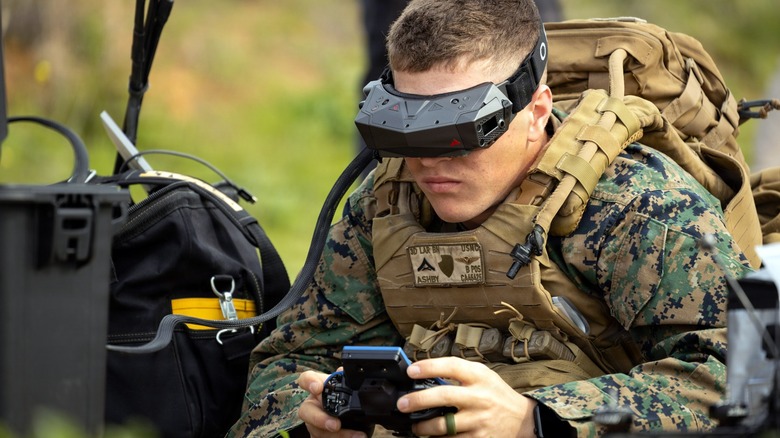
Gauntlet I was a two-week exercise, with 25 companies' products being put through their paces. The chosen winners will provide a combined total of 30,000 drones, which will be delivered over five months. Gauntlet wasn't merely a demonstration of drones, as around 100 servicemembers from the U.S. Army and Marine Corps, alongside some from the Special Operations community, were also involved. The tests included sending drones out to hit targets 6.2 miles away. Operators were limited to two hours of training on each system before testing.
The Pentagon intends to spend around $5,000 per drone, though it would prefer the cost were closer to $2,000 per unit over the Drone Dominance program's lifetime. Typically, defense procurements start high and reduce over time as production becomes more streamlined. Gauntlet I is part of the first phase of that program, which will continue for some time as the DoD identifies, chooses, and procures tens of thousands of drones for its inventories.
Other initiatives, like the U.S. Game of Drones at Edwards Air Force Base, California, have similar objectives. Choosing new one-way attack drones is paramount to the U.S. drone initiative. One-way attack drones have proven vital in both the Russo-Ukrainian War and the United States-Iran War; Iranian Shahed drones have proven their worth in the latter conflict, and the Department of Defense understands the U.S.' need to add similar lethal options to its inventory.