

The FCC Is Banning Any New Internet Router That Isn't Made In America - Here's Why
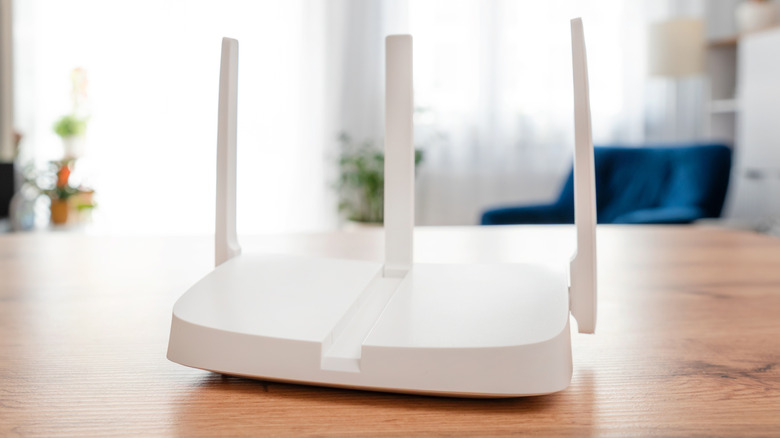
An internet router is a key part of any home network, and consumers have thankfully had numerous major wireless router brands to choose from over the years. For American consumers, however, this list will eventually be somewhat shortened. Per a March 23 Federal Communications Commission announcement, the sale of new consumer-grade routers not manufactured in the United States will be illegal going forward. There are, however, certain caveats: non-U.S.-made routers currently in use will remain legal, as are imported routers that have already received FCC approval. The latter can still be imported and sold without issue.
To put the scope of this action into perspective, it's important to note that there are next to no consumer-grade Internet routers manufactured exclusively in the U.S. The FCC's FAQ clarifies that non-U.S. contributions to the router in the form of design, manufacturing, assembly, or development will place the device under the ban, so even those partially U.S.-made are no good.
Companies can, however, apply for Conditional Approval from the Department of Defense or the Department of Homeland Security to allow these routers to receive FCC approval. With those two entities part of the equation, the rationale for this router ban becomes clear. According to the U.S. government, this action is a matter of national security.
The U.S. government's justification for this router ban

This ban stems from national security concerns raised in the U.S. Executive Branch's 2025 National Security Strategy. This outlines an initiative to return manufacturing of all kinds to the U.S. and eliminate reliance on other countries for resources and goods, such as internet routers, which are overwhelmingly made abroad. In fact, some 60% of U.S. routers come from China alone. Thus, dependence on routers made entirely or in part in other areas of the world is presented as "a supply chain vulnerability that could disrupt the U.S. economy, critical infrastructure, and national defense."
The perceived threat of cyber attacks is also a major motivator behind the FCC's band. There's concern that technology produced outside the U.S. could have weak spots that can pose cybersecurity risks. This could not only theoretically harm any U.S. infrastructure ill-equipped to combat it, but potentially expose consumers who use the routers to threat actors. Conditional Approval, however, gives companies a chance to plead their case and prove that the tech they plan to sell in the U.S. is secure and doesn't pose a threat.
As the FBI warns of specific unsafe router models, the FCC brings to the table the less refined approach of banning all new routers made outside the U.S. Time will tell how this ban goes over and whether it leads to router manufacturing returning to the country in the coming years.