

Ukraine's Experimental New Laser Weapon Drops Enemy Aircraft Right Out Of The Sky
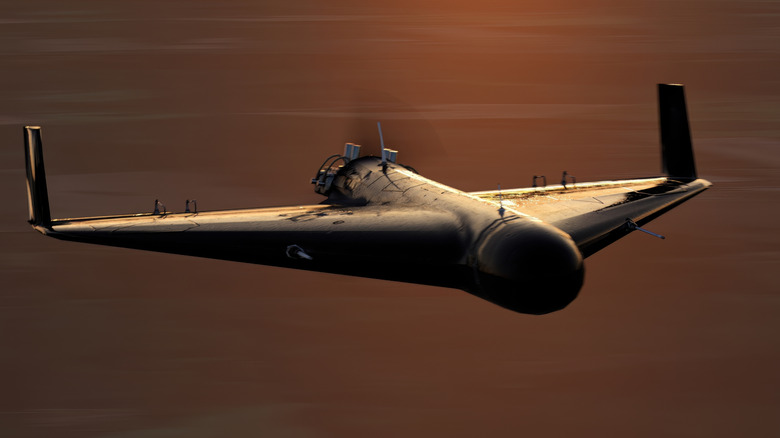
Drones have a habit of democratizing technology that was once unattainable by anything short of a company or a government. Aerial photography in particular has been revolutionized by these flying cameras. Even in professional settings, camera shots that once required helicopters can now be filmed with a two-person crew from the safety of terra firma. A notable recent example would be when Tom Cruise drove a motorcycle off a cliff for the Mission Impossible franchise.
Drones have also changed the face of warfare, causing the U.S. Army, in particular, to worry about this looming problem. An army can bombard a hostile target with shells and cruise missiles that cost tens or hundreds of thousands of dollars, or it can build drones out of cheap parts and literal lawnmower engines. Given that choice, cheap drones feel like the obvious solution.
But now defenders have a choice to make — how to shoot them down. Up until recently, Ukraine has had to decide if it wanted to use Interceptor missiles to shoot down drones or risk the damage that those drones would cause. Russian forces have had to make the same decisions. But now, Ukraine has a new defense it may be able to deploy soon. It's called SunRay, and most of the reporting comes from the Atlantic who saw the laser weapon in action.
How does SunRay work and why is it effective?
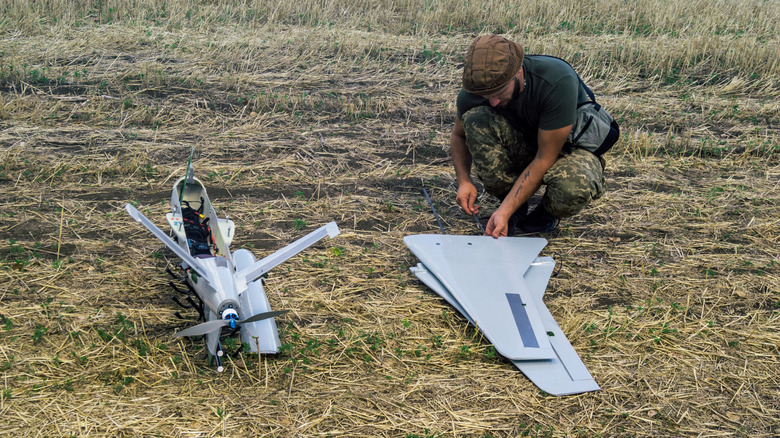
Ukrainian commander of air-defense forces, Pavlo Yelizarov and a team of engineers developed SunRay over the course of two years for a few million dollars. The device is small enough to fit in a car trunk and looks like a telescope with cameras strapped to the side of it. Put simply, the cameras track the drone it's targeting automatically, while human operators fire the laser. The result is the drone catches on fire within a few seconds and is neutralized.
This can be a very effective weapon that greatly reduces the cost per shot required to take a drone down. That's important because of the fact that these drones can be made very cheaply, so a surge of drone attacks can include multiple decoys along with drones that will ultimately attack the primary target. By reducing that cost per shot, you're allowing defenders to take out more threats economically.
As drone warfare becomes more and more common around the world, with Ukraine in no small part leading the charge, defense systems will need to be able to adapt just as quickly. SunRay will likely be the first in a long line of anti-drone defense systems developed to counteract these threats.