

These New HVAC Units Could Help Ease Energy Costs & Power Grid Consumption
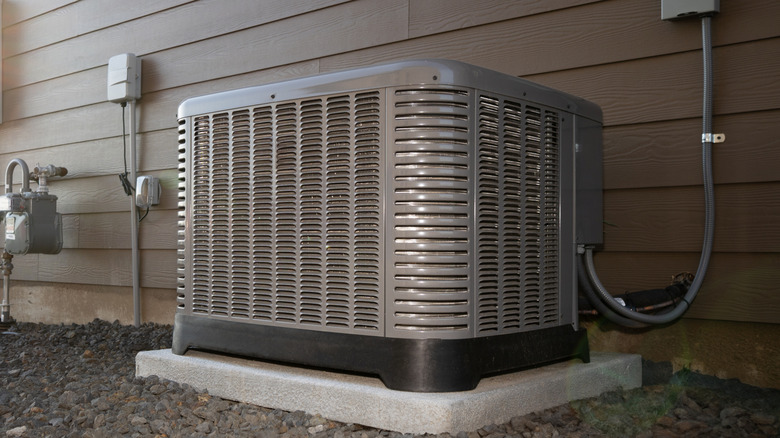
As much of a relief as it can be to turn on the heat in the winter or the air conditioning in the summer, flipping the switch has its drawbacks. Overusing these systems is just one of multiple mistakes that can increase an electric bill, but in an increasingly extreme climate, it's hard to avoid. However, an air-conditioning company has introduced an intriguing new HVAC concept that tries to alleviate this issue. These new HVAC units from the American corporation Carrier could theoretically reduce electric bills and ease power grid strain by providing energy part-time, instead of just consuming it.
The HVAC unit Carrier began trialing in 2025 heats and cools as normal, but also features an internal battery. Carrier controls the batteries remotely, charging them when energy is at its most affordable (such as during peak solar production) and switching to battery power once power grid demand increases and electricity gets expensive. This reduces grid strain and the need to use energy directly from utility companies. At the time of publication, only a handful of homes in the United States are testing this tech, along with homes of several Carrier employees, though the company hopes to install it in millions of homes over the next decade-plus.
Naturally, testing these HVAC systems is a major part of getting them ready for more widespread use. Next to that, the biggest question surrounding them is how utility companies are responding to this innovation.
How this HVAC tech could benefit customers and utility companies
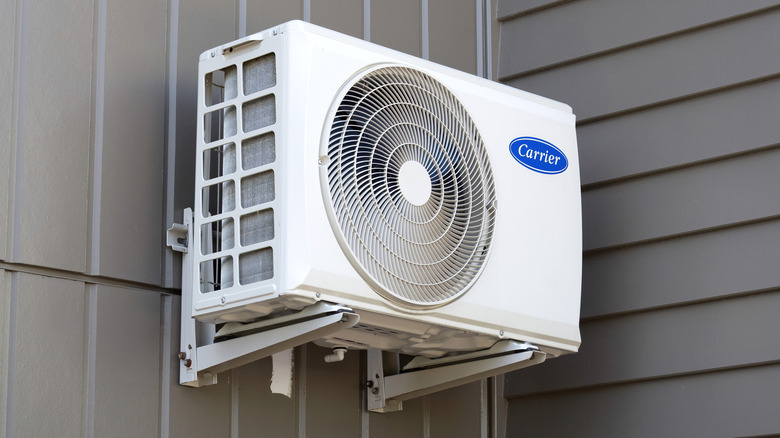
On paper, this concept seems very pro-customer and, to some extent, anti-utility company. It would reduce customers' reliance on their electricity providers, lowering their bills and the revenue utility companies would generate. While this is true, power demand and consumption have increased sharply in recent years, largely due to the rise of artificial intelligence data centers. With some ever-hungry data centers in the U.S. plugged directly into power plants, the nation's power grid can only handle so much. It can't expand at the speed needed to meet the combined consumption of these data centers, homes, businesses, and more.
In this context, the rollout of battery-aided HVAC may become a roundabout win for utility companies. While expanding and improving energy infrastructure does make utility companies money, battery HVAC systems are a net benefit in terms of time and cost, and their implementation means less pressure to expand rapidly and massively. In 2026, eight unspecified utility companies across the U.S. will begin working with Carrier to test its battery HVACs. The hope is that this data will accelerate the approval of this battery technology, allowing Carrier to get its new HVAC units into customers' hands as quickly as possible, thereby helping with their monthly bills.
At a time when just about everything is getting increasingly more expensive, and in a climate where some form of temperature control is almost a necessity, Carrier's battery-equipped HVACs can't come soon enough. Time will tell what results the testing yields and how the approval process will unfold.