

What's The Average Lifespan Of A Water Heater? Here's What Experts Say
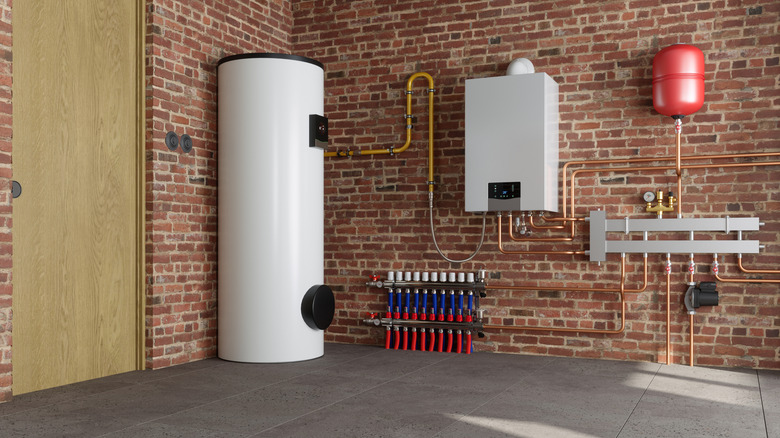
While most people use major appliances like stoves, refrigerators, and laundry machines on a daily basis, there are others in your home that you likely just don't think about very often. Perhaps more accurately, you may not think about them until they begin to malfunction and you're faced with either a pricey repair bill or an even pricier need to replace the item altogether. Among that particular subset, many a homeowner would be quick to list the water heater as the appliance they are most wary of losing.
There's good reason for such worry, of course; installing a new water heater will likely cost you several thousands of dollars on average, with the numbers varying significantly based on the model, brand, and style of device you select. If there's any good news when it comes to replacing your heater, once the installation is complete, you shouldn't need to worry about doing it again for a while. The question then becomes how long you've got before you have to do the whole thing all over again. Unfortunately, there is no concrete answer, as multiple variables can affect the appliance's lifespan.
While it's all but impossible to put a precise number on that lifespan, many industry experts claim that a traditional, well-maintained tank water heater should last anywhere between 8 and 12 years. If you opt for a more expensive tankless model, the lifespan may stretch to 20 years or longer, and if you're using an electric model from a major brand like Bosch or Rheem, the estimate is approximately 10 to 15 years.
How to properly maintain your water heater

Now that you know how many years of usage you might expect to get from a newly installed water heater, you're probably wondering if there are any measures you can take to ensure that the appliance is fit to run towards the higher end of that estimated range. In short, yes, there are a number of preventative measures you can take that might potentially extend the life of your water heater and even help make it run more efficiently.
Before we get too far along here, however, you should know that several other factors may ultimately counteract those measures, including water quality, the quality of the water heater, and even the appliance's location within your home. All these variables need to be taken into account when you are deciding what type of water heater you want to install. Once the new appliance is up and running, you'll want to take additional measures to combat rust and corrosion.
There are, after all, several metal parts in most water heaters, which makes things tricky as water and metal don't exactly get along. The appliance should come equipped with a rust-battling anode, but even that needs to be replaced on occasion to ensure it's properly functioning. This means it's in your best interest to keep tabs on it and swap it out when necessary. Harmful sedimentation is also a worry in your water heater, as loose minerals in water are prone to building up in the bottom of the device and affecting its overall function. You can, however, combat this issue by flushing the water heater annually to remove the buildup.
How to know when it's time to replace your water heater
Apart from preventative maintenance, there are also a few telltale signs to watch out for that may signal your water heater is beyond saving. Age — which you can determine via the device's serial number — is one of the most obvious signs it may be time to look into a replacement. If your unit is already past the lifespan estimates we provided, you should perhaps think about making an upgrade before it's too late.
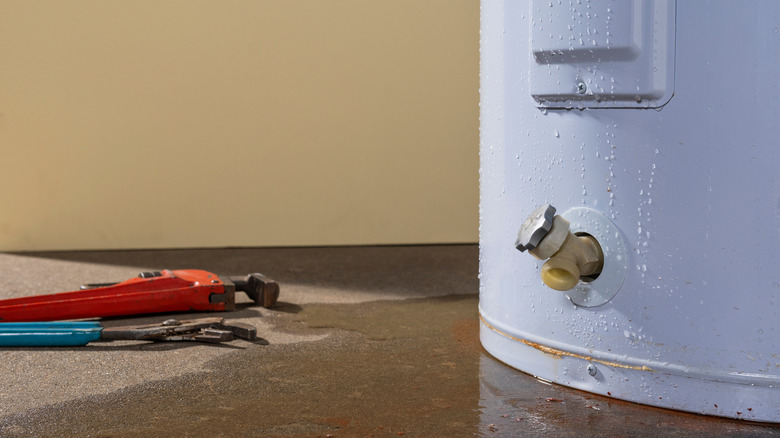
Another sign that your water heater may need replacing is a sudden rise in your utility bill, indicating that the device may be working harder to heat the same amount of water. You should also keep a close eye on the unit itself, as it may show clear signs that it's not functioning properly. One of the most obvious is the puddling of any water below the heater. That likely means there's a leak; if so, there may be a dangerous buildup of pressure in the heater itself. If left untreated, that could actually cause the water heart to fail catastrophically (i.e., explode). In such cases, immediate action should be taken to avoid that fate.
Rusty or cloudy water from your faucets may also indicate a buildup of sediment or even corrosion. If the water is rusty, the appliance may be beyond saving. If it's cloudy, it should be serviced sooner rather than later. The same is obviously true if your unit is not heating water at all. Finally, you should keep an ear out for a knocking sound within the unit. Such noises could indicate a significant sediment buildup that should be addressed ASAP.