

Common Problems With DeWalt Drywall Sanders, According To Users
We may receive a commission on purchases made from links.
Installing drywall can be frustrating, and one of the trickiest parts is trying to get the seams between the panels to look good. There are a lot of tricks for hiding seams, but no amount of texturing will help you if you don't give them a good sanding first.
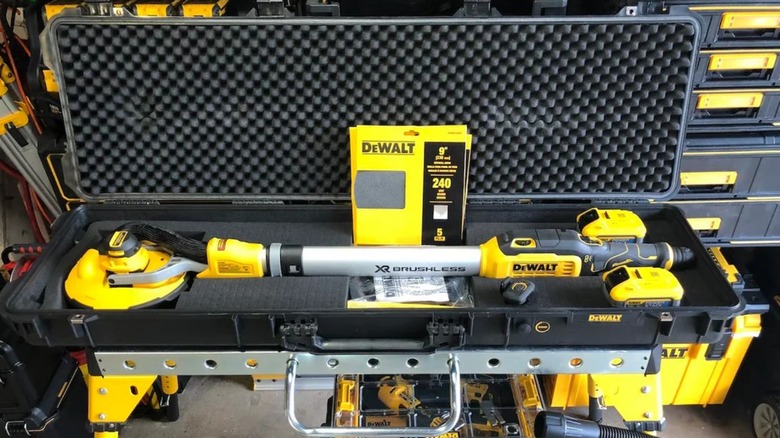
DeWalt is widely regarded as one of the best power tool brands in the business, and the company makes a couple of different drywall sander models. The DeWalt 20V Max Cordless Drywall Sander (DCE800B), might be very tempting to fans of the brand. The tool is powered by a brushless motor, which improves runtimes and promises to deliver up to 1,200 RPM. It has a telescoping pole, an articulating head with a 9-inch sanding pad, and a variable speed dial. It also utilizes DeWalt's AirLock connection, which is designed to fit seamlessly with DeWalt's own dust extractors. Then there's the DeWalt 4.7 Amp Electric Drywall Sander (DWE7800), which boasts many of the same features but trades the battery for a corded connection and can reach up to 2,300 RPM.
That all sounds pretty good on paper, but you might want to take a moment to see what users have had to say about these tools before you grab one for your next wall or ceiling replacement. The reviews for the battery-powered version device have been decent at best, with customers rating it 2.8 out of 5 stars on DeWalt's website. Meanwhile, the same product was rated 4.1 stars on Home Depot and 3.1 stars on Lowe's. The corded version has a 1.8-star rating on both the DeWalt site and Ace Hardware, along with a 2.4-star rating at Lowe's. Part of the reason for these lower scores appears to boil down to a few common problems that users have reported experiencing.
Poor sanding performance
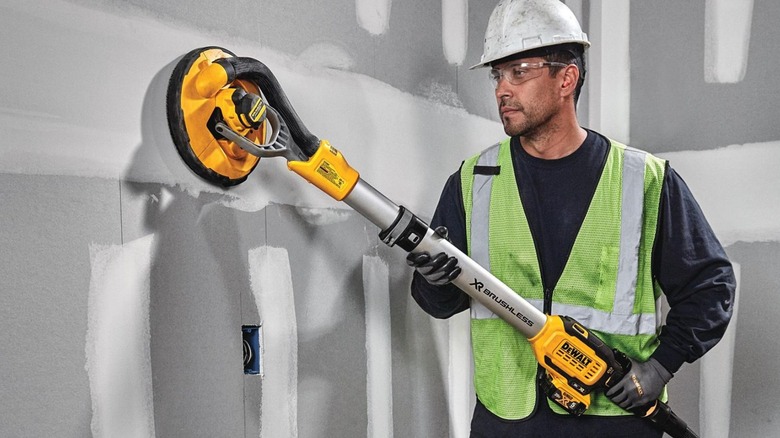
The biggest issue that users have been reporting about the DeWalt drywall sanders seems to boil down to their power output and general sanding performance. A few customers have found that the cordless model isn't able to maintain full power for as long as the product description claims. "A brand new fully charged 5.0 battery lasts almost 20 minutes, and then it runs weakly for 2~3 more minutes," one reviewer stated on a Lowe's review.
This isn't exactly in line with the company's promise that the sander will provide 30 minutes of runtime on a DCB205 5Ah battery, and having to pause to wait for a battery to charge isn't anyone's idea of a good time. The corded version of the tool appears to be even worse in this regard, though reports are somewhat inconsistent. Some have claimed the motor is too weak, while others have claimed that it's far too strong, eating through drywall too quickly to get an even surface. Others have had issues with it failing outright.
An even more common complaint has to do with the head plate, which customers claim is inferior to that of the Porter Cable model these tools are seeking to replace. Many users complained about the tool scratching, leaving lines, or otherwise damaging the drywall, regardless of how much time they spend trying to adjust it. "It is in every way identical to the Porta Cable 7800 Sander except for one: the head plate," another reviewer claimed. "Makes it impossible to sand drywall without destroying the wall."
Overheating
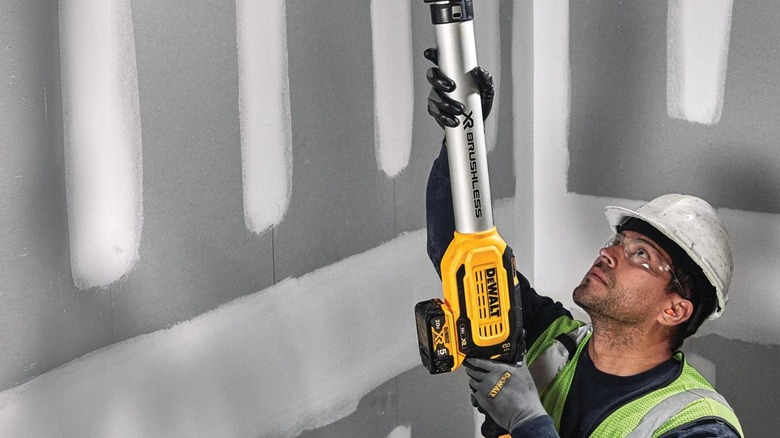
Generally speaking, brushless motors are a big step forward over their brushed counterparts because they are designed to get more power while simultaneously extending battery life and reducing heat. Even so, it appears that customers have experienced issues in all three of these categories when using the DeWalt drywall sanders. We already talked about the problems customers have had with the tools being underpowered, but unfortunately, it seems that many have also experienced issues with them overheating.
"The sander seems to overheat and not work after [the] first few times using it," one user said of the cordless model on the Home Depot site. They claimed that the tool worked well initially, but that it would quickly burn out within minutes of use. On a related, but slightly separate note, another user complained on Reddit that the cordless tool would actually shock them when they used it due to excessive static buildup and the battery-powered tool's inability to ground.
This is a problem for a couple of reasons. Power tool motors running hot isn't just uncomfortable for the user; it can also lead to the engine seizing. Repeated exposure to high heat can dramatically reduce the longevity of the tool. This issue doesn't appear to be quite as common as some of the others on this list, but it's serious enough and there are enough complaints about it that it's worth mentioning.
Proprietary dust collection
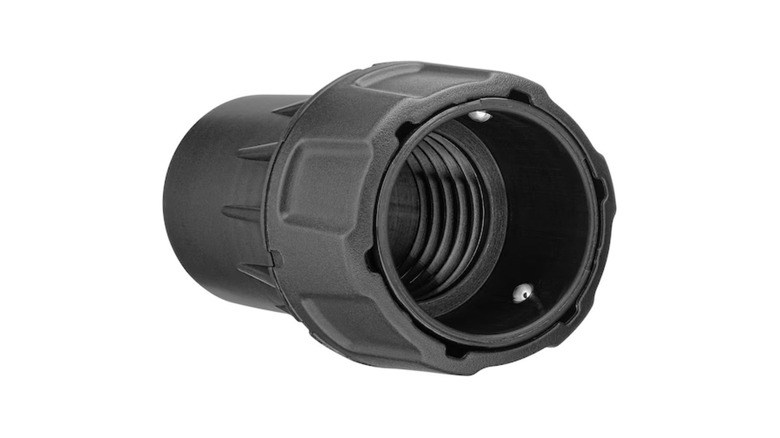
This next complaint involves an intentional part of the tool's design that users really don't seem to care for. Both the corded and cordless versions of this tool utilize DeWalt's AirLock connection, which uses a twist-to-lock mechanism coupled with rolling ball bearings to keep the hose in place without restricting its ability to rotate as you move the tool. The company isn't exactly hiding this information, but it also doesn't go out of its way to advertise that this is a proprietary connection.
That means these drywall sanders won't connect to other standardized dust collection systems without getting an adapter to connect to the tool and potentially a second one to connect the AirLock adapter to the dust extractor if it isn't using a 1 ¼-inch vacuum hose. This isn't an issue for those who already own a DeWalt dust extractor with AirLock connections baked in, but others may not have realized that they were signing up for these extra purchases when buying the tools.
"I had to use tape to hold the thing onto my dust extractor because I had no idea that there was a proprietary Dewalt dust extraction system," said one reviewer on the Home Depot website. They went on to claim that hardly any of the dust was collected by the extractor. "I think for the amount of the sander, you would think that the vacuum hose would come with it," another customer said of the corded product. Many of these customers also remarked that the sanders don't come with sandpaper disks, adding further to the number of purchases they needed to make before being able to actually use the tool.
Sanding pad sticks and detaches
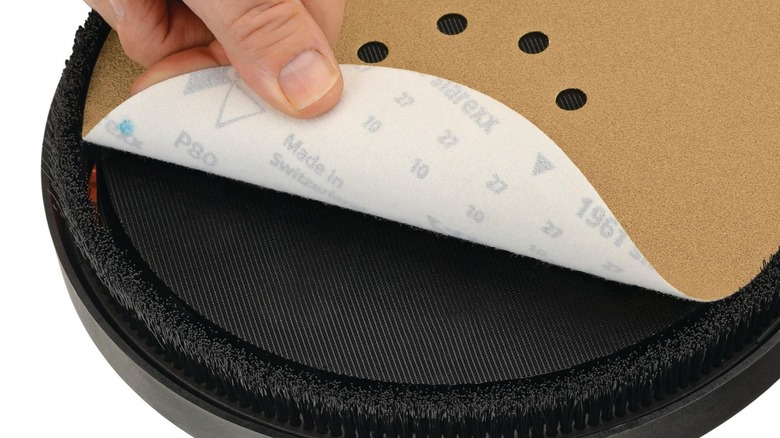
Numerous complaints all come back to the fact that both the corded DWE7800 and cordless DCE800B use a soft foam sanding pad that customers have found to be less than satisfactory. The first problem appears to be that this sanding pad sticks to the drywall when connected to a dust collector. "The foam Velcro pad keeps getting suctioned to the wall and pops off," one reviewer stated on the Home Depot website. "To put the foam back on it takes an act of Congress. There's no locking mechanism to stop the washer and bolt from spinning, and the [bolt] is on there super tight."
The second complaint frequently levied against the pad is that it is a solid surface that doesn't have holes in it for dust collection. "Bought this to make sanding faster and easier," someone wrote on the DeWalt product page. "Well it does that but the dust is everywhere." The third problem that's frequently repeated with this design seems to be a result of the other two. Several users claimed that the soft hook-and-loop pad doesn't do a very good job holding onto the sanding disks. "The sanding pad keeps flying off while I use it. Horrible design," one user said. It should be noted that a firm pad with extraction holes is available. However, it must be purchased separately.
The pad screw is easily damaged
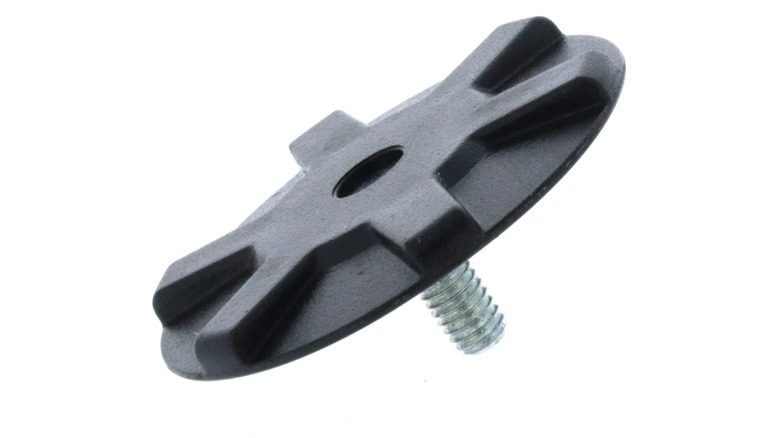
Another major issue with these sanders has to do with one of the most innocuous little parts in their construction. There is a 2-inch plastic headed washer and bolt combo that connects the sanding pad to the plate. This humble little fastener is essential for holding the pad to the tool, but there have been several user reports claiming that it's easily damaged. One user said the variable speed dial on the corded version broke shortly after they purchased it, but that they were able to continue using it at the set speed until it generated too much heat.
Others have simply stated that the screw and the associated plastic components can get beat up in the course of the tool's use. Part of the reason for this might come down to the way the head is designed. "There's no locking mechanism to stop the washer and bolt from spinning, and the bolt is on there super tight," a reviewer claimed on the Home Depot site.
What's more, some users have stated that an exact replacement part can be difficult to track down. Consumers say you need to get the exact part from DeWalt, as it isn't a standardized screw that you're likely to find at your local hardware store. This makes what should be a relatively simple repair difficult to follow through on. This can be particularly frustrating for users, as it means that the tool is all but useless until the repair is completed.