

These US States Have The Cheapest Gas Price In March 2026 (It's Still Not Great)
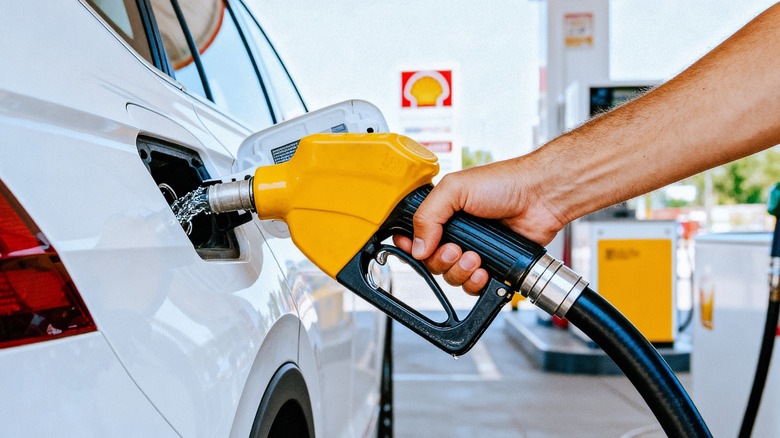
Gas prices are always a hot topic, but they've become especially headline-worthy throughout March 2026. They've swiftly risen just about everywhere in the United States, though not all states and cities have seen prices rise equally. While one U.S. city hit a whopping $8 per gallon, others have seen comparatively lower price jumps. There are a handful of states that stand out as the cheapest of the bunch at the time of publication, with their regular gas price averages just barely climbing above the $3 mark at this point. It's far from ideal, but it's as good as it gets for now.
As of this writing, the state with the cheapest gas in March 2026 is Kansas, per Forbes, with an average per-gallon cost of around $3.15. North Dakota isn't far behind at $3.20, with Oklahoma at $3.22 and Arkansas at $3.24. Rounding out the top five cheapest is Missouri at roughly $3.25. According to the AAA fuel price tracker, most of these states remain in the top five for other fuel rates, such as mid-grade, premium, and diesel. Even at the cheapest, though, you're unlikely to find diesel for under $4, no matter where you are.
Depending on where you live, it can be frustrating to see gas prices spike so extremely. Just know that it's not for no reason, as many factors can lead to gas prices varying between states.
Why gas is cheaper in some states than others
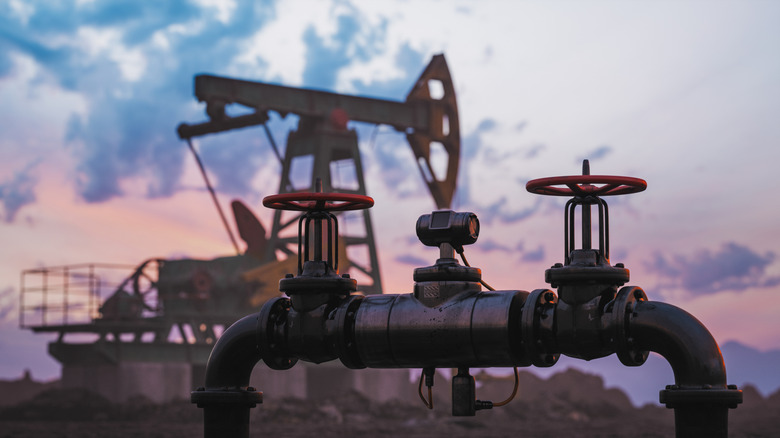
A lot of factors can influence fuel prices across the board. Presently, the Iran War is a major reason for these price increases, given Iran's status as one of the world's major crude oil suppliers. Thus, experts have warned that the continuation of the Iran War likely means further fluctuation. While that explains the rise in prices across the board, there are also domestic factors that lead to price discrepancies between states in the U.S.
A major part of these price differences is proximity to oil pipelines and refineries. States like Oklahoma, North Dakota, Arkansas, Kansas, and Missouri are close to major oil harvesting, processing, and delivery infrastructure, meaning easier access and lower prices as a result. State-specific gas tax rates and environmental initiatives and regulations can bump up costs, too. Population is also a factor. The states with the cheapest gas have much fewer inhabitants and less industry than states such as New York and California. More people mean more demand for fuel, resulting in higher prices.
Gas prices rise and fall all the time, but given the state of the world, it stands to reason they'll stay high for the time being. Hopefully, the entire U.S. and the world at large will see better rates soon — ideally, ones significantly better than those in the cheapest states right now.