

This Is The Only US State With A Ban On Self-Serving Gas Stations
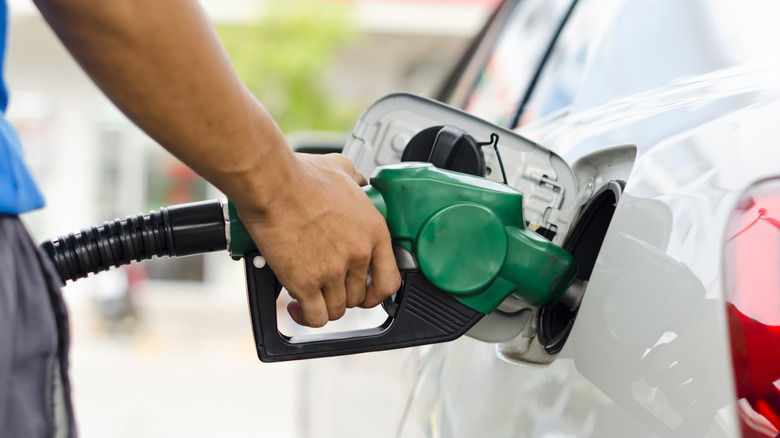
Old gas stations were way better than what we have now, thanks in part to full-service fuel. But those days, and the nostalgic 1950s images they conjure, are unfortunately a thing of the past. However, there is one major exception, as the state of New Jersey still has full-service gas pumps. In fact, it's illegal for anyone to pump their own gas in the state, and it's been that way for decades.
Full-service gas in New Jersey dates back to 1949, when the state passed the Retail Gasoline Dispensing Safety Act. This legislation primarily cited fire hazards as the reason for the change, which would outlaw customers from pumping their own gas. This meant that attendants at each station had to handle the process themselves. Lawmakers believed that employees were better suited to following proper safety procedures when fuel was dispensed. This meant ensuring engines were turned off and that no one was smoking, both of which would be difficult to monitor from a distance.
Additionally, state officials reasoned that attendants working the pumps would prevent customers from being exposed to potential health risks from gasoline, including fumes. The law also noted that self-service stations faced higher liability insurance premiums than full-service ones. This fact was used to reinforce the state's point that allowing customers to do the work wasn't worth the cost.
Challenges to New Jersey's full-service gas ban
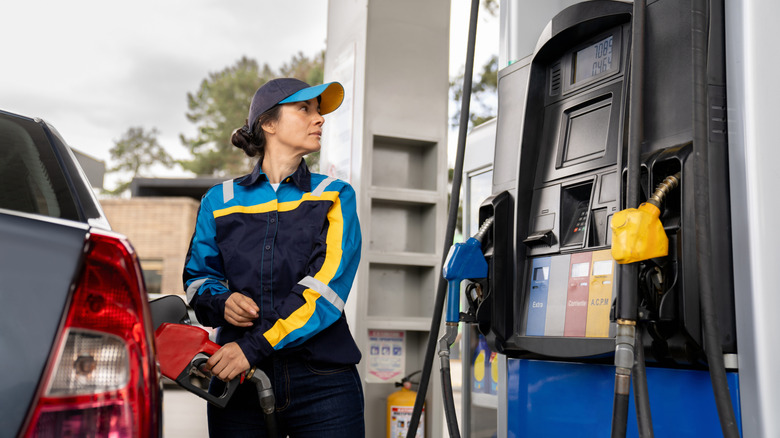
There was pushback when New Jersey's Retail Gasoline Dispensing Safety Act was first passed in 1949. A self-service station owner in Hackensack actually sued the state the following year, arguing that the new law was unreasonable. However, the New Jersey Supreme Court ruled that the regulation of gasoline was a matter of public safety. Thus, it fell under the state legislature's authority.
The act was challenged in the following years as well, with one official introducing new legislation to allow self-service gas in 1981. Those efforts continued on throughout the 1980s into the 2000s, but none of the proposals ever passed. Even a pilot program proposed by Governor Jon Corzine in 2006, allowing self-service at a limited number of stations, was shot down. Governor Chris Christie had no luck either, and later proposals offering both self-service and full-service options fell flat. In the end, the public and safety advocates were the ones who consistently pushed back on any such proposals.
Other U.S. states have contemplated similar full-service gas laws in the past, but none of them have moved forward with legislation. The only exception is Oregon, which had its own full-service gas law on the books for 72 years, before repealing it in 2023. Like New Jersey, Oregon had moments through the years when the law was challenged, but never overturned. However, public sentiment shifted, and self-service was eventually allowed.