

Elon Musk's Data Centers Keep Getting Louder And Residents Are Fed Up
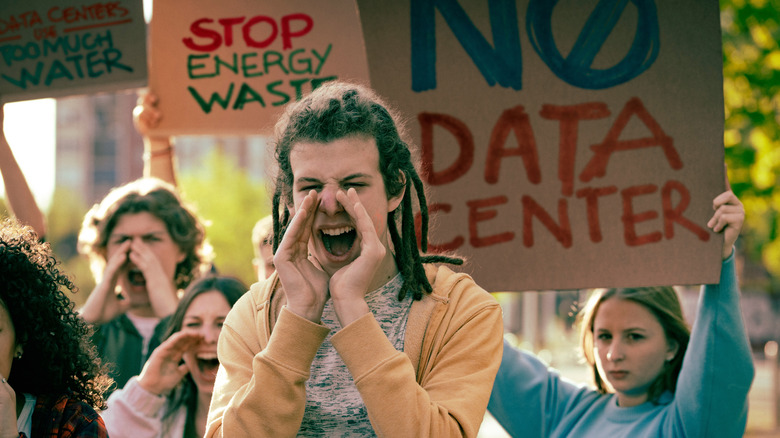
Thoughts of AI taking over the world have been keeping many people up at night, but few imagined AI would literally keep them awake with its noise. That's exactly what residents of Southaven, Mississippi, have been going through. The noise is originating from a bunch of methane gas turbines parked on a formerly quiet stretch of road. Eddie Gossett, a 76-year-old man who lives on that same road, told NBC News that he woke up one morning last summer to what felt like a jet engine had materialised outside his window. Things haven't gotten any better since.
The turbines showed up last year without any notice, followed by more in December. There are 27 in total now. Gas turbines are essentially jet engines repurposed to generate electricity. Tech companies have been deploying them as quick-and-dirty power sources because local power grids simply can't keep up with the energy requirements of AI data centers. In some cases, data centers are sitting empty because utilities haven't even approved their power supply yet.
The Southaven site turbines are supposed to be temporary, but 'temporary' is doing a lot of heavy lifting there — after all, it's been months. Gossett actually supports Musk's work with DOGE and called it "a service," but even he's had enough. He suggested that Musk actually come over and stay at his house for a week to get an idea of how bad the noise is.
Residents pack a hearing, and nobody speaks in xAI's favor
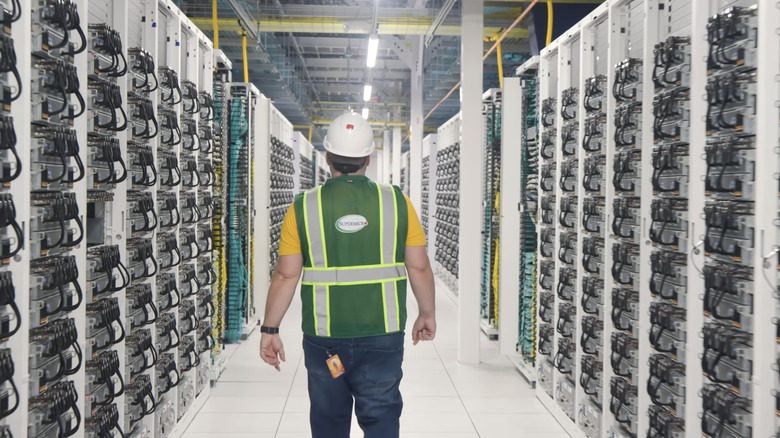
Of course, Gossett wasn't the only one with problems. xAI had actually requested to install 41 permanent turbines at the site. People were naturally opposed to the idea — and they're far from the only ones, as communities across America have been pushing back on new data centers. All those complaints led to a regulatory hearing on February 17, as the Memphis Commercial Appeal reported. Roughly 300 people showed up, all to weigh in on the request — and not a single attendee spoke in favor. Some even wore shirts that read "Not all money is good money."
Southaven's mayor, Darren Musselwhite, did acknowledge that the noise is a "legitimate concern" with a post on Facebook, but he added that some of the pushback is a politically motivated attack on Musk. For its part, xAI did spend $7 million on a sound wall to dampen things, according to Musselwhite. But residents aren't exactly impressed by it.
The legal pushback doesn't end there either. Those 27 turbines have apparently been running without proper permits, so that's turned into another legal battle. Before the hearing, on February 13, the Southern Environmental Law Centre and Earthjustice filed a 60-day notice of intent to sue xAI under the Clean Air Act on behalf of the NAACP. According to NBC, the organisation accused xAI of pulling the same move it did at its Colossus data centre across the state line in Memphis, Tennessee — firing up turbines long before it ever bothered getting air permits.
The noise might be the least of their worries

So the good news for the residents is that there's at least a lawsuit in play. The bad news is that the problems go well beyond sound. Electrek reports that xAI's own permit application shows the combined Memphis and Southaven facilities could release more than 6 million tonnes of greenhouse gases annually. That's alongside over 1,300 tonnes of health-damaging air pollutants. The Southern Environmental Law Centre has noted that these gas turbines can produce hazardous chemicals like formaldehyde. And that's just air pollution – AI data centers are also leaving locals nervous about water supply interference in several states.
The Colossus turbines in Memphis are already causing problems. In Boxtown, a predominantly Black neighborhood, residents have reported that fumes from the facility are making it difficult to breathe, as reported by Futurism. Meanwhile, the proposed turbines at Southaven are a similar problem in the making: A study commissioned by the Southern Environmental Law Centre said they could alone cause $30 to $44 million in annual health damages.