

5 Of The Worst Places To Store Your Makita Batteries
We may receive a commission on purchases made from links.
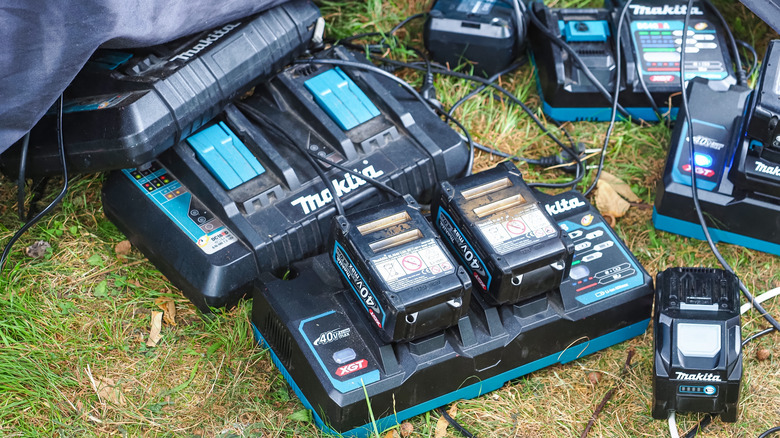
There is no doubting the convenience of cordless power tools. No longer is the tradesperson or DIYer restricted to the length of a power outlet or an extension cable — or, perhaps worse, finding themselves tangled in cables while balancing precariously on top of a step ladder. However, there are downsides to battery-powered tools. Before cordless tools, there was just the expense of the tool to consider; now there's the expense of both the tools and the batteries that power them. Today, most of us will have a collection of cordless tools and an even larger collection of batteries. And these batteries — as we all know — aren't cheap.
In the case of Makita, a pack of two 18-volt LXT lithium-ion 5.0Ah batteries can cost around $170 on Amazon. At this price, you'll want to make sure that your precious batteries continue to power your tools for as long as possible, which means avoiding the mistakes that can ruin them. But longevity isn't the only concern, as improper storage of your Makita batteries can also be dangerous. These devices are popular because they store a lot of energy in a compact space. That's fine when all that energy is controlled, but if you let it out of the bag in an uncontrolled manner, the story is different. A battery stored in the wrong environment can be prone to accelerated wear, and in some cases, it can even turn into a fire risk.
Don't leave Makita batteries in high temperatures
Storing your Makita batteries in a place where they're likely to be subjected to excess temperatures is bad for its longevity and potentially dangerous, too. Few places are harsher on a lithium-ion battery than the inside of a parked car on a hot day. While this might seem harmless, temperatures in parked vehicles can quickly rise far beyond that of the outside temperature. In summer, interior temperatures can easily exceed 120 degrees Fahrenheit and can reach much higher in some cases.
Lithium-ion batteries don't like this. Elevated temperatures speed up chemical reactions inside the cells, increasing internal resistance and causing the battery's lifespan to shorten considerably. Safety is also a concern as excessive heat increases the stress inside lithium-ion cells. In extreme cases, this can contribute to thermal runaway — an uncontrolled release of energy that could lead to fire. While modern Makita packs include protective circuitry, no battery benefits from being stored in excessive heat.
In short, anywhere where the battery is exposed to higher-than-normal temperatures should be avoided. Even leaving them on a workbench in direct sunlight can raise surface temperatures higher than many people realize. If longevity matters to you, make sure your batteries aren't left somewhere that gradually bakes the performance out of them — or worse.
Sending your Makita batteries out into the cold

While storing your Makita batteries in excess heat is definitely off the cards, the same rule applies when going to the other extreme. Letting your batteries get too cold is a common mistake that almost everyone makes, and it's no different with Makita's. From a power perspective, cold temperatures slow the chemical reactions within a battery, which is why performance often drops when working with Makita tools in cooler temperatures. In most cases, the performance drop will be temporary and will improve with use.
However, prolonged storage in sub-freezing conditions also carries additional risks. An issue known as lithium plating happens when cold conditions slow the diffusion of lithium inside a battery's anode. In essence, this creates a "traffic jam" of ions that gather inside the battery and start piling up on the anode's surface faster than they can move inward. Over time, this can form unwanted metallic lithium, causing the battery to degrade more quickly over time.
While this is something that occurs during discharge, storing your Makita battery in low temperatures can exacerbate the issue. Because a battery that sits in low temperatures will often start its next charge or discharge cycle with slowed lithium movement, this can cause the aforementioned traffic jam to occur, which might accelerate the onset of lithium plating. An unheated shed or garage might seem like a harmless enough place to store your Makita batteries. However, if the temperature regularly dips below freezing, then your precious batteries certainly won't appreciate it.
Tossing your Makita batteries loose in a toolbox or drawer
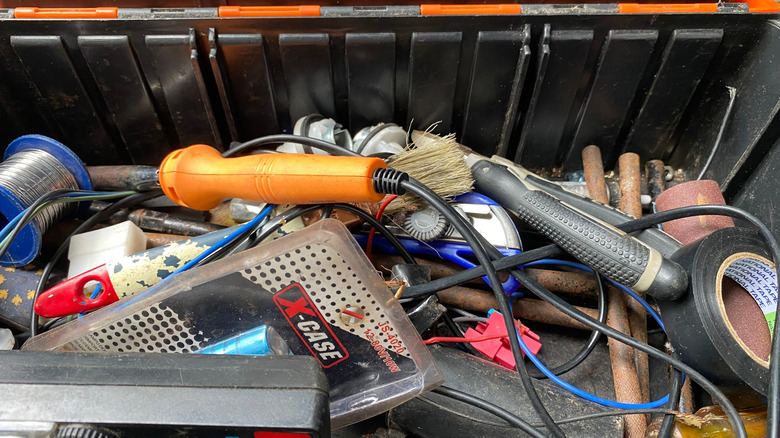
It's been a long and tiring day, and now that the battery's given up the ghost, you decide to do the same and toss it into your toolbox. This is a situation that many of us are likely familiar with, and the toolbox does seem like a natural home for a battery. However, unlike a dedicated case or storage rack, hidden dangers lurk within the confines of toolboxes that make them far from ideal roommates for lithium-ion batteries. After all, they're generally filled with loose metal objects, dust, and general debris, all of which can degrade or damage your battery.
Makita batteries are built with resilient housings and are designed to survive the rigors of the workplace, but they aren't indestructible. Repeated knocks can damage casings over time, and conductive debris or stray screws can potentially bridge exposed contacts. Even if that worst-case scenario never happens, grime and corrosion on the terminals can increase resistance and affect performance.
There's also that old adage, "out of sight, out of mind," to consider. A pack that's run flat and then left untouched for weeks or months will be stored below its optimum storage voltage, which increases the risk of permanent capacity loss. This is one reason why care should always be taken with Makita battery charging cycles. A toolbox may seem like a convenient storage place, but it isn't ideal for Makita batteries even if you don't forget about them.
Keeping your Makita batteries in damp or humid places
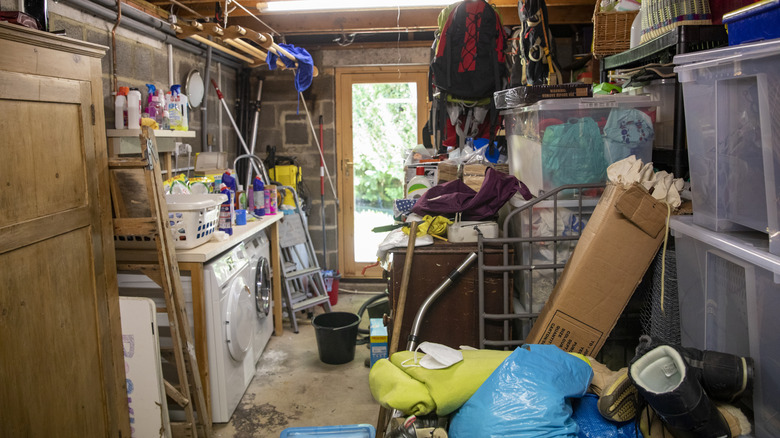
Basement shelves or outdoor storage spaces are other places that — at first glance — might seem like a natural place to store your Makita batteries. However, they can also get very humid, and moisture isn't exactly a good friend of electricity. Even if your battery never comes into direct contact with water, consistently damp or humid conditions can cause long-term problems.
All lithium-ion batteries rely on clean, low-resistance electrical contacts to work efficiently. In high humidity or damp conditions, metal terminals can corrode. This may not be immediately apparent, but over time, it can increase resistance at the contact points, which can lead to degraded or unreliable performance. On top of the performance downside of corrosion, it can also be dangerous, as higher resistance causes heat to build up. That, in turn, is another source of thermal runaway.
There's also the issue of condensation. Moving batteries from cold outdoor storage to warm indoor environments can cause moisture to form on or around the pack. On top of potentially causing corrosion, this can also encourage the growth of dendrites within the cells. Dendrites are minute growths that can damage the interior of the cell and cause it to short-circuit. A dry, climate-stable environment is the best option for battery storage. In other words, always store it in a cool, dry place. Just make sure it's not too cool, as mentioned previously.
Store away from combustible liquids and materials

We have now narrowed the storage choices for Makita batteries down to a temperate, clean, and debris-free environment. But there's one more thing you should consider: what to avoid storing alongside your batteries. Combustible materials and lithium-ion batteries are not a perfect match, and storing the two items in close proximity should be avoided.
Lithium-ion batteries are generally safe when looked after and stored correctly, but they do store an awful lot of energy. It's unlikely that your Makita battery will spontaneously combust, but the potential for it to happen exists, no matter how slight. The risk of this is heightened if the stored battery is damaged or overcharged, and in extreme cases, the battery can ignite even when it's not being used.
Again, the chances of this happening are incredibly slight, especially with a quality brand like Makita. Even so, "very slight" doesn't mean non-existent, and there's no point in heightening the risk by storing your batteries on shelves stacked with paint cans, solvents, and gasoline cans. This doesn't mean that your Makita batteries need industrial-grade storage solutions; it simply means avoiding the worst-case combinations. A clean, dry shelf separated from fuels and chemicals is a far better choice than a crowded cabinet overflowing with paint thinner and shop rags.
How we chose these storage mistakes
The locations highlighted in this article were based on widely-accepted lithium-ion battery handling guidance, manufacturer recommendations, and established principles surrounding temperature, humidity, and electrical safety. While Makita designs its battery packs with built-in circuitry protection, no lithium-ion battery is immune to the long-term effects of environmental stress. For selecting the worst storage environments and mistakes, we considered how a battery might be affected by extreme temperatures, physical damage risks, prolonged high humidity, charge-state neglect, and proximity to combustible materials.
Each of the storage environments discussed introduces one or more of these factors, either accelerating chemical degradation within the cells or increasing the risk and consequences of a rare battery failure. They're also commonly accessed by users of Makita batteries and the tools that are powered by them. The goal was to identify realistic, everyday storage scenarios that could reduce the lifespan of your Makita battery or increase the risk of a potentially catastrophic battery failure.