

Americans Are Quietly Installing DIY Solar To Fight Skyrocketing Energy Bills
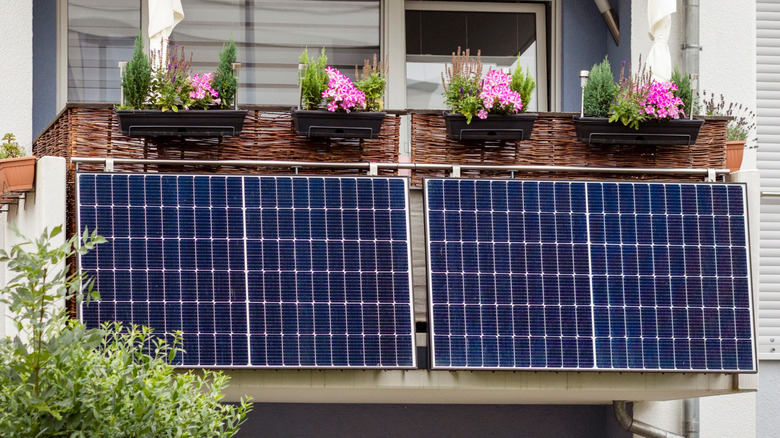
Homeowners and renters alike have seen utility costs increase in the mid-2020s, directly impacting their monthly budgets. This is due to a range of factors, from some providers having virtual monopolies in specific areas to attempts to offset the costs of power-hungry AI data centers. Even common mistakes can run up utility costs. To that end, some have turned to homemade solar setups to generate their own energy and save money — all without letting their utility providers know, avoiding potentially costly connection fees on their already rising bills.
These small, relatively simple setups are known as balcony or plug-in solar: two to four panels that can be placed in an outdoor area, like a balcony, and powered via a wall outlet to harvest solar energy. These setups are easy to hook up, much simpler than a full-on solar roof installation, and save money on utility bills — alongside the usual environmental benefits of solar panels.
Reports by outlets such as Canary Media, The Washington Post, and CNN indicate that savings can range from around $100 per year to $35 to $50 per month. Exact numbers depend on elements like location, existing utility rates, and the size and strength of the solar setup. While DIY solar does seem like a good idea, there's also the legal side of it to be aware of. Unfortunately, laws across the United States are a bit hazy on the matter, but that could change soon.
The legality of at-home solar

Plug-in solar is not new: Germany, for example, has anywhere between 1.5 and 4 million installed systems as of 2025, according to a HTW Berlin report. In the U.S., however, there's some legal ambiguity surrounding these energy systems, possibly contributing to their relatively slow uptake. As of 2026, there's little regulation surrounding the panels and ancillary items needed to make these systems work. As mentioned, utility companies also often impose fees for customers to set up and use them. However, some states are taking steps to empower those who want to give solar a shot.
At the time of publication, the only state with solid DIY solar laws on the books is Utah. In 2025, the state passed House Bill 340, or the Solar Power Amendments bill, which approves and encourages the use of small solar setups in residential settings. These devices and their owners are exempt from needing approval and from utility provider fees. While many states haven't even introduced potential legislation on this front, others, such as New York and California, have taken steps to make balcony solar legal and offer protections to those hoping to equip their homes with it.
The plug-in solar ecosystem

Depending on size, plug-in solar setups can cost between a few hundred and over $1,000, offering between 200 and 800 watts of power. This means that users should have no problem running lights, device chargers, radios, and fans, amongst others, from their balcony solar setups. Some may even be able to run appliances like refrigerators.
As of 2026, there are multiple companies, like Anker Solix and Craftstrom, that produce these solar kits, and numerous nonprofits that advocate for and aid in solar adoption. One of the biggest is Bright Saver, which is dedicated to expanding plug-in solar to help families and individuals plagued by high energy bills while protecting the environment. Both it and other organizations like Solar United Neighbors help people access the solar technology they want without straining them financially.
While customer complaints indicate that some solar companies are worth avoiding, there are many more vying for the business of homeowners and renters. Given advancing legislation supporting balcony solar and increasing energy costs spurring its adoption, it stands to reason that some of these companies' offerings will soon become more popular with Americans.