

What Gold-Plated HDMI Cables Actually Do – And What They Don't
We may receive a commission on purchases made from links.
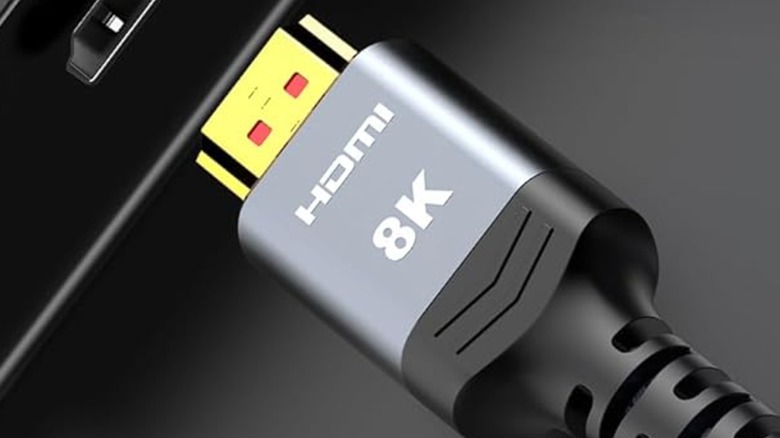
Most might not realize that there's a lot of nuance to selecting an HDMI cable. There are different types, whether you're hooking up a TV or monitor or connecting a cool HDMI gadget most don't know about, and they can be comprised of different materials. For example, there's some buzz (and misconceptions) surrounding gold HDMI cables, which are those that feature gold plating on their connectors. Gold plating makes the connectors less susceptible to corrosion and provides them increased oxidation resistance, meaning you're theoretically likely to get more use time from them as they're less prone to these forms of damage.
As far as benefits, this is pretty much it. The fact of the matter is, besides some minor durability increase on the connectors themselves, gold-plated HDMI cables don't have much more to offer the majority of users. Contrary to popular belief, they don't provide clearer or smoother picture, sound isn't improved, and data transfer isn't more efficient. Their connectors are just a bit more durable.
All of that is to say that gold plating on HDMI cables isn't essential for most users. In fact, the presence of other materials should be more important for the more tangible improvements they bring.
Other materials in HDMI cables that are more notable
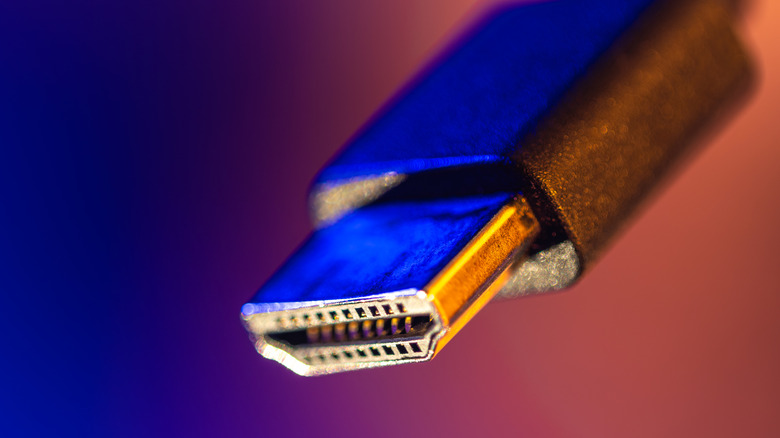
While gold-plated HDMI cables don't offer much improvement for the casual user, other materials can offer clearer benefits. First and foremost are the advantages of complete copper wires versus those of hybrid optical and copper wires. If you only need a short HDMI cable, a completely copper HDMI cable will serve you fine — so long as it doesn't exceed 7.5 meters, where signal degradation starts to become an issue. For sustained performance across longer distances, Active Optical Cable, or AOC, HDMI cords are the way to go. Optical cables (which still have copper at either end) also means higher bandwidth capabilities and less susceptibility to electronic interference.
Additionally, the outer layer of your HDMI and what it's made of should be taken into account. After all, this layer is the first line of defense against all kinds of bumps, bends, and general wear and tear, so it should be of reasonable quality for your needs. For instance, there are those wrapped in PVC, which are generally more flexible and are easier to come by, though more prone to damage. Alternatively, one could opt for braided HDMI cables, which feature a braided jacket made from materials like nylon that are durable and less prone to tangling at the expense of flexibility.