

Does A Torpedo Have To Hit A Ship To Sink It?
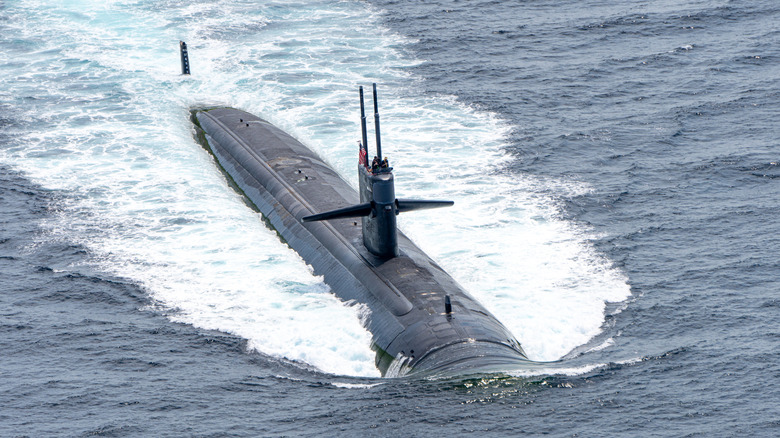
Torpedoes have been a part of naval combat since the 16th century. The idea is pretty simple; a ship, aircraft, or submarine launches an explosive-filled projectile that travels underwater to the target where it then detonates and sinks the ship.
The United States Navy notes about torpedo development during the opening years of World War I: "Before the modifications, torpedoes would have to strike a direct hit to explode, but the improved detonators could explode from any direction or even a glancing blow to a hull."
How a torpedo functions and does damage in the 20th and 21st centuries is more high-tech than lining up a shot and hoping it hits. Contrary to what seems evident on the surface (pun intended), a torpedo does not have to hit the target to do damage or sink a ship. In fact, aiming directly for a "hit" is not standard practice, as most modern torpedoes use a proximity fuze that allows the torpedo to detect a target.
Modern torpedos
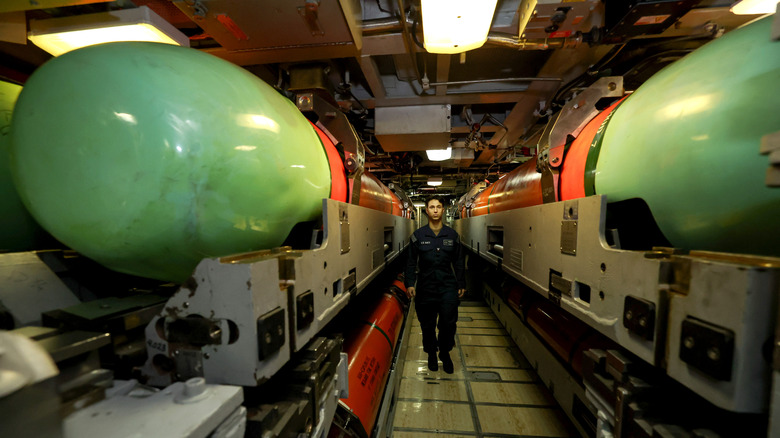
"Throwing" a torpedo and having it guide itself as opposed to manually aiming it has been in practice since the 1950s.
Currently, the Mk 48 Heavyweight Torpedo is the standard equipment torpedo of the U.S. Navy and is used by Virginia, Los Angeles, and Seawolf-classes of submarine. It uses a digital guidance system and sonar to seek out a target. The warhead is comprised of 650 pounds of high explosives. The torpedo itself weighs 3,744 pounds. The United Kingdom Royal Navy uses the "Spearfish" that uses a wire guidance system. It can seek out targets and even turn around for another "shot" at the ship if it misses the first time.
Aircraft, like the Boeing P-8 Poseidon, use a smaller but no less advanced Mk 54 Lightweight torpedo with a 100-pound warhead. It's developed by Raytheon and can also be launched by helicopters and ships. The Mk 54 is capable of tracking and identifying targets and avoiding attempts to counter it.