

Unmanned 'Speed Jeep' Dishes Out Tickets With No Officer Behind The Wheel
Citizens and law enforcement officials alike would probably be quick to tell you that speeding drivers rank among the most dangerous issues they face on the roadways every day. While the onus of obeying speed limits on the road ultimately rests on the person in the driver's seat, authorities are expected to help control excessive speeding by catching those drivers in the act and issuing citations as punishment.
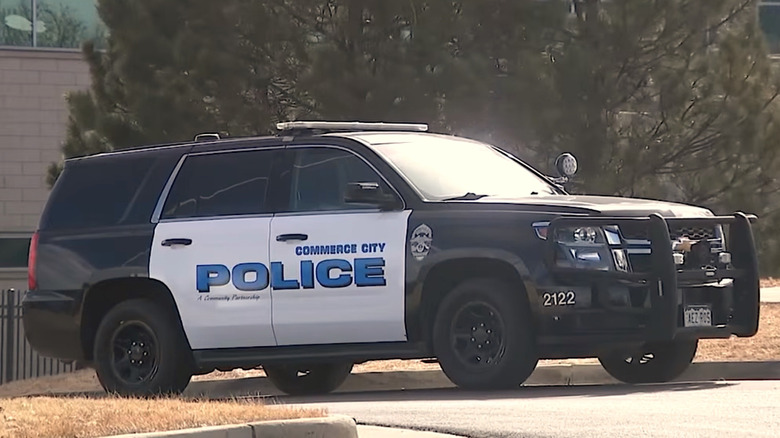
That job is particularly tricky, as the number of officers on patrol is typically outnumbered greatly by the number of citizens at the wheel of their own vehicles. Some municipalities have, however, sought to tilt the situation in their favor by setting up speed traps. Similarly, traffic light cameras have become regular fixtures in helping monitor and control traffic patterns. Some local forces are taking matters a step further by using so-called "Speed Jeeps," which are stationary, unmanned cruisers equipped with cameras to catch and ticket speeding drivers.
Commerce City, Colorado, has started rolling out such vehicles in March, with authorities in the Denver suburb looking to use them to help enforce speed limits in school zones, residential areas, and work zones. It remains to be seen how effective the move will be, as speed cameras have sometimes caused controversy in their alleged overreach. Still, according to Denver 7 News, some Commerce City residents are fully behind the use of Speed Jeeps if they help make their streets safer.
Here's how Speed Jeeps actually work
Speed cameras are, of course, not legal in every city and state in the U.S. However, areas such as Montgomery County, Maryland, have effectively used them to control speeding in areas of concern. Commerce City has now joined the list of municipalities hoping to use tech to increase community safety, with its Speed Jeeps rotating between locations and adding mobility to the mix.
The fact that Speed Jeeps are designed to look like real police cruisers may make them even more effective than just their cameras, as few things will get a speeder to tap the brakes faster than the sight of a cop. The unmanned vehicles are, obviously, not designed to chase after speeders as a normal officer might. Instead, their cameras are activated when a speeding vehicle enters the range of its on-board radar gun. Once activated, the camera snaps a shot of the vehicle's front end and driver. A separate camera then takes a shot of the rear license plate once the speeding car passes.
From there, local law enforcement will collect additional information about the alleged infraction and then decide whether to issue a citation. If deemed necessary, the citation will be mailed to the vehicle's registered address. Upon receipt, the recipient will have a chance to either pay the fine or challenge the ruling in court.