

Nearly 100% Of New York Gas Stations Failed This Critical Test
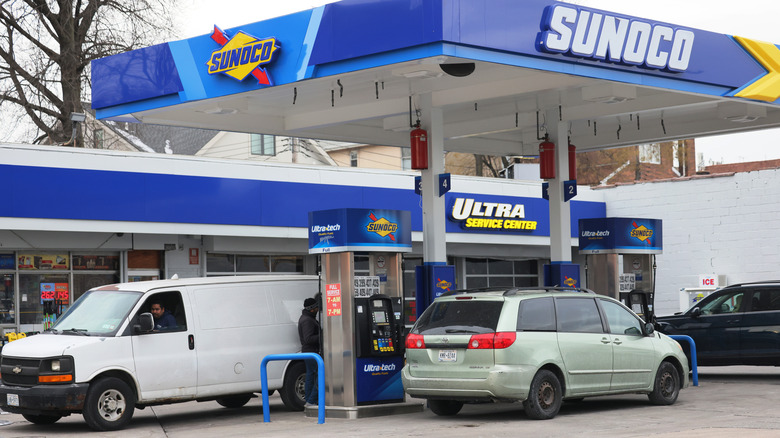
The city that never sleeps also appears to be the city that rarely sells consumers properly labeled gasoline. According to the NYCity News Service, inspectors from New York City's Department of Consumer and Worker Protection (DCWP) found that of the 729 gas stations inspected between 2023 and 2025, 702 failed in terms of octane, mid-grade gas blends, or signage. If you're mathematically inclined, that's a whopping 96% failure rate. Clearly, gas stations are having a hard time making the grade in NYC.
Leading the list of infractions was failed octane sample testing (replacing premium fuel with regular blends), which led to 1,135 gas pumps getting shut off until the station fixed the problem. It wasn't the only issue, though; they also found that stations were selling bad diesel fuel (which can be differentiated just by looking at it) and displaying inaccurate prices. All of which the DCWP considers predatory business practices and is desperately working to eradicate. In a statement to NYCity News Service, the DCWP said that citizens need to be able to trust the companies they're spending their hard-earned money at, adding, "Conducting honest business isn't a suggestion — it's the law."
Stations are inspected annually by investigators who can show up any time they're open. The owners must then provide paperwork that details and tracks how many gallons of gasoline (and the grade) each truck delivered, who delivered the most recent supply of fuel, the levels of each underground tank (before and after delivery), and the date of delivery, among other things. Digital monitoring systems linked to the large underground tanks are also inspected and used for comparison to the paperwork.
Playing games with octane levels is no joke
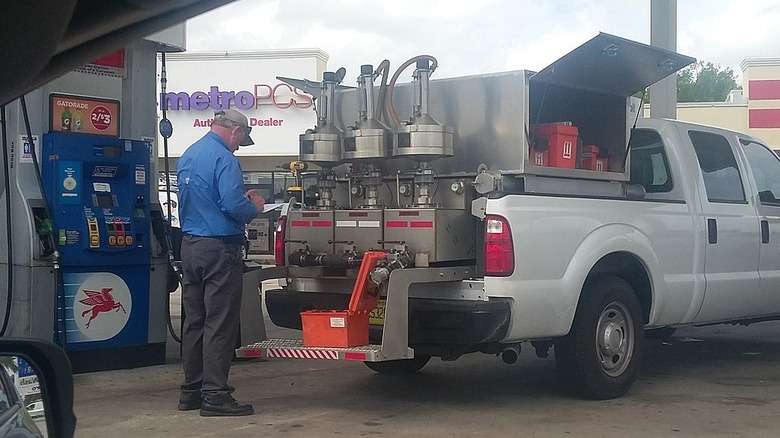
Inspectors drive around in trucks equipped with a testing lab built directly into the bed (similar to the one used by the Florida Department of Agriculture in the above photo). They also carry cans, containers, and a variety of weights and measures. After pumping five gallons of gas into one of their containers, they test it and then compare it to what's shown on the pump. If the numbers don't jive, the pump is turned off immediately until the problem is fixed.
With premium gas costing far more than regular gasoline, making sure each pump is labeled properly and dispensing the right grade with the appropriate octane level is important. To check this, inspectors fill a can with slightly less than one gallon pulled from each pump. A barcode is slapped on each can, which is then retrieved by a state-approved testing lab in New Jersey every few weeks. Once there, the octane is tested in the blind to determine whether it's properly labeled. If it doesn't match the octane level displayed, that pump is shut off until the offending station resolves the issue. Additionally, the DCWP can issue fines for violating consumer protection laws.
Master mechanic and CUNY adjunct professor, Mike Porcelli, told NYCity News Service that putting the wrong gas in your car can, at the very least, "cause premature wear," but could potentially "blow the engine apart." According to Road & Track, using a lower-grade fuel in an engine that needs a higher octane can certainly cause more knocking and, over time, lead to catastrophic metallurgical failure, increasing the risk of detonation.