

Mazda's New 2026 CX-5 Gains Space And Tech, But I Miss The Zoom-Zoom
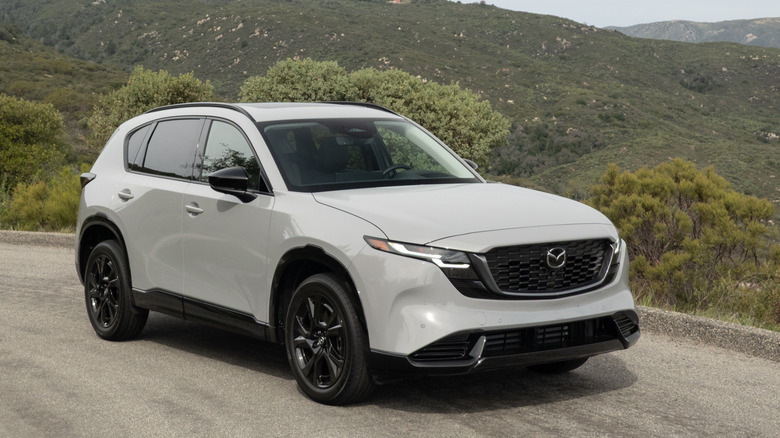
Back in 2011, Mazda debuted the CX-5 as a new crossover for model year 2012. A swoopy and sporty new design language made for a solid entry into the burgeoning segment, and the CX-5 also undoubtedly offered superior driving dynamics compared to the majority of competitors. A second generation then followed for 2016, and since then, the CX-5's sales figures total over 5 million units globally and 1.7 million here in the United States alone.
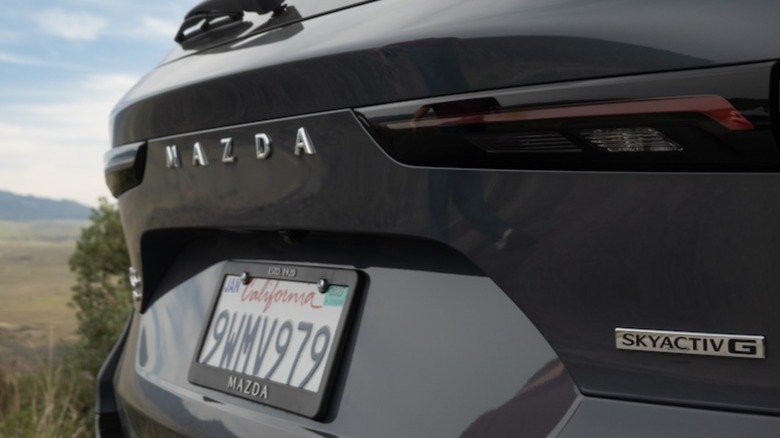 Michael Teo Van Runkle/SlashGear
Now, a new generation arrives for model year 2026, designed purposefully to cater to the American market even better. Consumers apparently want bigger and more tech, and yet despite also improving the interior's premium amenities, Mazda still kept the CX-5's starting sticker below the critical $30,000 mark. To show off the CX-5's next evolution, Mazda held a media drive program in and around San Diego, prime territory for an increasingly family focused crossover.
Bigger, longer, better
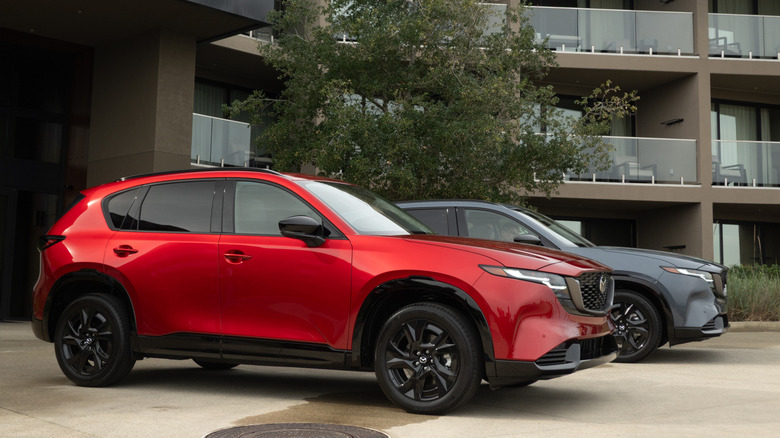
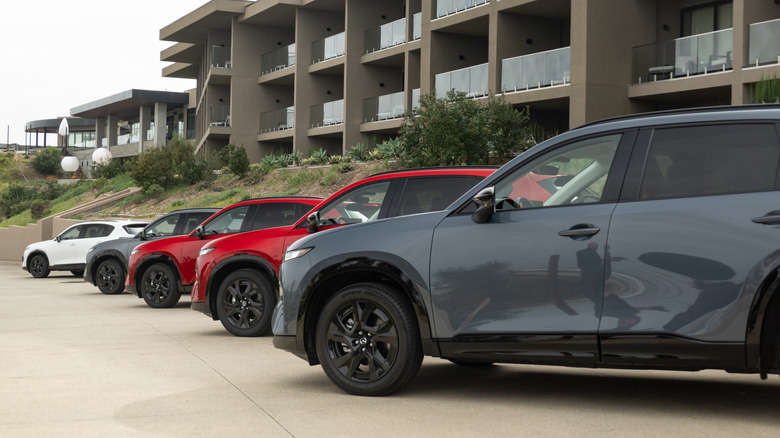
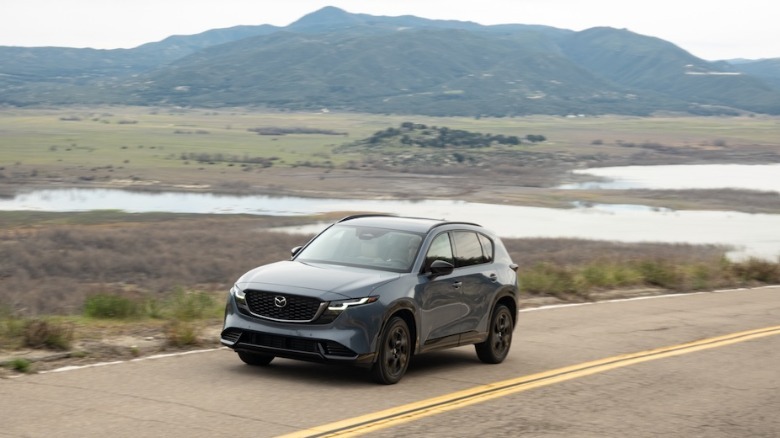
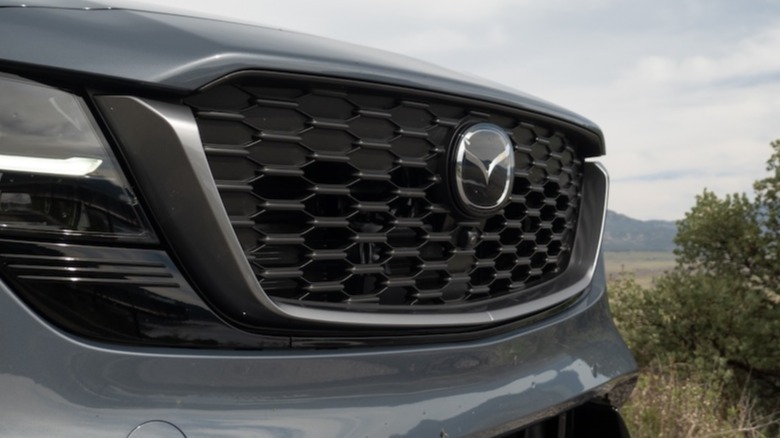
The third-gen design cleans up some of the swoopier exterior lines in the name of more presence, while also dropping some matte plastic cladding in favor of shiny piano black. To my eyes, Mazda drew on a healthy dose of the perfectly penned CX-50, with a bit more Honda HR-V thrown in for good measure—and I mean that as a compliment. But even a brief glance at the new profile reveals a much larger car, stretched by 4.5 inches between the front and rear axles while also measuring a half-inch taller and a bit wider, as well.
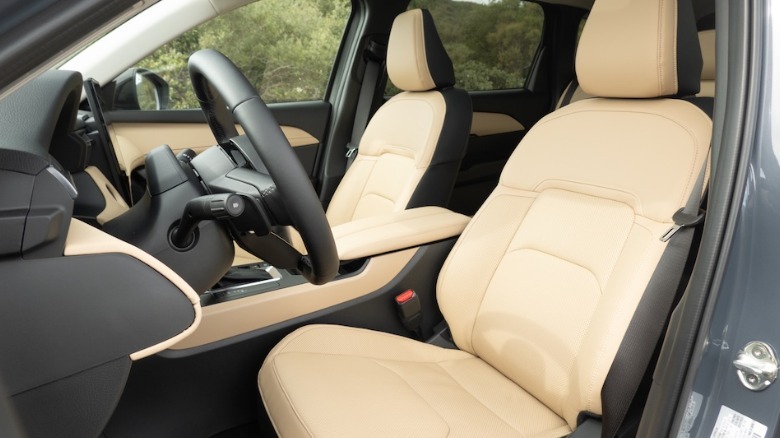 Michael Teo Van Runkle/SlashGear
That longer cabin specifically optimizes interior volume, especially in the rear seat and cargo areas. Second-row passengers can expect 2.3 more inches of knee room, and the cargo deck measures 1.8 inches longer. With the 40/20/40 back seats folded down almost perfectly flat, a five-foot-ten surfboard (admittedly a shortboard) fit without needed to turn diagonally.
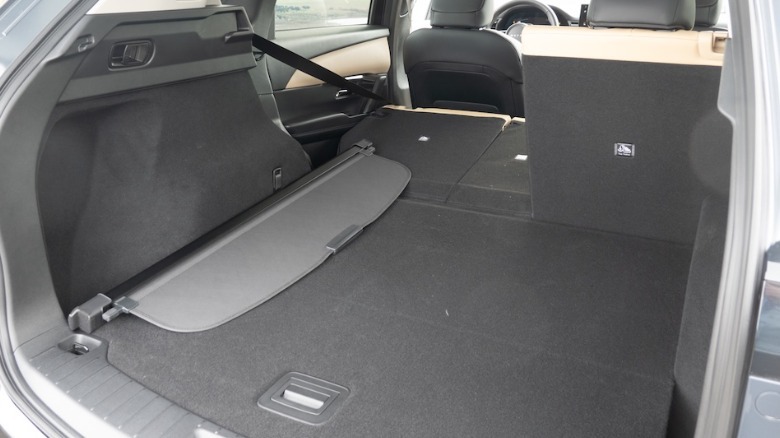 Michael Teo Van Runkle/SlashGear
The backseats also feature more car seat mounting bracket options, and a lower flat sill in the entry opening to make climbing in and out easier for children.
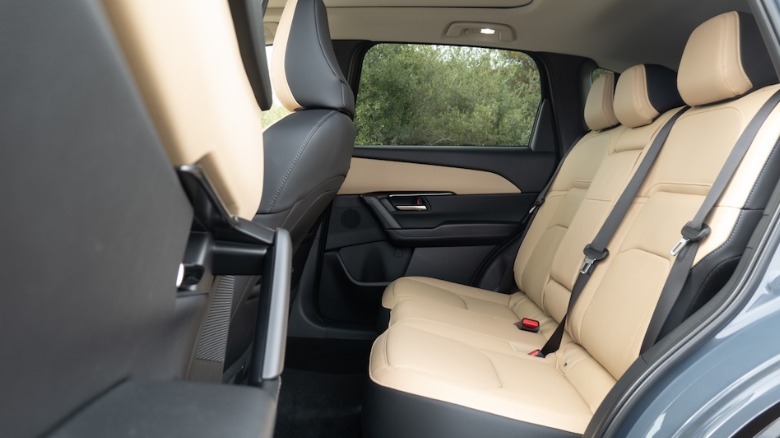 Michael Teo Van Runkle/SlashGear
The rear doors open nice and wide, while the sill also makes standing tall to deal with roof accessories more accessible—and the CX-5 can come with real roof rails ready for crossbars, a rack, or a cargo box.
Welcome to 2026
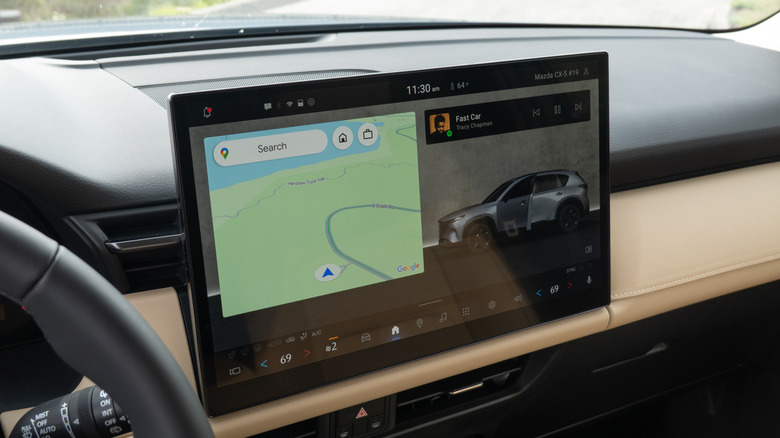
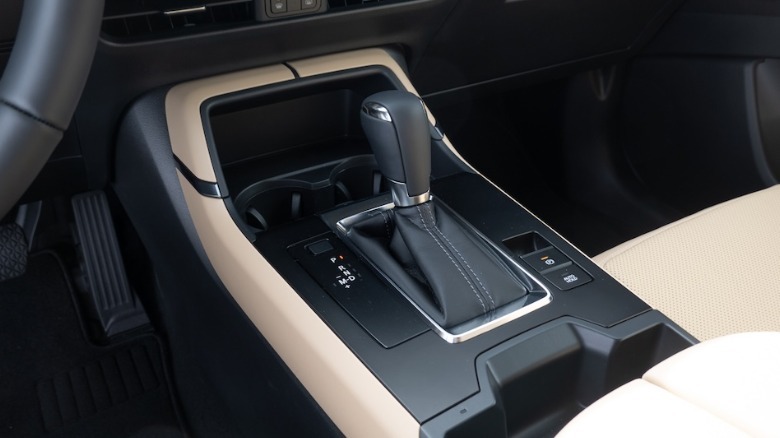
More importantly, the new CX-5 steps into the modern era with a big dash touchscreen, while relegating the rotary selector knob on the center console to the past. Most trim levels feature a 12.9-inch screen, and the Premium Plus specs a 15.6-incher. Google Built-In powers the displays, which means native Google Maps and Google Assistance voice controls, but also available CarPlay and Android Auto.
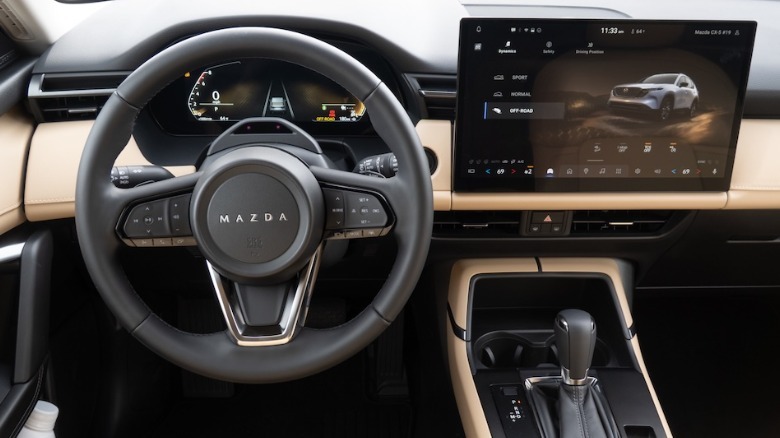 Michael Teo Van Runkle/SlashGear
The tech suite also includes more ADAS for safety's sake. And that theme continues with more high-tensile steel around the passenger compartment, 10 airbags including side impact deployment for the backseats, and smart seatbelt pre-tensioners that can limit forces on the chest in the case of an accident.
 Michael Teo Van Runkle/SlashGear
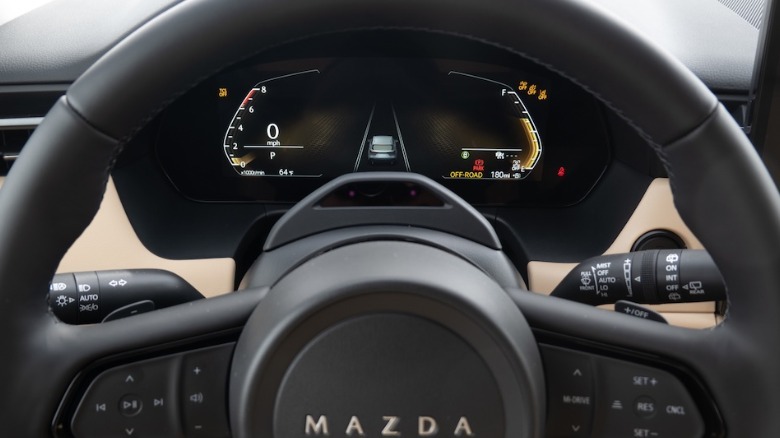
Strangely, though, the CX-5 still features no hands-free driving yet—a questionable decision that a rep waved away by saying, "Mazda is a hands-on company that believes in the joy of driving." Even as a driver monitoring camera keeps track of drowsiness and attention, plus the car will cooperatively steer for lane changes with adaptive cruise and lane-keep assist activated.
Comparisons with the competitors
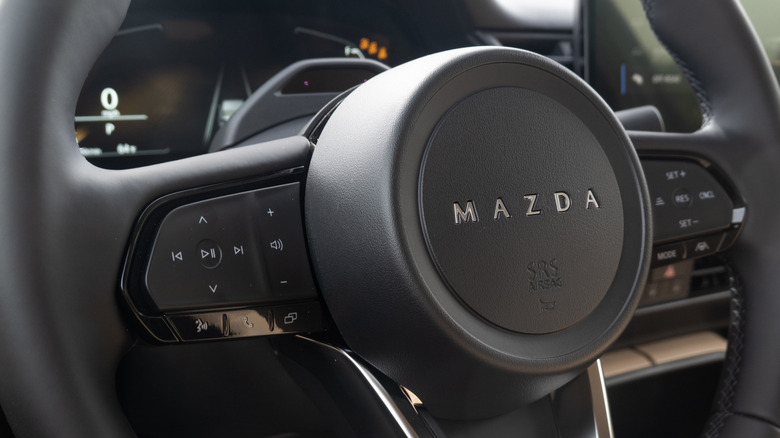
Another questionable choice: the touchscreen, undoubtedly late to the party, now arrives in the middle of a growing trend for other automakers to reintroduce physical switchgear back onto the dash. But the CX-5's climate controls, infotainment volume, and drive mode selection all require navigating sliders on the screen, menus in the UI, or steering wheel buttons alone. Those buttons feel functional, if not particularly premium, and in fairness the tech works crisply and intuitively. Which helps eliminate at least some of the driver distraction factor while fiddling around.
 Michael Teo Van Runkle/SlashGear
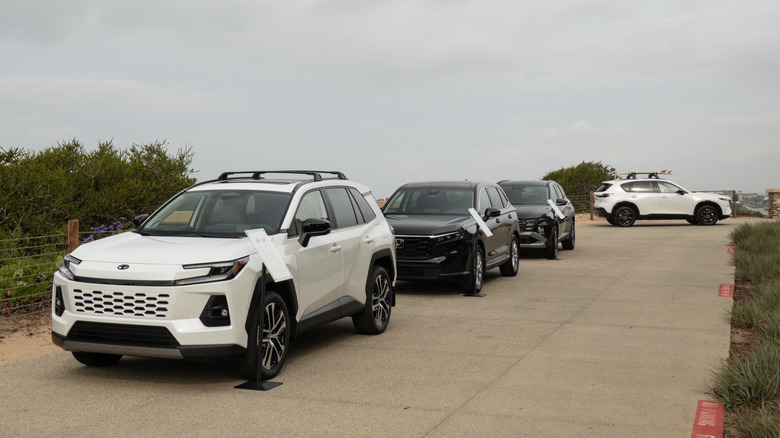
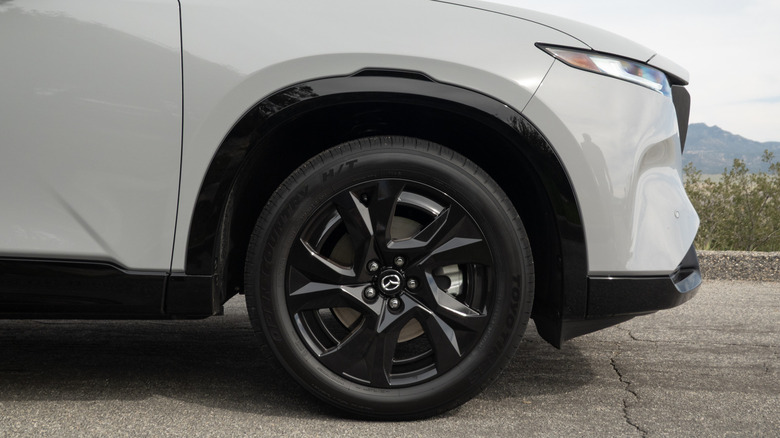
On hand in San Diego, Mazda also brought out a bunch of direct competitors, a move I always appreciate. Why stay coy, as so many other OEMs do, rather than directly highlighting the features that potential buyers will inevitably take into consideration while shopping? For example, compared to a RAV4 Limited AWD, the CX-5 Premium Plus costs almost $5,000 less but comes with a bigger touchscreen, bigger wheels, paddle shifters, and more speakers for the sound system.
No hybrid at launch, though
Or a CX-5 Preferred versus the Honda CR-V EX AWD, again with about a $400 lower price in the Mazda's favor, but a larger screen, bigger wheels, and more speakers plus a power liftgate and heated steering wheel. Same holds for the Tucson SEL Premium AWD, where the Mazda's premium amenities—as probably expected—include memory seats, auto folding mirrors, and an active driving display system.
The tech all works well, but the CX-5 launches lacking one major technological factor that Toyota, Honda, and Hyundai all offer on their volume sellers: a hybrid powertrain. Other than the obvious fuel economy gains of a hybrid, Mazda desperately needs the additional torque from electrification to ramp up the CX-5's dynamics.
Softer and easier to drive, but not as sporty
The steering and suspension toe a fine line between easy to use and sporty. I genuinely went back and forth in my mind about whether the steering used hydraulic or electric assist—of course, the latter, but I quizzed an engineer after my drive who described lightening the effort with more assist at lower speeds, while removing rubber damping in the components to increase how communicative it all feels.
 Michael Teo Van Runkle/SlashGear
Mazda's G-Vectoring Control Plus system, which uses sensor data to play with power deliver, probably matters less for the new CX-5 than other models in the lineup. Namely because the new generation purposefully rides softer, with lower springs rates that instead rely more on shock dampers to absorb bumps and manage body roll. The resulting ride borders on wallowing, despite a curb weight that sticks below 4,000 pounds. But also because of the only available powertrain thus far, a non-turbo 2.5-liter inline four that puts out just 187 horsepower and 185 lb-ft of torque.
Sluggish acceleration from the non-turbo engine
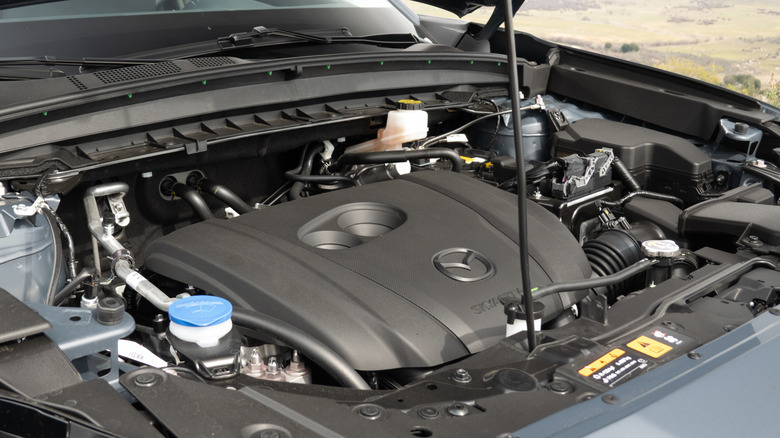
For those that care, that output results in a 0-60 time of 9.6 seconds; the engine might work in a Miata, maybe, but results in borderline hilarious sluggishness for a crossover, even a lightweight one. And the mill never sounds happy either, only coming into a bit of pep once the revs reach 4,000 to 5,000 RPM, straining the whole time. Even in Sport mode, which improves throttle response marginally and prompts the transmission to hold gears longer, the naturally-aspirated CX-5 struggles to get up and go.
I suspect that sticking with a six-speed automatic transmission somewhat hampers the engine's ability to put down power, since the additional forward gears and shorter ratios available in an eight-speed, for example, might increase wheel torque. Mazda uses an in-house transmission, rather than sourcing from a supplier like ZF or Aisin. And same will apply for the eventual hybrid, which reps claimed will definitely arrive next year: the in-house powertrain will mate to the same in-house six-speed though.
Prioritizing features and tech
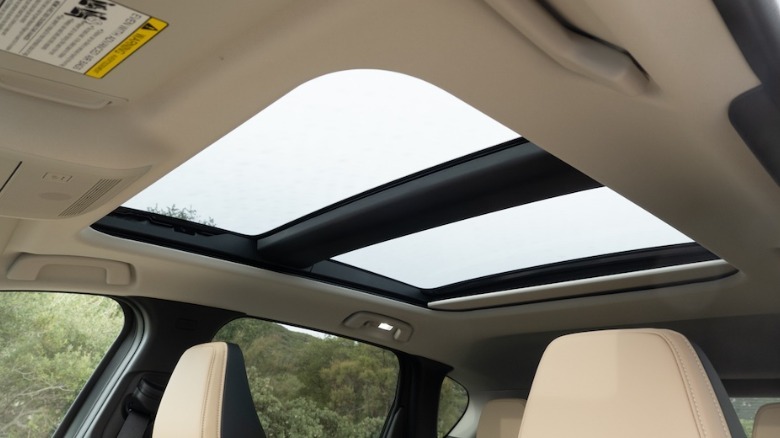
At least some hybrid grunt will help with acceleration, but fuel economy also comes into play. I started running low on gas after just a few hours of normal driving, interspersed with maybe 25 minutes where I pushed the powertrain hard (before realizing the futility of such an exercise). Turns out the gas tank holds just 15.3 gallons, so fuel economy ratings of 24, 30, and 26 MPG (for city, highway, and combined respectively) drain the CX-5 dry pretty quickly.
 Michael Teo Van Runkle/SlashGear
In the city or on the highway, the comfort and tech clearly took priority over this afterthought of a powertrain—begging the question of whether Mazda maybe needed to either hold off on launching the new generation with a hybrid, or at least stick with the previous gen's turbo engine. Or maybe selling this as the base powertrain will only nudge buyers up to the hybrid when it eventually arrives. Of course, any speculation about such schemings likely comes down to specs and pricing, which remain a mystery.
2026 Mazda CX-5 verdict
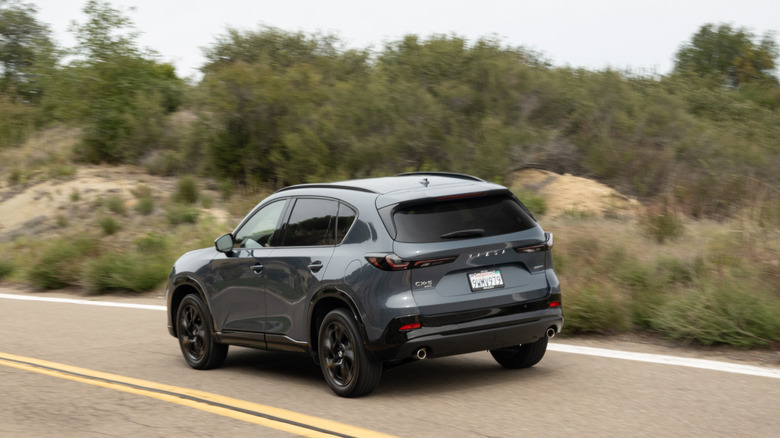
Regardless, the new CX-5 to my eyes looks much better than a RAV4, CR-V, or Tucson and the features now keep up with the competition. That probably matters as much as anything else, even if the driving dynamics thus far fall short of Mazda's previous standouts. I'd pick the Preferred package in the mid-$30,000 range for the roof rails, plus the heated seats and steering wheel, without the bigger touchscreen and additional ADAS features of my Premium Plus tester.
 Michael Teo Van Runkle/SlashGear
If not overly inflated in pricing terms, the larger footprint does bring up one more confusing aspect of this new generation: Mazda's own CX-50 that still looks better and drives better. Surely the new touchscreen will proliferate to other models, so even if the CX-50 offers slightly reduced cargo volume, will urban and family-oriented buyers still give up the aspirational adventure dreams? If so, those who do will likely be happy with almost everything about the new CX-5. Or more reasonably, will definitely be even happier when that hybrid option finally hits the market.