

Why 2022 Isn't The Best Model Year For Car Quality, According To JD Power
Assessing car quality and reliability for a specific model year is not always straightforward. In many cases, vehicles are carried over entirely from one model year to the next with no changes, making it difficult to determine whether and why one particular model year of a car or truck has more problems than the next, and whether those problems are significant enough to affect the average buyer.
However, certain model years have at times shown a clear tendency to have increased quality issues – not just across one model or brand but across the entire auto industry. And research by JD Power has highlighted the 2022 model year as having significantly more reported problems than average. In fact, the 2022 model year issues aren't just higher than surrounding years; they are higher than any single model year since 2009.
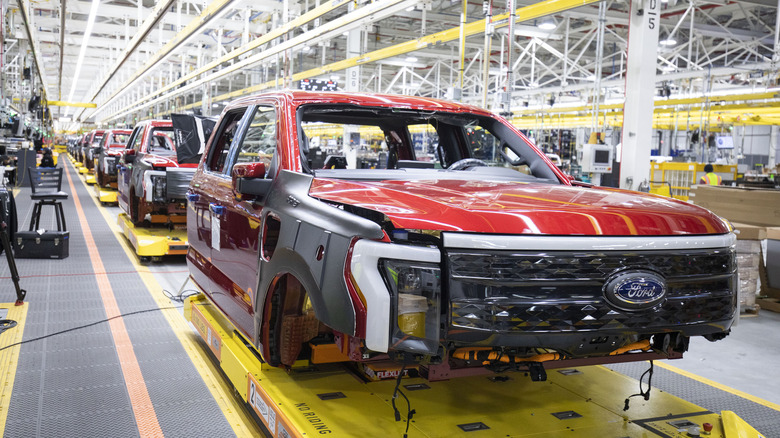
Unlike the individual model or brand rankings, where any number of unique causes could lead to issues, JD Power points out that this industry-wide result is almost certainly the result of widespread COVID-19 pandemic-era factory shutdowns, supply shortages, and production delays, during which the 2022 model year fell directly in the middle of. It shows that, although the industry has largely moved on from those turbulent years, the effects of the pandemic era continue to be felt in several ways.
A disruptive year for automakers
Fortunately, most of the day-to-day experiences of pandemic-era life that the world experienced in the early 2020s have faded into the rear-view mirror, but the JD Power study reminds us that the broader and longer-lasting economic and industrial impacts of COVID-19 persist, sometimes in ways that may not be obvious.
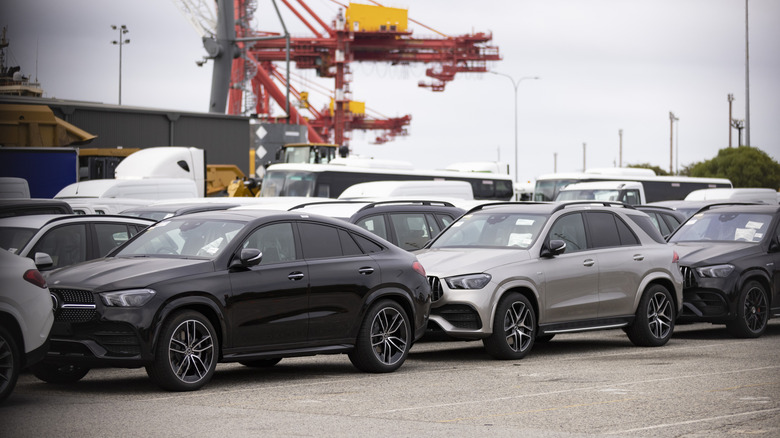
It may have been less than five years ago, but it can be easy to forget how much the pandemic affected global supply chains in 2021 and 2022, and how automakers were particularly hard hit by the widespread semiconductor shortages of those years. This caused both overall vehicle production and sales numbers in America to drop significantly.
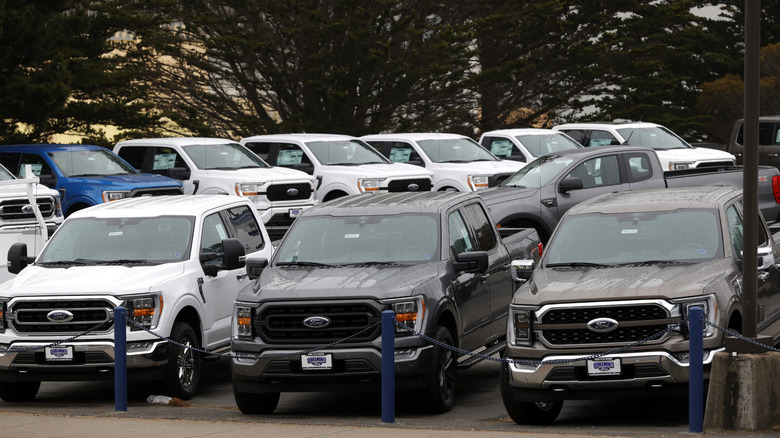
But despite those ongoing disruptions and uncertainty, both in the auto industry and across the economy as a whole, consumer demand for vehicles remained high in the early 2020s. This led to an out-of-whack demand and supply ratio, with factories rushing to deliver cars and dealers piling heavy markups on what little inventory they had to sell. JD Power concludes that both the widespread production disruptions and the rush to deliver vehicles to empty dealer lots are likely the biggest reasons that 2022-model-year vehicles have shown more problems than usual.
The lingering effects of 2022
The 2025 JD Power study points out that the higher number of problems with 2022 model-year vehicles is not an unforeseen phenomenon. Vehicles from 2022 also received lower-than-usual quality ratings in that year's JD Power Initial Quality study, and it's unsurprising that those issues have persisted as the cars have aged.
Alongside supply chain shortages, JD Power also highlights pandemic-era workforce disruptions as another likely contributor to issues with 2022 model-year vehicles. But if you happen to own a '22 vehicle and are concerned, this doesn't mean your engine is going to blow up, or your transmission is ready to fail. You can take some comfort in knowing that many of the reported issues concerned software and smartphone integration, which, though inconvenient, are not particularly serious for the vehicle itself. Interestingly, the data also shows that hybrid vehicles performed better overall than both electric and ICE-only vehicles for the '22 model year.
In most ways, the auto industry has moved past the problems that plagued it during the early 2020s, and today's supply of new cars is more or less back to normal, with discounts becoming commonplace again rather than the aggressive gouging and markups of 2021 and 2022. Yet, as the JD Power data shows, the lingering effects of those years when the auto industry was turned upside down will continue to be felt in smaller ways for a long time to come.