

How To Properly Wash A Microfiber Cloth After Cleaning Your Car
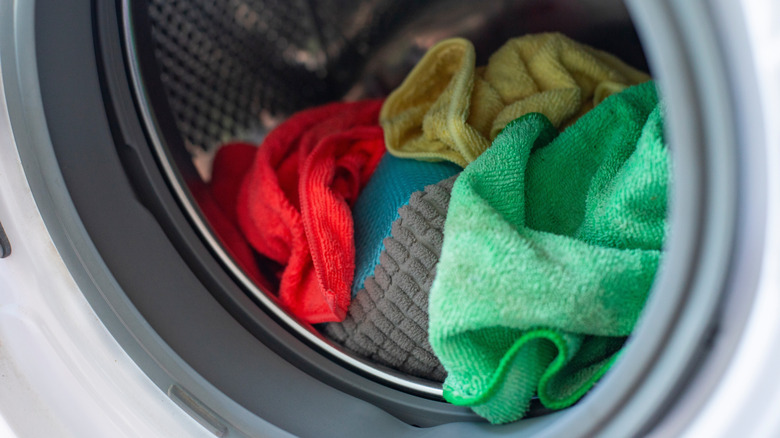
Microfiber cloths are an eco-friendly and versatile cleaning tool that many of us keep around the house. They serve a multitude of purposes, from wiping down your countertops and polishing your eyeglasses to cleaning your electronics and detailing your car. They're a great choice when you want to polish a surface without scratching it, and many people use them to hand wash their cars. But what's the best way to clean them after you use them, or even after they've simply hit the ground?
Microfiber cloths, as the name implies, are made up countless synthetic fibers that carry an electrostatic charge. It's this charge that attracts dirt so well; maintaining that charge means washing them in ways that don't limit the cloth's abilities. Thankfully, you don't need to wash those microfiber cloths by hand — your washing machine will do the job. However, if the microfiber towels are extremely dirty, you may want to give them a rinse in the sink beforehand. That being said, you should wash them on their own and not with other clothing or towels, especially anything that's cotton or wool, as this can make it harder for all those synthetic fibers to keep attracting dust and dirt.
Once you toss those microfiber cloths safely into the washing machine, set the water to warm, which will help loosen the dirt and clean them more thoroughly. Use gentle detergent and avoid fabric softeners and bleach, which can also damage the fibers. Stick to the gentle or normal cycle to minimize wear and tear caused by heavy agitation. If you want to ensure that the cloths are clean, you can add an extra rinse to the cycle. Once the microfiber cloths come out of the washer, you can either allow them to air dry or throw them in the dryer on low heat. Once they're clean and dry, they should be ready for another round!
How and why to use microfiber to clean your car

Visit the car detailing aisle at your local big box store and you'll be greeted with a multitude of sponges, washing mittens, and towels. However, the pros often choose microfiber because it's both soft and dense, and all those small fibers it's made of easily pick up tiny dirt particles without being abrasive. They're also very absorbent and don't tend to leave behind streaks or lint, making them a better choice for washing your vehicle than sponges or an old rag. They're also cost-effective, as you can use them again and again as long as you clean them properly.
To avoid cross-contamination and the potential for scratches, use a separate microfiber cloth for each section of your car when you wash it, including the tires, the body, and the windows. Glass-specific microfiber cloths for your windshield can be particularly helpful in keeping it free of streaks. Never use the cloth on dry paint; always rinse your vehicle first to remove loose dirt and reduce the risk of scratches. You may want to use one bucket for soapy water and another with clean water to rinse the cloth as you wash. Instead of using a circular motion, wipe in straight lines when using a microfiber cloth, as this helps reduce any marks that may be left over when you're done.
To dry your vehicle, use another clean cloth. Instead of wiping, gently pat with the cloth, which again will help you avoid scratches, smudges, and streaks. Finally, never reuse a microfiber cloth without washing them — even if they look clean, dirt trapped in the cloth may lead to scratched paint the next time around.