

Waymo Senate Hearing Reveals The Real People Behind Self-Driving Cars
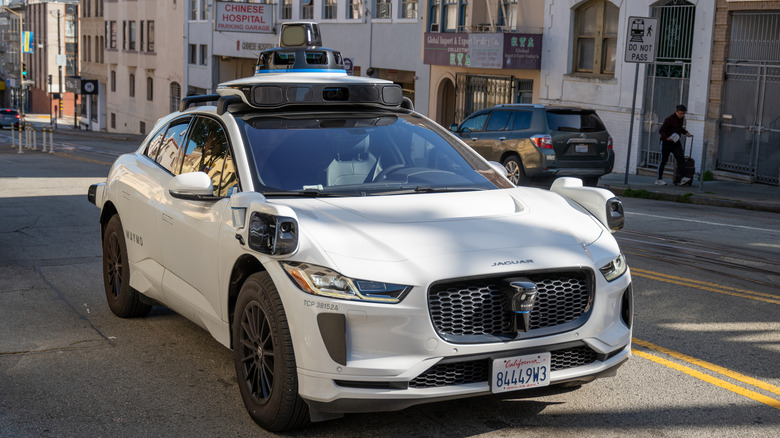
In early February 2026, a coterie of representatives from self-driving car companies Waymo and Tesla sat before the United States Senate. Typical of high-profile hearings these days, exchanges between lawmakers quickly grew tense. Waymo, the Google-and-Alphabet-owned company that has pursued a rapid expansion of its robotaxi fleet into multiple new markets, drew particular scrutiny. Its representatives fielded questions about safety and rider support, but much of the hearing fell under the long shadow of anti-China fervor which has gripped Congress in recent years.
As chairman of the Committee on Commerce, Science, and Transportation, Senator Ted Cruz of Texas convened the hearing. Appearing as a witness for Waymo was Dr. Mauricio Peña, the company's Chief Safety Officer. He was grilled by other senators, including Ed Markey of Massachusetts and Maria Cantwell of Washington on issues related to Waymo's labor practices, safety initiatives, and use of Chinese tech.
Although the overall regulatory environment at the federal level remains friendly toward big tech under the second Trump administration, concerns are growing around robotaxis as Waymo rapidly scales its operations, and politicians are beginning to show their teeth. Bad press has predictably increased as more of its robotaxis hit the roads, leading to bizarre and sometimes tragic outcomes. In October, a Waymo vehicle ran over and killed a beloved community cat named Kit Kat. Two weeks later, another Waymo killed a dog (per the L.A. Times). Waymos have recently been spotted running onto train tracks and cruising into the middle of an armed police standoff. Most significantly, Waymo robotaxis were accused of putting children at risk after passing stopped school buses, prompting a government investigation. At the hearing, these concerns were brought up in the context of other political bugbears.
Waymo's Senate hearing highlighted the human labor behind robotic cars
Waymo's cars may operate mostly without human intervention, but human labor goes into keeping them operational. Those opaque human costs were made clear when senators took Peña to task regarding the company's use of overseas labor. Waymo cars operate without a driver, but the self-driving system can encounter hiccups which require a human operator to intervene remotely. Although some of those operators are stateside, Peña testified that others are working overseas in the Philippines. "They provide guidance. They do not drive the vehicles," Peña told Senator Ed Markey.
Use of overseas operators drew safety and labor scrutiny from lawmakers. "Waymo has critical safety employees who may need to intervene in a split second if a Waymo encounters an unknown, dangerous situation in the United States, but they are outside the United States," Markey said. Most recently, a large power outage in San Francisco resulted in numerous robotaxis sitting still in the middle of busy streets. The outage highlights how reliant Waymo's system remains on a robust Internet connection.
Waymo's remote operators have never been a secret, though the company hasn't drawn attention to their locations. In a 2024 blog post, Waymo explained how its "fleet response" aids the self-driving system but claimed that the automated system is always doing the actual driving. Human operators can suggest the robotaxi take a particular path, ask it to use a specific lane, and so on, but the car's system must then take action on that input. A separate "Event Response Team" whose members are inside the U.S. and subject to much more rigorous job qualifications steps in to coordinate with emergency responders in the event of a collision, the company clarified in the wake of the hearing.
Senators bristle at Waymo's Chinese partnerships
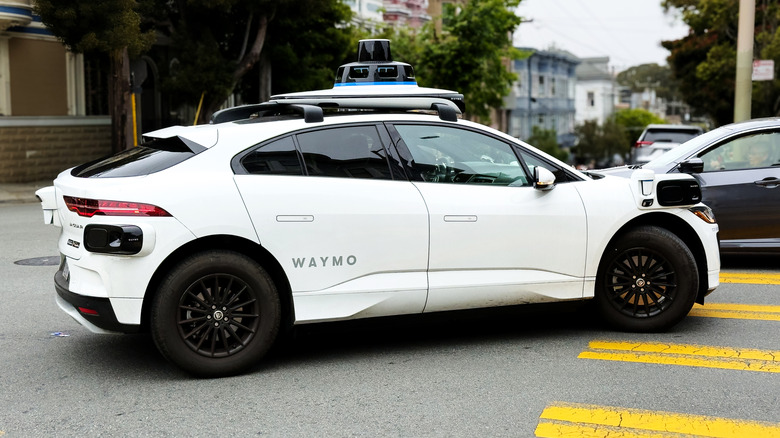
A substantial portion of the Senate hearing on self-driving cars was focused on Waymo's use of Chinese technology. Bernie Moreno, a senator from Ohio, questioned Peña regarding Waymo's plans to use custom vehicles designed by a Chinese auto maker. Waymo is in a partnership with Geely to design an electric vehicle — a Zeekr brand Waymo minivan which the company claims is being designed in Sweden, while the self-driving system will be installed in the U.S. For a company like Waymo that intends to pull off with self-driving cabs the paradigm shift Uber accomplished with human-driven ones, the partnership makes sense. Chinese cars are dirt cheap compared to those typically available for Americans, and will probably be even cheaper for Waymo in bulk. Even if Waymo pays tariffs and taxes, the Chinese vehicles will still likely wind up less expensive than any suitable American vehicle.
Lawmakers have stressed over the rising Chinese economy, which was built largely on the offshoring of American manufacturing in the latter half of the 20th century. While protecting American interests is clearly within the purview of Congress, some see the continued hostility toward Chinese goods and services as veering into protectionism. Domestic auto manufacturing has been on rocky economic ground for some time and has struggled to bring cheap EVs to market. The recent explosion in cheap, high-tech, Chinese EVs threatens to put even more downward pressure on American auto makers. Whether protecting the domestic auto industry is smart policy or an affront to free market principles depends on your view of economics. One thing is certain, though. Self-driving tech companies like Waymo appear to be in the eye of the storm.