

NASA Loosens Rules, Lets Astronauts Take iPhones To Moon
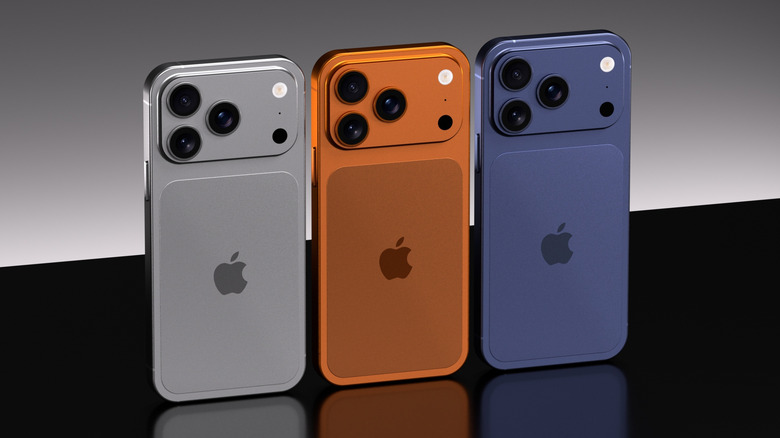
It takes a lot of essential technology to get astronauts into space, let alone land them safely on the Moon. But why not let them bring some less crucial yet still worthwhile tech into space? That seems to be NASA's new outlook, as it has reduced restrictions on mobile devices venturing beyond the Earth's surface. NASA Administrator Jared Isaacman revealed on X that astronauts will now be allowed to bring modern smartphones on the next expeditions to space and beyond, allowing for an unprecedented level of documentation.
"NASA astronauts will soon fly with the latest smartphones, beginning with Crew-12 and Artemis II. We are giving our crews the tools to capture special moments for their families and share inspiring images and video with the world," Isaacman wrote. NASA astronauts will be taking iPhones with them, but the agency may approve other smartphones in the future. No matter the phone, NASA's astronauts likely won't take photographs as remarkable as those taken by the James Webb Space Telescope, but these smartphone cameras will surely capture some breathtaking sights in space, all the same.
If nothing else, they'll likely secure better snaps than the gear previously approved for the Artemis II lunar mission: a 2016 Nikon DSLR and GoPros that were considered top-of-the-line 10 years ago. All in all, this is pretty historic news. Surprisingly, though, the matter of iPhones going to space isn't as significant as what had to be done to get them approved in the first place.
Shaking up NASA procedures
Not only is the approval of iPhones for SpaceX's Crew-12 and the Artemis II lunar mission a major win for in-space astronaut documentation, but it marks a big change for NASA itself. In his post, Jared Isaacman noted that getting smartphones approved for space missions required a big departure from standard NASA approval processes and procedures. These long-established processes are quite arduous, with numerous requirements to meet and tests to pass, among other tasks. Thus, Isaacman's push to challenge, reassess, and expedite these checks is a respectable bureaucratic leap for NASA. At the same time, it's worth noting that this isn't the first time iPhones have been to space.
This decision to loosen phone restrictions during space travel actually comes long after iPhones were cleared to enter orbit for the first time. Back in 2011, two trailblazing iPhone 4s – unfortunately, one of the worst iPhone models of all time — were sent up aboard the shuttle Atlantis to run an iOS app called SpaceLab, which helped the crew conduct various experiments aboard the International Space Station. NASA spokesperson Bethany Stevens also explained to Bloomberg that iPhones have flown on commercial space flights for approximately a decade.
SpaceX's Crew-12 successfully launched on February 13, and NASA's Artemis II mission commences on March 6. One has to imagine the iPhone photos and videos their respective crews take will make their way into the history books in short order.