

Your New Tires May Have Tracking Tech Built In: Here's Why
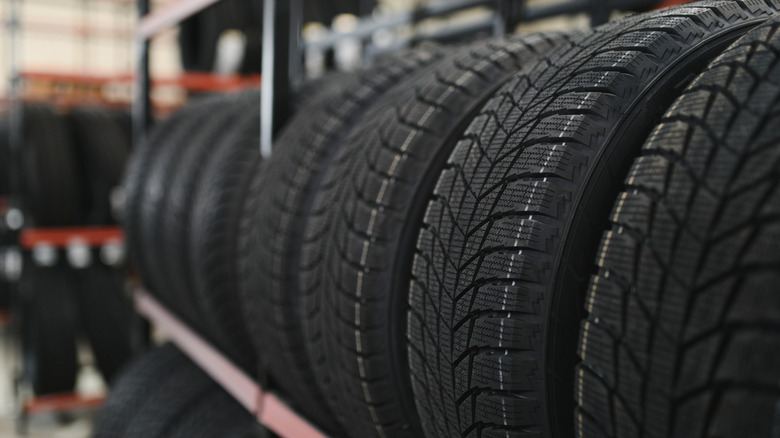
Smart tracking technology has made its way into many different corners of the automotive industry, including your tires. Several major tire brands like Michelin and Continental use radio-frequency identification (RFID) tags that are embedded in their latest tires to track individual tires throughout their lifespan, from the moment they leave the factory through to their end-of-life processing. If you buy a new tire from one of these manufacturers, there's a good chance that it might come with an RFID tag inside. There are several reasons that some manufacturers have started using them, with tag manufacturer Murata highlighting the main use cases.
According to Murata, manufacturers use RFID tags to track individual tires throughout the delivery process, before they ever make it onto a vehicle. Scanning a tire into a warehouse upon delivery is faster and more reliable than manually checking each tire, and it means any tires missing from a shipment can be quickly identified. Vehicle manufacturers can also use the tags to quickly confirm that each tire is correctly fitted on the assembly line.
Once a new tire is out on the road, RFID tracking tags are still useful. They work without batteries, so there's no extra maintenance required, but technicians at a service center can potentially use them to download information about a specific tire's history from a cloud database. This could be information about when the tire was manufactured, or its previously recorded tread depths, but it's also an easy way to check if a tire is subject to any recalls.
RFID tags can also track tires that reach the end of their lives
It's worth noting here that the intent of fitting RFID tags into tires isn't to track the vehicle that's using them — it's simply to keep tabs on the condition and history of the tire itself. Continental notes that only technicians who have registered for its tire information service and are authorized to use it can access full tire condition records.
According to Michelin, over 100 million tires with the technology are already on the road. Michelin has continued to be a top brand after the introduction of the technology, ranking as the best major tire brand for customer satisfaction across several studies. Performance and durability are two major factors cited for that rating.
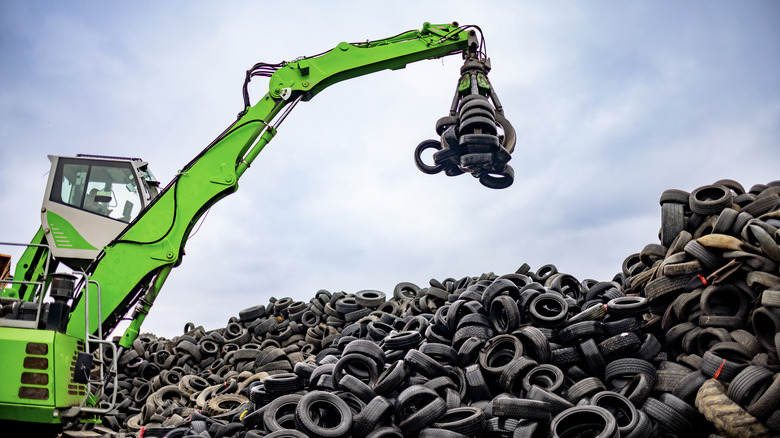
Alongside performance and durability, another important part of buying tires is what happens to them once they reach the end of their lives. According to Murata, RFID tags also come in handy here, since they can help track where tires end up after they wear out. If they're set to be processed for retreading, the RFID tag can help record where they are in that process at any given time, and if they're destined for recycling or scrapping, they'll be marked accordingly, too.
How are RFID tags fitted into tires?

Any tags fitted into tires need to be able to survive not only through the life of the tire but also through its end-of-life processing, which means they need to be tough. The exact way these tags are fitted varies slightly between manufacturers, but they're either embedded into the structure of the tire or fitted as a secure interior patch. Once they're in place, the tags can't be removed or swapped out, which helps protect against counterfeiting and ensures that any retreaded or used tire isn't falsely sold as new by unscrupulous resellers.
This is a win-win for both manufacturers and consumers, so it shouldn't come as any surprise that many major manufacturers either already use or are set to implement the technology. Since 2022, manufacturers like Pirelli, Michelin, and Goodyear have formed a dedicated association for rolling out tire tracking and managing access to the tracking data. The organization is called GDSO, and its website states that its goal is "to act as a competent body responsible for developing and managing a global tyre data management," as well as standardizing access to that data via its tire information service.