

Navy Base Shoots Down Unauthorized Drone, But The Pilot Was One Of Their Own
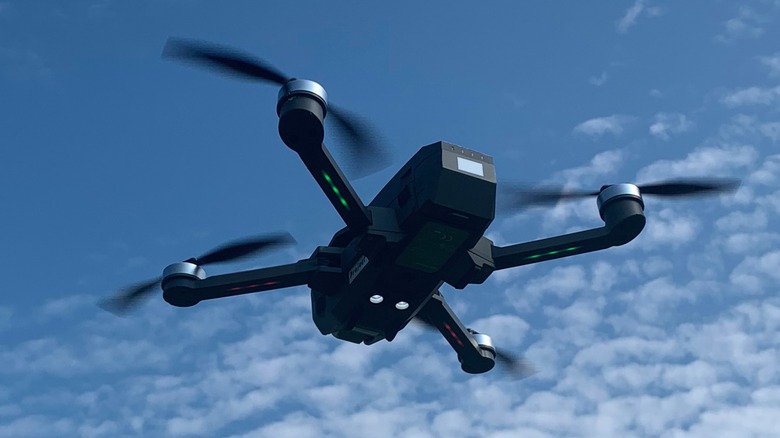
Drones used by the United States military are some of the most technologically advanced and deadly machines used in warfare. Everyone in the military knows their worth, as they've helped to protect troops on the ground by extending and multiplying force towards the enemy. They've also been used in operations to locate lost personnel and much more. While giant drones like MQ-9 Reaper hunter-killers or RQ-4 Global Hawk are exceptionally large; there are far more options when it comes to smaller drones.
The military is on a state of constant alert regarding small drones, as these represent dangerous threats that must be countered when detected. To this end, the U.S. military employs various defense capabilities to ensure they don't operate in restricted airspace. This was proven in early February 2026, when unspecified defense systems at Ault Field, Naval Air Station Whidbey Island, Washington, disabled a drone operating in its airspace. While the Navy released information regarding the incident, it didn't detail the systems used to take down the drone.
It was later revealed that the drone operator wasn't a nefarious actor looking to exploit the base's potential security weaknesses; it was one of their own. Base spokesman Michael Welding told Stars and Stripes, "The drone operator was a reservist here on temporary duty. During a break, unbeknownst to his superiors, he deployed a personal drone in violation of base regulations. The drone was detected once airborne, and countermeasures were deployed to render the device inoperable."
Drone operation on military bases is restricted for a reason
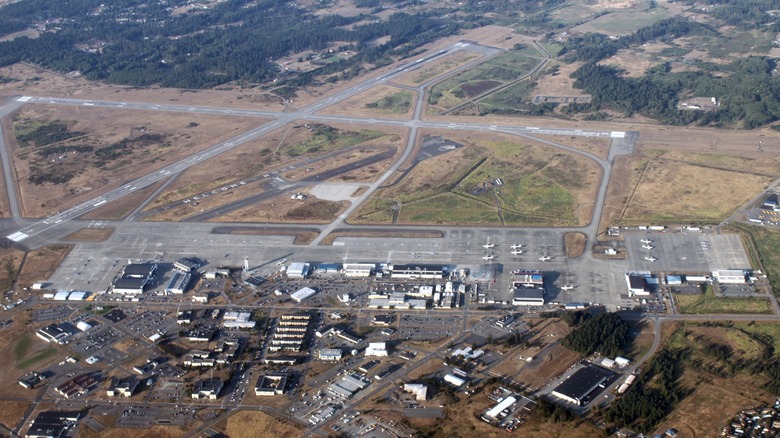
Most servicemembers know that they're not allowed to fly personal drones on bases, as the airspace is restricted and photographing certain buildings or vehicles is prohibited. There are signs spread about bases reminding anyone there of this fact, but it seems that the offending sailor's status as a reservist might be why the incident occurred. Reservists typically spend far less time working in an active duty capacity. Because of this, it's understandable why this unidentified sailor made the mistake of operating their drone on a base where such activity is restricted.
NAS Whidbey Island is home to the U.S. Navy's carrier-based EA-18G Growler electronic warfare squadrons, which are highly sensitive and under a great deal of protection, hence, the immediate response in downing the drone. A quick search of Navy policy regarding personal drone operation would have informed the reservist of the danger in operating a drone on base. Specifically, Navy Region Northwest's COMNAVREG NW NOTICE 3501.1 outlines that it is prohibited to operate any such device without specific authority granted by the commanding officer.
Violating this can result in criminal charges under the Uniform Code of Military Justice, and the FAA can also impose civil penalties for civilian drone operators who violate protected airspace. The reason these restrictions are in place is to maintain force protection. The Russo-Ukrainian War has demonstrated the dangers posed by small quadcopters, similar to the one downed in February, so bases maintain a high state of readiness, as evidenced by this latest incident.