

Chinese Company Claims New Battery Can Last Over 1M Miles On The Road
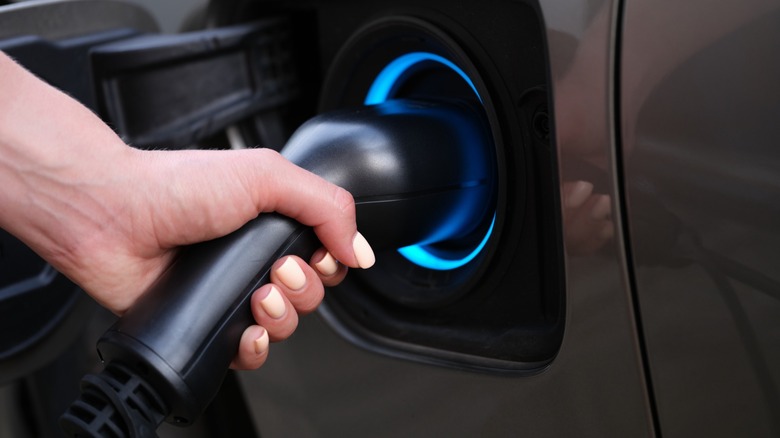
Aside from the driving range between charges, another common concern of EV drivers is how and when to charge their batteries. Common wisdom suggests you should avoid fast charging your EV battery under certain conditions to prevent damage to the battery's internal cells. However, Contemporary Amperex Technology Co., Limited, a Chinese company doing business as CATL, has announced the development of the CATL 5C ultra-fast-charging battery that promises to increase EV battery life by "over six times the industry average."
The video, posted to CATL's YouTube channel, announces the new battery retains 80% of its capacity after 1,400 cycles under test conditions at 60 degrees Celsius (140 degrees Fahrenheit), a temperature CATL says is comparable to operating an EV in Dubai. CATL calculates that those 1,400 cycles, in a vehicle with a presumed range of 600 kilometers (372.8 miles), would provide 840,000 km (521,952 miles) of range.
Under milder laboratory test temperatures, described in the video as "20-something degrees Celsius" (between 68 and 84 degrees Fahrenheit), CATL 5C batteries achieved 3,000 cycles before falling below the 80% capacity threshold. Using the same 600 km/charge range estimate results in a serviceable lifespan of 1.8 million kilometers (1,118,468 miles).
What makes the CATL C5 battery different?
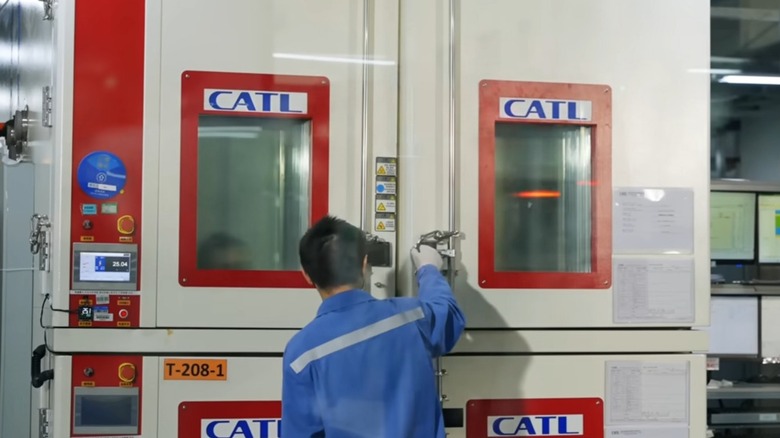
It remains to be seen whether or not the CATL C5 battery can live up to the claims by lasting for more than a million miles. If test results hold true in the real world, vehicles using the new batteries could become entrants on the list of the highest mileage cars on the road.
CATL claims its new C5 batteries combat the potential damage caused by ultra-fast-charging of lithium-ion batteries in three ways: improved materials, manufacturing processes, and battery monitoring system (BMS) design. Improved materials and manufacturing processes combine to create a battery that limits cathode oxidation, maintains active lithium-ion levels, and self-repairs micro-cracks in the Solid Electrolyte Interphase (SEI) layer.
Like other BMS designs, the C5 BMS regulates charge parameters, temperature, and voltage of the battery. CATL claims its C5 BMS directs coolant to individual battery cells with higher temperatures and reduces the output of underperforming cells to keep the battery cells balanced. The company believes cell consistency within the battery pack "significantly lengthens" service life.