

Don't Get A Ticket: What To Do If You Need To Pass A Stopped Car
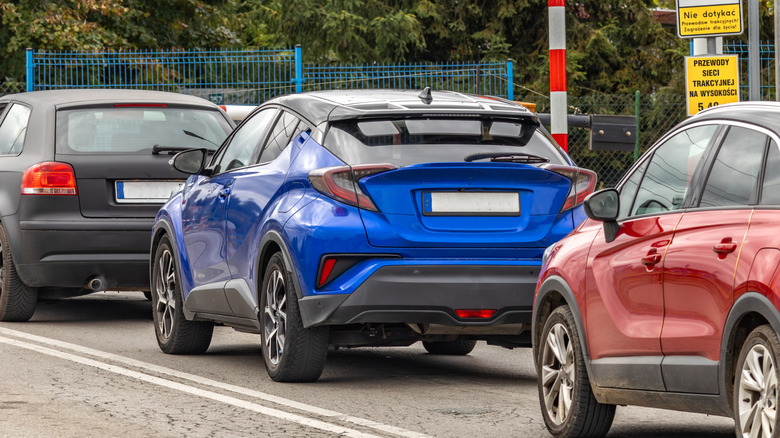
When you've been behind the wheel for long enough, some things become second nature. Passing a stopped car, for instance, might seem straightforward enough, but there is actually a correct way to go about this. As you approach a stopped vehicle, you first need to slow down and assess the situation. If there isn't a left lane going the same direction as you, you then want to look ahead to ensure there aren't any vehicles in the opposite lane headed in your direction. If there are any vehicles behind you, you should turn and look over your shoulder to see that they've slowed down as well and aren't trying to pass you.
If the coast is clear, you're all set to proceed. Turn on your left-hand turn signal to alert other drivers of your intent to pass and mindfully move into the next lane, whether it's in your current direction or the opposite. In this process, keep your eye out for movement from the stopped vehicle, such as opening doors or passengers exiting. Move quickly yet still within the speed limit, and once the front bumper of the stopped vehicle is visible, you can turn on your right turn signal and move back into the original lane.
All in all, this is a quick driving maneuver that's easy to execute as long as you're safe and aware. It can even be done in areas with No Passing Zone signs, since they typically have exceptions, including for slow-moving or stopped vehicles. Still, there are situations in which passing a stopped vehicle shouldn't be done under any circumstances.
When you shouldn't pass a stopped vehicle
There are multiple scenarios where you should not pass a stopped vehicle. If a vehicle of any kind is stopped at a crosswalk, you shouldn't try to pass it. There could be a pedestrian just out of sight who may not see you coming. Similarly, passing a vehicle stopped close to an intersection or near the crest of a hill shouldn't be done either. Intersections present too many variables — other drivers, lights or signs, and pedestrians — to safely pass through, and hills limit visibility of oncoming traffic.
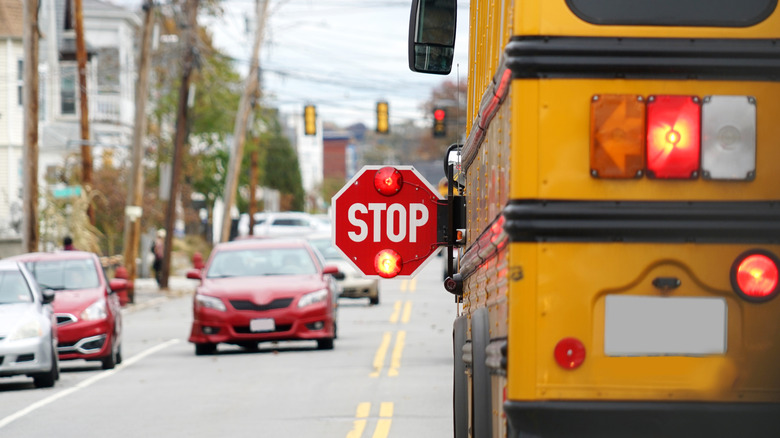
On top of these road conditions, there's also one specific vehicle that you shouldn't pass when stopped, no matter what. Even though school buses lack seat belts, they're designed with their passengers' safety in mind. Once the flashing lights come on and the stop sign folds, that's their way of saying no one should attempt to pass. This is to make crossing the road safe for the children entering or exiting the bus and prevent vehicle-pedestrian collisions. This is such a concern that some states take illegal bus passing extra seriously, with heavy penalties for attempting such an unsafe driving maneuver.
When you're behind the wheel, sticking to traffic laws is immensely important. Knowing when and how to pass a stopped vehicle is paramount to one's legal standing and personal safety, as well as the well-being of other drivers and pedestrians.