

Why Car Companies Switched From Gaskets To Glued-On Windshields
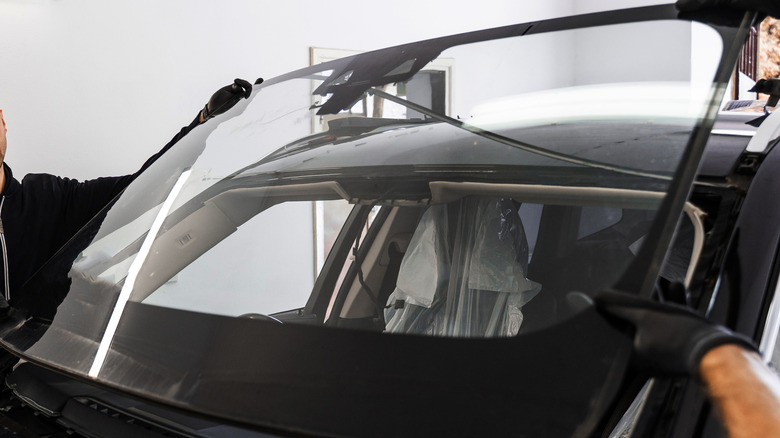
Although designers of some modern high-end cars like the McLaren Elva employ creative concepts for the component, car windshields have been around for over a century. In the industry's early years as cars got faster, automakers began installing glass panels to protect occupants from road debris, flying creatures, and other hazards. Front windshield glass is now much thicker than side and rear window glass and is made of laminated layers to prevent shattering on impact. The standard for many decades was to mount car windshields using rubber seals, molding, or weatherstripping around the edges.
The tight seals these materials form keep wind and moisture out of the passenger cabin; many of these compounds are also resistant to UV rays. Over time some manufacturers stopped using rubber and polyurethane to mount windshields and opted to glue them in instead. It might sound dangerous, but a glued-in windshield can actually be safer than one held in place with older technology.
The benefits of glued-in windshields

Many car windshields were affixed with a polyurethane adhesive and sealed with silicone similar to that used to make gaskets. Gluing a windshield in place bonds it with the frame, making the thick glass plate a structural component of the vehicle. Among the coolest features of the BMW Z1 convertible was its roll bar integrated with the windshield frame, which added a bit of protection to occupants of the quirky coupe. The strong adhesives used to affix windshields in this manner provide another important safety benefit.
With the older mounting technology, hard frontal impacts could send the driver and passengers into the windshield, dislodging it completely. Glued-in windshields can help keep you from flying out onto the roadway in the event of a crash, and structural adhesives also don't degrade as quickly as older adhesives and sealants. It's one of many advancements to windshields along with heating elements, heads-up displays, and sensors that enable the various levels of autonomous driving systems.