

DOJ Eliminates Federal Charges For Two Popular Diesel Engine Mods
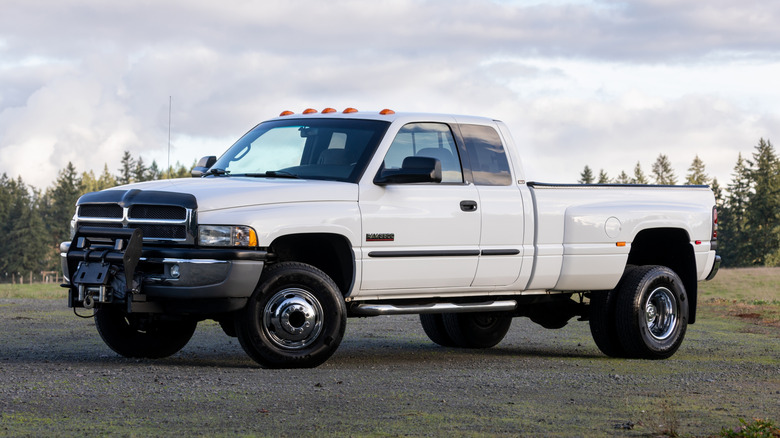
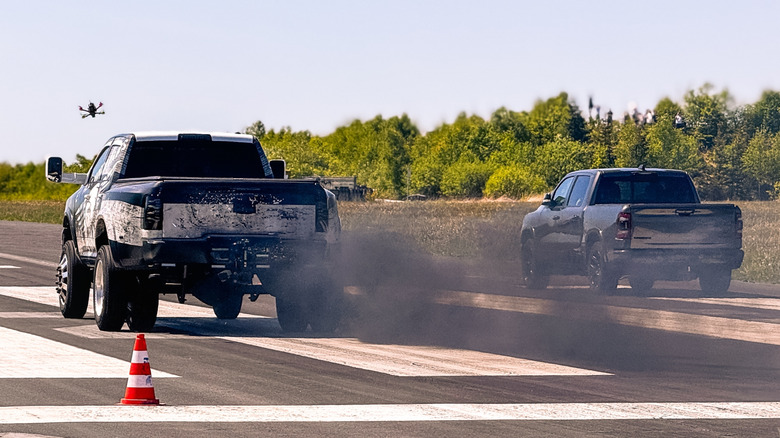
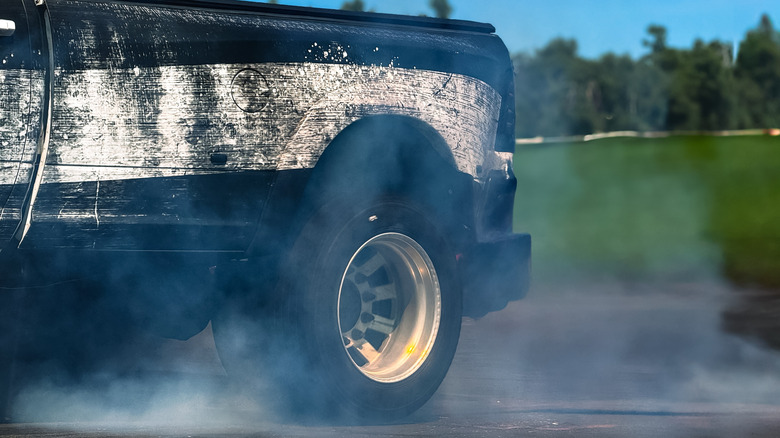
Although motor vehicle enthusiasts have been modifying their cars and trucks forever, and sometimes in legally dubious ways, the practice of "rolling coal" has become an especially hot-button topic over the years. In the standoff between diesel owners, state and federal legislators, and environmentalists, some U.S. states opted to ban the practice of purposely belching out diesel black smoke toward nearby motorists and pedestrians starting in 2015.
On January 22, 2026, the United States Department of Justice announced that it would no longer pursue federal criminal charges for those accused of removing or altering emissions control devices on diesel trucks — something that previously could bring prison time for violators. The step comes as the DOJ looks to stop what it considers the over-criminalization of federal environmental law.
Though the DOJ's decision means the diesel truck violators may not face jail time for deleting or tuning diesel emissions devices, they can still be subject to civil enforcement where deemed necessary. Depending on where they live, they can also face any number of possible fines and penalties at the state level. It also opens up a larger and ongoing discussion about the Clean Air Act and the legality of modifying emissions-controlled vehicles, regardless of engine type.
A different kind of Dieselgate
By far the most high-profile case of illegal diesel emissions is the situation that Volkswagen found itself in during the massive Dieselgate scandal of the 2010s. But this diesel truck situation is different, as it involves diesel owners, aftermarket diesel companies, and repair shops, rather than automakers themselves.
According to CBS News, the decision by the DOJ to eliminate the criminal charges comes after considering both the legality and the prudence of the federal government criminally prosecuting non-OEM violators of the Clean Air Act, under which the emissions regulations fall. Part of the DOJ's argument is that the Clean Air Act required the vehicles to meet regulations at the time and date of sale, but that modifying or altering emissions devices after the fact should not bring criminal liability. Others, like the EPA, argue that the Clean Air Act requires that emission systems be maintained under the law.
One of the most prominent cases of the federal government criminally prosecuting someone for altering diesel truck emissions was Troy Lake of Colorado, who served seven months in prison for tampering with emissions devices on hundreds of commercial trucks before being pardoned by President Trump in November 2025.
Diesel trucks aren't the only issue
Even if the DOJ stops criminal prosecutions for diesel emissions mods or deletes, it does not mean that violators won't be subject to fines or other civil penalties. Individual states also have a lot of power when it comes to regulating emissions, with states like California previously attempting to ban the sale of certain diesel trucks altogether, though those plans were eventually rolled back. California has also long had a law on the books that prohibits vehicle owners from knowingly altering or removing emissions control devices on any motor vehicle.
It's that type of law that brings forward a wider discussion of modifying or removing emissions devices across the board. It could be something like an ECU tune on your late model sports car, changing intakes or exhaust systems, or, on some cars, removing the catalytic converters. Even if the actual emissions impact is lighter than rolling coal, these activities could all be considered violations of the Clean Air Act.
The debate over emissions devices is far from settled, and people who modify emissions-controlled vehicles, diesel or otherwise, will continue to face many financial and procedural deterrents depending on where they live. For the time being, though, they at least won't have to fear doing federal jail time for their alleged crimes.