

South Korea's Idea For The Canadian Navy: 'Five-Star Hotel' Attack Submarines
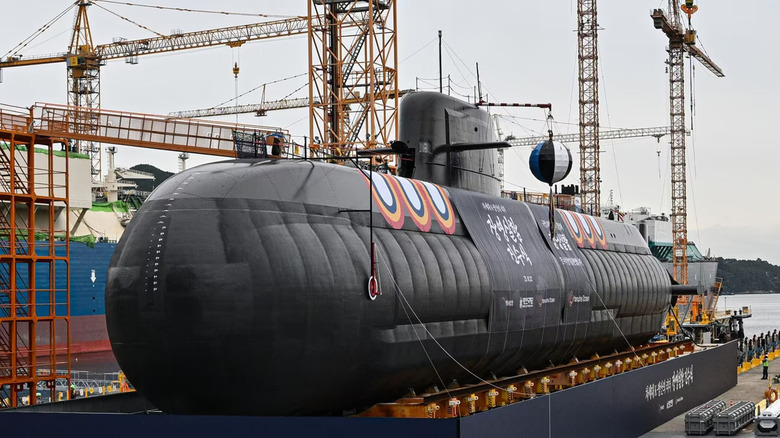
Popular exports from South Korea include everything from K-pop singles and portable electronics to automobiles and heavy equipment. The nation's large industrial conglomerates are now also hoping to make a splash in international waters by building state-of-the-art submarines for the Royal Canadian Navy.
South Korea has already devoted much of its own harbor space to shipbuilding facilities and has built hundreds of vessels for its allies around the world. HD Hyundai could soon build destroyers for the U.S. Navy, and South Korea's Chief of Staff Kang Hoon-sik visited Canada in late January and talked with top officials there about building new submarines for the nation's navy. The Chosun Daily quoted Kang as saying the proposed subs "are designed and built with the mindset that my own sons and daughters would be aboard. That is why we aim to create them like a five-star hotel." But when the rubber meets the road — or in this case the metal meets the sea — it likely won't be just shipboard accommodations that determine Canada's path.
The nation currently has just four secondhand British-made submarines that date back to roughly 2000 and has pledged to spend lavishly to replenish and modernize its fleet. ThyssenKrupp Marine Systems (TKMS) in Germany is competing with South Korea's Hanwha Ocean for a contract to build 12 new subs for Canada as part of the $45 billion Canadian Patrol Submarine Project (CPSP), and Kang noted that the project would be as important to his country as it stands to be to Canada's armed forces. "If successful, it will mark the largest-ever entry into Western markets and is expected to pave the way for full-scale entry into NATO markets," he said.
About the KSS-III submarine
South Korea is also known as the Republic of Korea and has one of the world's most powerful militaries. The World Directory of Modern Military Warships ranks the ROK's navy as fifth-largest in the world with 147 active vessels, of which 21 are submarines. The Hanwha KSS-III diesel-electric attack submarine is the model that Hanwha is planning to supply to the Royal Canadian Navy, although it's new and not yet battle-tested. The first vessel from batch II of this sub class is the Jang Yeong-sil, which was launched from Hanwha Ocean's facility in Geoje in late October of 2025. Hanwha says it should deliver its first completed batch II sub to Canada in 2032, with another following each year through 2035.
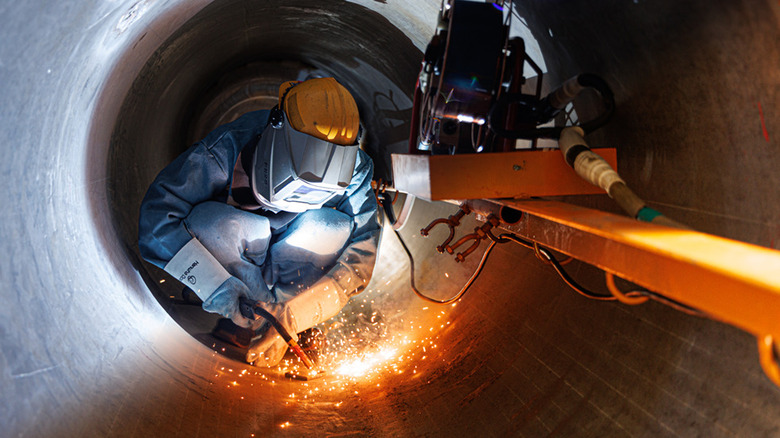
The KSS-III is driven by an Air Independent Propulsion(AIP) system getting its power from lithium-ion batteries, and Hanwha claims it "offers the longest submerged endurance of any conventional submarine." As missions get longer, crew comfort and safety becomes even more critical to a sub's ability to perform up to expectations and return to port safely. State-of-the art attack weapons and defensive systems are less effective if the humans operating them aren't in peak condition; making subs more crew-friendly also promises to make them more effective war machines.
The new subs are part of a growing partnership between Canada and South Korea
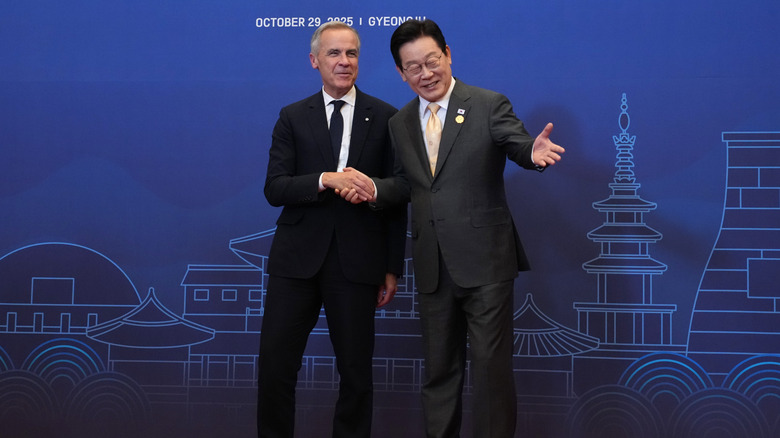
Along with building submarines for Canada's Navy, Hanwha is poised to invest tens of billions in Canadian supplies and infrastructure. Hanwha plans to build shipyards on both Canadian coasts and has pledged to use Canadian steel in many of its proposed projects. Hanwha has an arrangement with Toronto-based Algoma steel to invest $275 million on a new mill in Canada and the company has a goal of creating 200,000 new jobs in the nation by 2040.
Vice-Admiral Angus Topshee is the current commander of the Royal Canadian Navy, and he told the CBC his nation was in dire need of new subs. "We're down to a single operational submarine," he said. "Clearly we need to get that capability locked in for the future and at the numbers that Canada really needs to meet the current environment." If the nation's proposed partnership with South Korea and Hanwha comes to fruition as planned, the RCN's undersea crews will be better-supported than ever before and their compatriots on shore should have plenty of new job opportunities.