

This Country Has The Largest Uranium Reserve In The World
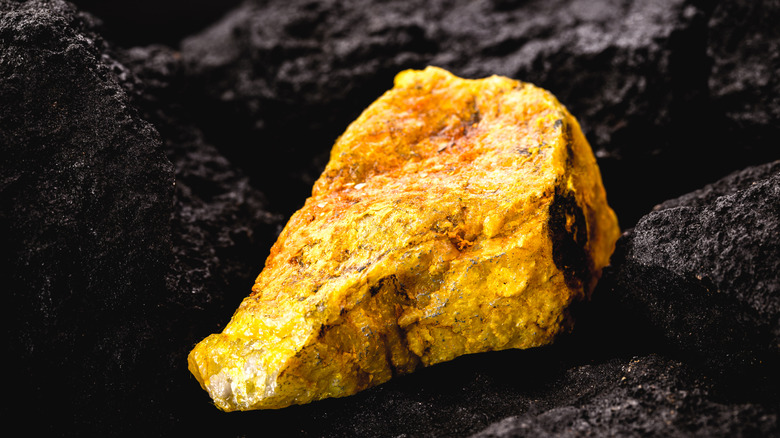
The world is currently in the midst of a rapid energy transition. China is leading the way with solar energy, while wind energy installations are also growing at a record pace. Nuclear power has long remained a core focus, especially with the sheer potential of fusion reactors for clean energy. Unfortunately, commercial fusion reactors are still a pipedream, leaving the traditional fission reactors as the only major outlet for nuclear energy. In the age of AI and the near-inexhaustible demand for power at data centers, nuclear energy is in more demand than ever. And to feed it, the world's uranium reserves will have to step up. Right now, Australia is sitting atop the pile of the world's biggest uranium reserves.
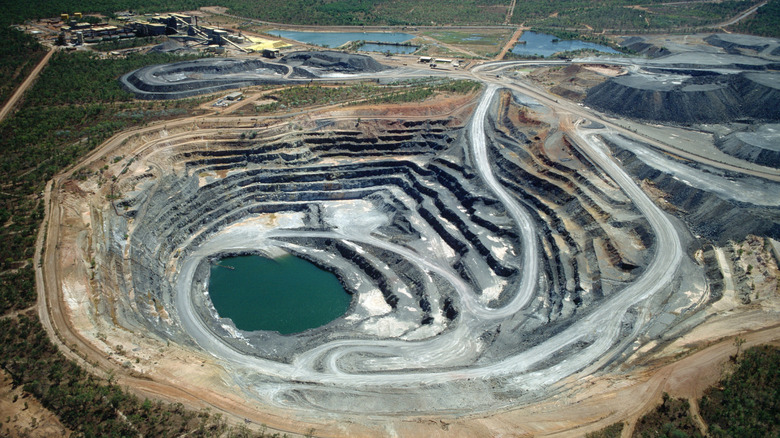
The Olympic Dam mine in South Australia has the world's largest deposit of the radioactive element, and combined with the other major mining sites such as Four Mile and Ranger, Australia accounts for nearly a third of the world's total uranium reserves. With a rich resource like uranium available in abundance, one would expect Australia to be a major adopter of nuclear energy. Well, it might come as a shocker, but Australia has no nuclear power plants, and the country doesn't intend to build one in the near future. In 2025, Australians voted to keep nuclear plants at bay, citing reasons such as pollution risks, high water demand in a dry landscape, and high costs.
As a result, the entirety of Australia's uranium is exported, which amounts to roughly 8% of the global production. That's lower than expected, right? Well, reserves and production are two different things. Kazakhstan accounts for roughly 14% of the global uranium reserves, but it commanded over 40% of the global production. It's also the second-largest source of uranium for the US, behind only Canada.
A white-hot atomic race
Australia's massive uranium reserves are a massive trade asset, but the export bargaining chip is now heavier than ever, all thanks to AI. Look no further than data center mega-initiatives such as the $500 billion Stargate Project. The power demand for the AI industry is so urgent that it has triggered "de-mothballing of recently retired nuclear generators," according to Goldman Sachs. Even the stakeholders in the tech industry have started to make bold bets. Google is building a modular reactor in Tennessee and also reviving the Duane Arnold Energy Center nuclear plant in Iowa.
Meta has inked multiple nuclear energy projects to secure power for its AI data centers, while OpenAI has also urged the Department of Energy to build nuclear reactors. At this point in time, AI developments have become a centerpiece of global tech wars. The US and China are currently locked in a tight AI race, one that is dictating trade deals and sanctions. It's imperative that the country that is faster at scaling up the AI infrastructure will have an edge in the race, and given China's massive lead with solar power, the US' best bet for clean (and high output) energy is nuclear power plants.
Access to uranium from allies like Canada and Australia could be the key here. In addition to the AI segment, uranium will also strengthen the power grid as the U.S. battles it out in the EV segment, allowing brands to boost manufacturing as well as the charging infrastructure. Aside from its role as a nuclear fuel, spent or depleted uranium is also used as the tip material on tank shells, mortar rounds, and bullets. Due to the high material density, it is used to enhance the penetration of projectiles.