

Starlink Lowers Over 4,000 Satellites Following Near-Miss With China
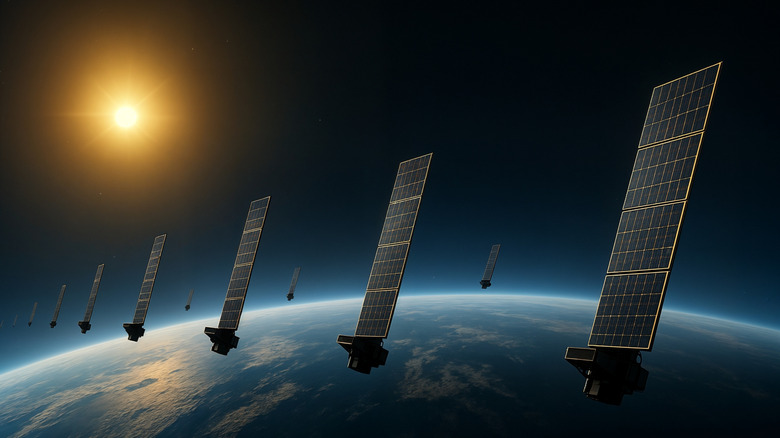
The Space race is heating up, and this time, it's the enterprise players rather than nation actors that are holding the chips. The Starlink constellation, which is run by Elon Musk-led SpaceX and currently serves everything from remote areas to in-flight WiFi, is increasingly finding itself entangled in risky situations. The latest one involves a close call with a Chinese satellite that led to a drastic measure. In December, a satellite launched from the Jiuquan Satellite Launch Center in Northwestern China came dangerously close to a Starlink satellite. In the wake of the incident, SpaceX has decided to lower the orbital altitude of nearly 4,400 satellites, bringing them down from 550 kilometers (341.7 miles) to 480 kilometers (298.2 miles).
According to SpaceX engineering VP, Michael Nicolls, the two satellites came within a 200-meter range, blaming the close call on a lack of "coordination or deconfliction with existing satellites." Researchers at the Chinese Academy of Sciences' Institute of Software claim that the move was directly linked to the near-collision event with an Earth imaging satellite, reports the South China Morning Post. According to Chinese scientists, the orbital data and launch trajectory was created and shared "just under 14 minutes before the close approach, leaving SpaceX with little time to detect the risk."
Starlink is beginning a significant reconfiguration of its satellite constellation focused on increasing space safety. We are lowering all @Starlink satellites orbiting at ~550 km to ~480 km (~4400 satellites) over the course of 2026. The shell lowering is being tightly...
— Michael Nicolls (@michaelnicollsx) January 1, 2026
This isn't the first incident of its kind. In 2021, there were two separate incidents where Starlink satellites had a close approach with the Chinese Space Station, forcing the spacecraft to perform an emergency collision avoidance maneuver. Interestingly, SpaceX's decision to lower the orbit of nearly half of its Starlink satellite cluster is being seen as a risky move in itself. Chinese researchers have warned that coordination mistakes might trigger a cascading event of collisions, dropping a massive amount of debris on Earth.
A peek into a risky future

The latest move by SpaceX can be seen as a strategy to avoid risks of collision and win some good faith commentary. But the risks are very much real. A paper that was published in December 2025 describes chain reaction of uncontrolled collisions in space, a theory that is popularly known as Kessler Syndrome. After analyzing datasets from the Space-Track.org, the team concluded that satellites with higher orbits and long orbital periods are a bigger risk because they are more difficult to navigate and control.
SpaceX's decision to lower the orbital presence of thousands of Starlink satellites sounds like a step in the right direction. Nicholls also argues that lowering the orbit will reduce the ballistic decay time for malfunctioning satellites and trim the chances of collision. Yet, the risks persist, despite calls for tighter regulation on satellite launches and the need for a more robust international framework that not only handles the space congestion problem but also takes measures to tone down the risks.
When satellite operators do not share ephemeris for their satellites, dangerously close approaches can occur in space. A few days ago, 9 satellites were deployed from a launch from the Jiuquan Satellite Launch Center in Northwestern China. As far as we know, no coordination or...
— Michael Nicolls (@michaelnicollsx) December 13, 2025
The Earth's orbit is getting increasingly dense. Starlink is the biggest player, but as players such as Amazon Project Kuiper (aka LEO), Blue Origin Tera, Eutelsat OneWeb, and China's Qianfan ramp up their efforts, it's getting crowded up there. This has triggered serious concerns in the scientific community. These Low Earth Orbit (LEO) internet satellites have resulted in congestion and made scientific observations more difficult.
Additionally, the rapid pace of satellite injection has prompted an inquiry into the increasing emissions from launch vehicles, as well as the pollution generated when these satellites and rockets return to Earth. Satellite debris will exacerbate the space trash problem and will pose a risk when it falls back to Earth. Some scientists are also worried that the debris might hit commercial airlines, too.