

Hot Vs Cold Water: Which To Let Your Faucet Drip When Winter Weather Hits
Almost any homeowner will tell you they have a long list of steps they take to prepare their house and property for cold weather. And that list likely includes a few vital tasks focused on protecting their home from the outside. But when a deep freeze does set in, there may be a much bigger x-factor to consider in your home's winterization, as frozen and burst pipes have been known to cost homeowners thousands of dollars in repair fees.
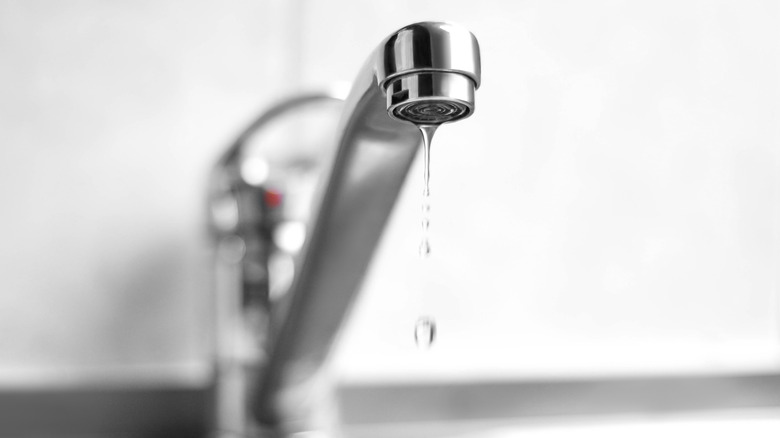
That issue is particularly concerning in warmer areas where temperatures rarely drop below freezing. But it also plagues homeowners who've long lived in regions where temperatures below freezing and power outages are common in the winter months. Most of those homeowners can no doubt confirm that there is one easy thing you can do to reduce the risk of frozen pipes in your home during a cold snap, and that is to leave faucets dripping with water during the coldest hours of the day.
We would, however, wager that debates have raged within those homes over whether to use warm or cold water. While warm makes some sense, dripping cold water is the most common recommendation, as it's generally believed that the cold water pipe is more susceptible to the elements. However, if both the hot and cold water pipes are exposed throughout your basement, crawlspace, or attic, it's often recommended that you drip both lines to reduce the risk of freezing.
Other ways to protect your pipes in cold weather
Apart from the tried and true drip method, there are, of course, several other steps you can take to help protect all of your at-risk pipes from freezing when dangerously cold temperatures eventually besiege your home. For the most part, they are as easy for homeowners to undertake as turning on a faucet to a steady drip.
First and foremost, there's a strong likelihood that many of you have a water heater or some form of water source in your garage. If that's the case, it is absolutely vital that you limit how often you open and close your garage door, as you'll want to trap as much heat inside as possible to keep the device and the water above freezing. Another easy step is to open kitchen cabinets that conceal pipe work, as exposing them to the warm air from heating systems can greatly reduce the risk of freezing.
To that end, it is also recommended that you keep your home at a steady temperature during cold snaps, as lowering the thermostat to save a few dollars on the old gas bill can increase the risk of a costly freeze-up. If you haven't already, adding insulation around any exposed water pipes, even those in basements and attics, is one of the best ways to protect them from the cold. While it may require a modest initial investment, that step could save you thousands in the long run.
How to thaw a frozen pipe before it bursts
Of course, even if you take every possible precaution to shield your pipes from sub-freezing temperatures, you may still experience a freeze-up. If you're lucky, however, you might catch the problem before the pipe bursts, with a tell-tale sign of such an issue being dramatically reduced water pressure. If you see a decrease in pressure, first check whether the pipe has already burst. If it has, you'll need to turn the water off immediately and call a plumber.
If the pipe is still intact, you can turn the water back on and let it run; even cold water should keep the liquid flowing through the pipe. It should also help melt the ice within. If you can determine exactly where the freeze is, begin warming the pipe's exterior. This can be done by covering it with blankets or wrapping the section with a heating pad. You may also try applying warm air from a hair dryer or even warming the overall area with a space heater.
Keep the heat on until the water pressure has been fully restored. If you use a space heater during the thawing process and can spare it in your living space, consider leaving it there until temperatures warm up. From there, you'll want to check the rest of the faucets in your home. Because if one pipe can freeze, the others can too.