

The US Gas Station Chain You Might Not Know Is Owned By Venezuela
When looking for the best quality gas, there are several major contenders with a presence across the states, one of which is Citgo. The Texas-based company supplies more than 4,000 independently owned gas stations that operate under the Citgo banner. Yet, dig a little deeper into Citgo's corporate ownership details, and we find that, despite its Houston headquarters, Citgo is actually a wholly owned subsidiary of PDVSA, Venezuela's state-run oil company.
That ownership dates back decades. PDVSA began acquiring Citgo in the 1980s, and by 1990, the Venezuelan company had complete control of Citgo. Under this arrangement, Citgo operated as a U.S.-based refiner and fuel marketer, and PDVSA benefitted from a steady U.S. outlet for its crude and refined products. Recent events have obviously raised interest in this relationship, but Citgo's Venezuelan ownership has been under scrutiny for some time.
Venezuela's long-running debt issues and legal disputes have placed Citgo at the center of a complex court process in the U.S., where creditors have sought to use the company's value to satisfy outstanding claims. This is despite Venezuela having the world's largest oil reserve. As a result, Citgo's ownership — while still formally tied to PDVSA — has been under sustained legal scrutiny, with the possibility of a court-ordered sale looming for several years.
For consumers, none of this changes how Citgo stations function day to day. However, Citgo stands out as a rare case of contested international ownership. The legal dispute is unfolding against the backdrop of a complex and troubled diplomatic relationship between the U.S. and Venezuela.
Why Citgo's ownership is being challenged
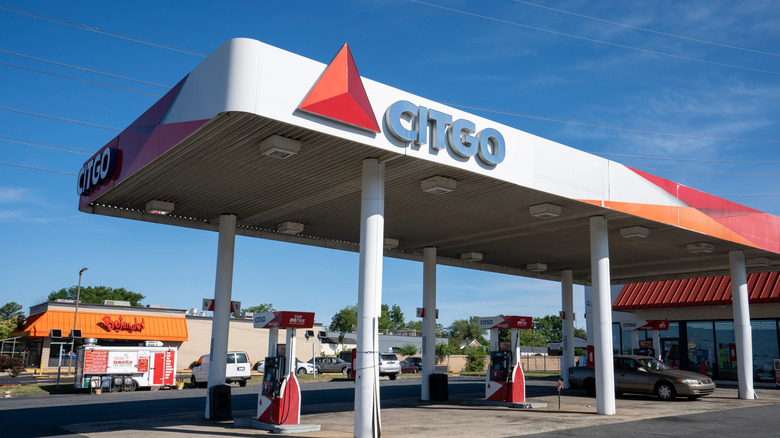
Although Citgo's branding and day-to-day operations look like those of any other major US fuel retailer, its corporate structure places it in an unusually exposed position. Citgo is not directly owned by the Venezuelan government, but through two U.S.-based holding companies that ultimately trace back to PDVSA. This point is important because it means that Citgo falls directly under U.S. jurisdiction when disputes arise.
The current disputes stem from Venezuela's long-running debt defaults. For more than a decade, the country has accumulated billions of dollars in unpaid obligations to bondholders, oil companies, and other creditors. When repayments failed to materialize, some creditors turned to U.S. courts in search of assets that could be used to satisfy judgments. Citgo became a focal point of these efforts, as it is both highly valuable and legally reachable.
The result has been a prolonged court-supervised process centered on Citgo's parent company. Judges have approved frameworks that allow creditors to bid for ownership stakes as a way of recovering losses. However, as is often the way with such matters, appeals and counterclaims have slowed progress at nearly every step of the way. Importantly, given the current relationship status of the two countries, this process is procedural rather than political. It's governed by U.S. commercial law, not foreign policy, and has unfolded over several years, regardless of shifts in diplomatic relations. In December 2025, a judge approved Citgo's sale to Amber Energy, a Houston-Based energy company. The sale is expected to go ahead this year.