

Winter Weather Sees Pileups Spike – Here's How To Keep Yourself Safe
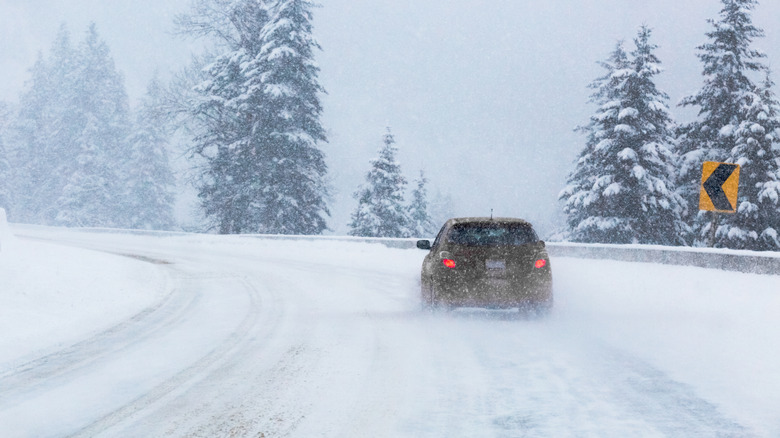
Driving in wintery weather is stressful enough, but those fears may be compounded if you're on a busy road or highway, especially when snow, fog, or even heavy rain is making it difficult to see. Accidents are common, with almost one-quarter of weather-related crashes happening during snow or ice storms, according to the Federal Highway Administration (FHWA). Pileups, or crashes that involve multiple vehicles, are less common but make the news almost every year. Already in 2026, winter weather led to a pileup of more than 100 vehicles on Interstate 196 in Michigan. Luckily, though injuries were reported, no one was killed, but the interstate was closed for hours in both directions.
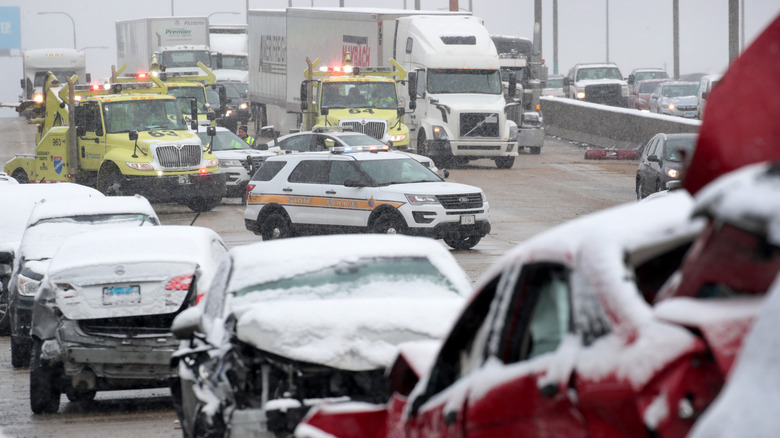
Sometimes drivers aren't so lucky. In 2022, a snow squall surprised drivers in Pennsylvania and led to slippery road conditions with very poor visibility. A chain reaction of spinouts and crashes ultimately caused a pileup involving 80 vehicles that left six people dead.
What can drivers do to avoid these deadly crashes? The first step is understanding why they happen. While weather and poor visibility are the biggest factors that lead to pileups, distracted driving can also be a factor. Taking your eyes off the road in normal conditions is dangerous and delays your reaction time, and it's even more risky when driving in bad weather. If you're driving in wintry weather, slow down and take your time, don't tailgate, and pay attention. If that's not enough and you find yourself in a scary situation, there are additional steps you can take to keep yourself safe.
How to react in a pileup
Sometimes simply paying attention and remaining cautious isn't enough. Consumer Reports recommends that drivers use a counting trick to keep the appropriate distance between them and the car in front of them. Focus on a fixed object like a sign and count in seconds when the rear bumper of the car ahead passes that object, then try to keep at least three seconds between you and that vehicle in good weather. For every change in condition, be it snow or fog, add one more second. If road conditions are extremely treacherous, default to eight to ten seconds.
If you can't stop a crash from happening, there are still ways to protect yourself. Don't slam on the brakes, instead gently slow down to maintain traction in snow or ice. If you can, aim for the guardrail instead of another vehicle. After an accident, keep your seatbelt on and stay in your car if possible. In a pileup, more cars are likely to hit yours, and your vehicle offers at least some protection. If you have to exit your vehicle, don't stand between two vehicles. Try to get to the front of the crash site, and then go past it, especially if crashes are still ongoing. Don't stand near the guardrail — remember, others may try to steer into it in a bid to avoid hitting other cars.
Once you're in the safest place possible, call 911. Another driver may have already called, but never assume. If you're uninjured and want to help others, be sure to do so in a way that doesn't endanger your own safety.