

5 Black & Decker Power Tools Users Say You Should Steer Clear Of
We may receive a commission on purchases made from links.
Black and Decker is one of the most well-known names in the power tool industry, having been around for over a century. Its parent company, Stanley Black and Decker, now owns over a dozen different tool brands, including DeWalt, Craftsman, Stanley, and Irwin.
Black and Decker is often seen as the budget power tool option in this family of brands. Most black-and-orange products are significantly more affordable than their black-and-yellow siblings. But even though Black and Decker might not have the same reputation for power and quality as DeWalt, the company is widely regarded as an excellent option for those looking for a solid cost-to-performance ratio.
That said, not all Black and Decker power tools are as good as others. Some of them have left buyers less than satisfied. There could be any number of reasons why this can occur. The tool might break easily, there might be some fundamental flaw in the design, or it might simply not be as powerful as expected. One of the best ways to find out which tools to avoid is to take a look at customer reviews on digital storefronts and see which of them have consistently received low reviews for the same issues. Sometimes, even items that have high scores overall will have dozens of 1-star reviews citing the same problem. This is a pretty reliable indicator that it might be more than a simple one-off mistake.
Black and Decker EdgeMax 20-inch 13 Amp Corded Electric Lawn Mower (BEMW213)
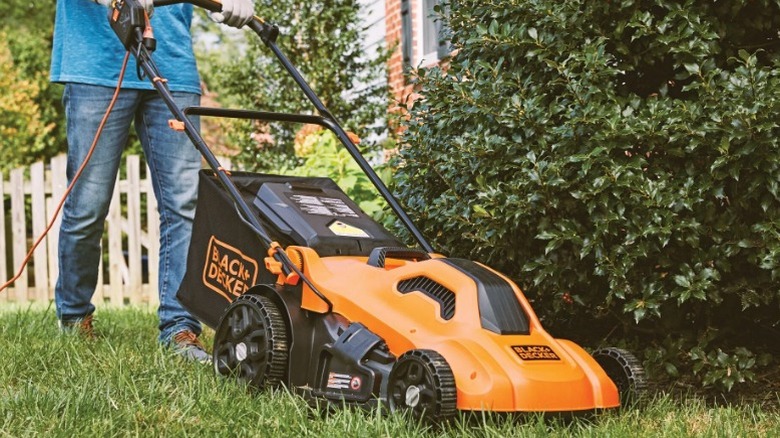
Corded electric lawn mowers come with some inherent pros and cons. You might be tethered to an outlet, but they're quieter and easier to maintain than gas models, and they're cheaper and have longer runtimes than battery-powered ones, making them a solid option for people with light landscaping needs close to the home. The Black and Decker EdgeMax 20-inch 13 Amp Corded Electric Lawn Mower initially seems like it should be a solid option in this niche. It has a winged blade that's designed to lift grass as it cuts, improving the cutting power and collection capabilities. It also has six height adjustment settings and a foldable handle for easy storage. Some customers have experienced some issues that suggest this mower is one you might want to pass on, however.
The EdgeMax 20-inch 13 Amp Mower has a 1.7 out of 5 on Black and Decker's own website, a 4.1 on Home Depot, a 2.8 on Lowe's, and a 1.6 on Acme Tools. That isn't exactly consistent, but some of those scores definitely set off a few alarm bells, and the reasons why this mower receives so many low scores are pretty concerning. There are several reports across all of these retail sites claiming that the mower's engine abruptly stopped working, often within only a few months of use. "Didn't even last through mowing a small front yard before it died," said one. "Was able to fill the bag twice, on the third fill, emptied the bag, then the mower refused to turn on." There are also a few scattered complaints that the mower feels light and cheap, that it stalls out frequently, and that the bag door sometimes gets stuck.
Black and Decker Mouse Detail Sander (BDEMS600)
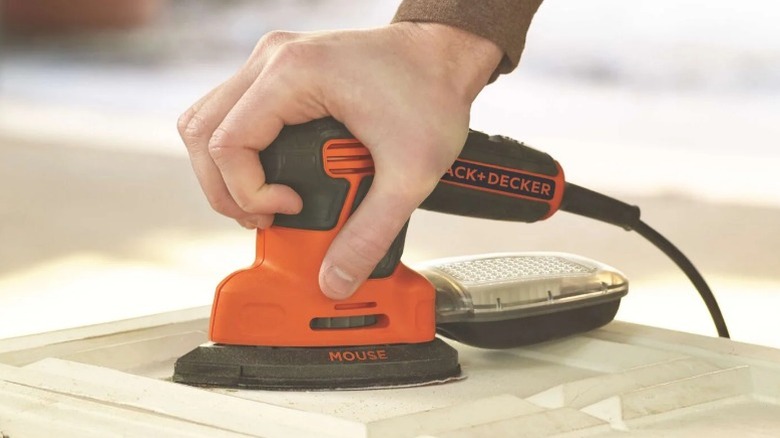
The Black and Decker Mouse Detail Sander is a variety of corner palm oscillating sander. The sanding pad has a roughly triangular shape, with the front ending in a point that's perfect for getting into tight corners or narrow gaps, like the spaces between banister railings. This model has a hook-and-loop attachment system for sanding pads, a three-position grip for control, a dust extraction system with microfiltration, a built-in dust storage container, and a separately included detail finger attachment that allows you to reach even smaller spaces.
Unfortunately, the Mouse Detail Sander hasn't been received all that well. The tool has a weighted score of 3.6 out of 5 on Black and Decker's website, a 4.1 on Home Depot, a 4.1 on Lowe's, a 3.9 on Walmart, a 4.1 on Ace Hardware, and a 3.8 on Acme Tools. While most of these scores aren't downright terrible, they aren't particularly good either, and there are an alarming number of 1-star reviews on each site that report some concerning issues regarding the tool's durability. Most of the reported issues seem to stem from the sander's excessive vibration during operation. Several users report the plastic at the nose of the sander melting from high friction. "The tip gets so hot that the plastic around the screw that holds it on, simply melts and the tip just falls off," one reviewer stated. "The underpad is coming off too. Do not buy." This appears to be a frequent issue and the main source of negative reviews, though it's worth mentioning that there are also a few scattered complaints about noise levels, the finger attachment breaking, and the dust extraction system not working well.
Black and Decker 12V Max ⅜-inch Cordless Drill/Driver (BDCDD12C)

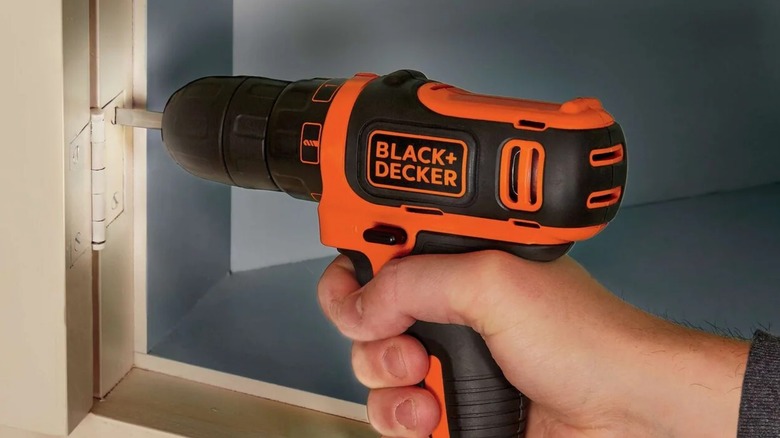
A good cordless drill from a major brand is the cornerstone of any power tool collection, so it's important that you get a good one. Black and Decker offers a wide range of these across different battery systems, from the tiny 8V Max model all the way to the company's flagship 20V Max Powerconnect model. Most of these are rated fairly well, but it seems that the middlechild of the lineup hasn't been received with the same enthusiasm from buyers. The 12V Max Cordless Drill/Driver has a lot going for it on paper. It's compact and lightweight, has an 11-position clutch, a keyless chuck, an LED worklight, a soft-grip handle, and many of the other features that you might look for in a drill.
There are a few problems that might make it a bad buy, however. This drill has a 3.3 out of 5 on the Black and Decker website, a 4.5 on Home Depot, a 3.5 on Lowe's, and a 4.1 on Walmart. Those scores are a bit scattered, but the complaints on each site are pretty similar. Most of the drill's critics seem disappointed with its power and the included 1.5Ah battery's ability to maintain a charge. "No matter how much you charge it, what holes you drill before you put the screws in, and how much pressure you put In, it will not screw wood together," one reviewer said. "Spend the extra money and get something other than this." Several others complained that the battery wouldn't hold a charge for more than 10-15 minutes of use before the drill would stop working. This makes it a hard sell, even for those who just want a drill for light use.
Black and Decker 20V Max Powerconect Cordless Leaf Blower (LSW221)

The Black and Decker 20V Max Cordless Leaf Blower is a bit of an oddity because it seems like it's designed more for floor sweeping tasks than actual yard waste control, in spite of its name. The Black and Decker website states, "Lightweight and quiet, this power sweeper clears driveways, sidewalks, decks, and garages of leaves, grass clippings, and debris." This specific utility is accentuated by its nozzle design, which is narrow, with a slight curve at the end for directing airflow along the ground. The tool's listed specs state that it can generate speeds up to 130 MPH at a volume of 100 CFM and that it weighs just 3.7 lbs.
This blower has a 3.8 out of 5 on the Black and Decker site, a 3.9 on Home Depot, a 4.0 on Amazon, a 4.0 on Walmart, and a 3.8 on Lowe's. There are a lot of complementary reviews commenting on the light weight, but there are also a substantial number of reviews from less satisfied customers regarding the power and battery life. "This thing has no power, one stated. "I would like to know where they got 130-MPH from. It is more like 10-MPH. The battery life last about 1 hour. If it did blow 130mph, the short battery life would probably be okay. But when you have to charge it 6 times just to blow half your yard, then no." The blower is often sold as part of a kit that includes a 20V Max 1.5 Ah battery, so it isn't much of a surprise that a small-capacity battery like that wouldn't last long, but it's definitely seen as a strike against the blower for many users.
Black and Decker 20V Max 10-inch Cordless String Trimmer and Edger (LST201)
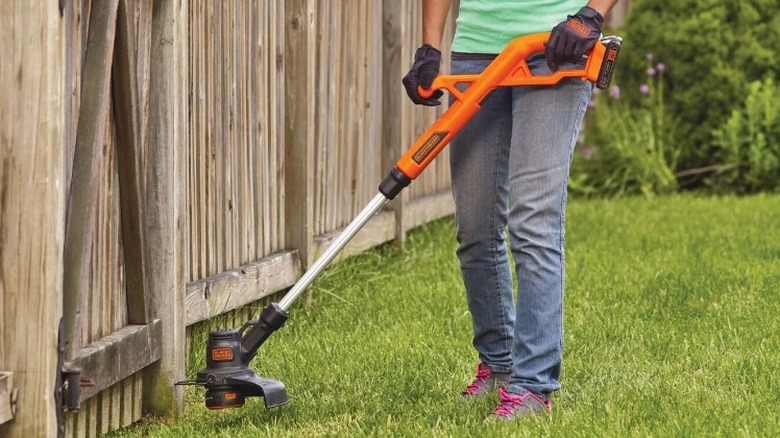
Getting a good power trimmer and edger can be really useful for cleaning and maintaining the parts of your yard that a mower can't reach, such as the areas beside fences, garden beds, and walkways. Even better if the tool is a two-in-one, right? The Black and Decker 20V Max 10-inch Cordless String Trimmer and Edger combines both functionalities, able to trim grass and carve out hard edges along drives and pathways. It has an automatic feed spool, weighs just 4.5 lbs., and is marketed as being able to easily convert from trimmer to edger, but there are a few issues that its owners have been less-than-pleased with.
The tool has a 3.3 out of 5 on the Black and Decker site, a 4.0 on Home Depot, a 3.9 on Walmart, and a 3.7 on Lowe's. Like with many of the other Black and Decker 20V Max tools that we've looked at thus far, customers don't seem very enthusiastic about the battery life, with some claiming that you only get about 10-20 minutes of use per charge. Aside from that, though, there are also a lot of complaints regarding the tool's build quality. Some mention the string housing assembly and auto-feed system failing to function properly or coming apart completely, some mention the electric motor failing, some mention difficulty switching between trimmer and edger modes, and others simply state that the tool feels cheap and poorly made, even for the low price point. So there isn't one specific issue, but it seems that there is a general sentiment of poor build quality that appears to be reinforced by the numerous reports of breaking and malfunctioning components.
Our Methodology

I've been collecting and using power tools for decades, and I'm very experienced in identifying both the desirable and more problematic qualities that help set them apart. In making this list, I started by taking a look at the lowest rated Black and Decker products on the manufacturer's website as well as on the digital storefronts of third-party retailers like Home Depot, Lowe's, Amazon, Walmart, Ace Hardware, and Acme Tools. I looked for models that repeatedly received low reviews across multiple platforms, making sure that they were reviewed enough times that the aggregate score could form a reasonable representation of user sentiment.
Once I had a few tools picked out, I dove into the reviews themselves and looked for reports of build, design, and performance issues that were mentioned frequently enough to suggest that they were problematic for a substantial number of users. I then used this information to describe the tools and break down why user reviews suggest that potential buyers might want to avoid them and instead seek out alternative products.