

This Tiny AI Data Center Is So Portable, You Can Take It Almost Anywhere
When most of us think of AI data centers, what comes to mind is probably a massive structure that houses hundreds (if not thousands) of servers and covers millions of square feet, much like the Digital Realty Innovation Lab that's powering America's AI movement. While such facilities will likely continue to sit at the vanguard of the AI gold rush, an upstart company is betting big on an alternative approach to AI-grade compute: portability.
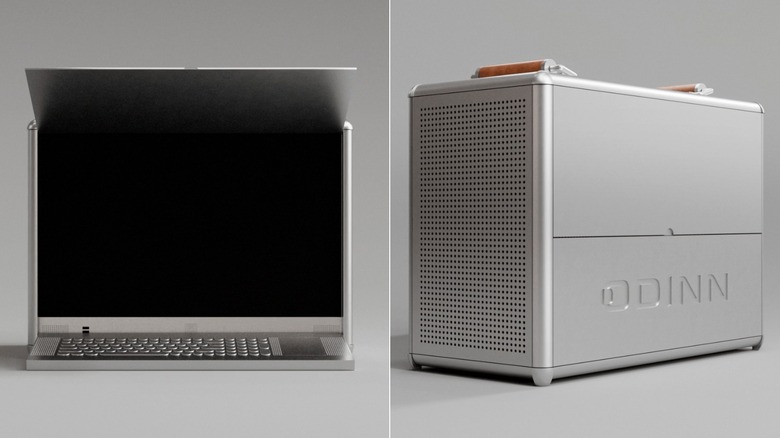
Odinn, a company first established in 2023, showcased a new product at CES 2026 called the Omnia. The Omnia is built around the company's concept of "Concentrated Compute," which aims to offer customers supercomputer-equaling levels of AI and compute performance in a compact, portable form. Well, relatively portable, that is: the Odinn Omnia weighs 77 pounds, which, while significantly lighter than your average supercomputer, is significantly heavier than even the chunkiest gaming laptop.
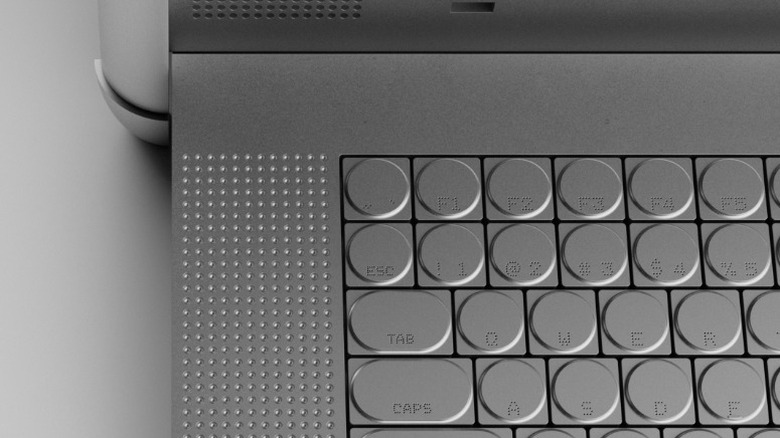
That's for a good reason, of course: The Omnia is loaded with some heavy-duty server-grade hardware, and also has a built-in 23.8-inch display and keyboard to make it a fully standalone machine. The company hasn't revealed pricing or a release date, but TechRadar claims that industry analysts expect it to retail for $500,000 or more based on the hardware it comes with.
The Odinn Omnia is a mobile powerhouse
The prospect of a $500,000 (or more) computer may seem ridiculous, but potential customers will be getting a lot of compute performance for their money. The Omnia will be available in four configurations: Omnia AI, for standalone and offline AI processing; Omnia Creator, targeted at visual creators who need huge power on the go; Omnia Search, for ultra-fast search and indexing without relying on online servers; and Omnia X, the full-fat model that'll do everything the others can do and then some.
Odinn has not specified the hardware for each configuration, but it claims the Omnia will come with one or two 192-core AMD Epyc 9965 processors (for a maximum of 384 CPU cores) and up to four Nvidia H200 NVL GPUs with 141 GB of VRAM each. Owners can also opt to run with redundancy, which will limit a maxed-out Omnia to 320 CPU cores and two Nvidia H200s. The rest of the specs look like they'll be constant across the configurations, and these include 6 TB of ECC DDR5 memory, a 1 PB (yes, that's petabyte) NVMe SSD, a 400 Gbps network interface, and the aforementioned 23.8-inch 4K display.
The Omnia draws power from a redundant Platinum-rated power supply unit and has a built-in cooling setup to keep everything running optimally. The company has yet to go into details about either, although we expect both to be quite beefy given the rest of the Omnia's hardware.