

Buying An Ex-Rental Car: The Pros And Cons

Drivers seeking a new ride have lots of choices available. There's the allure of the brand new segment of the market to consider, but that often costs an extreme premium that most buyers aren't able or willing to pay. The used market delivers solid value with plenty of variability. However, there's an interesting middle ground absolutely worth exploring. Instead of buying a new car, you can purchase an almost-new model from a rental agency.
These companies often churn through vehicles in just a year or two, meaning much of the stock an agency is looking to sell was bought brand new and has been used for as little as a year before falling out of rotation. That can mean getting an almost-new vehicle for a used car price. Rental agencies tend to clean their vehicles thoroughly between uses, and they maintain them to high standards, meaning you won't have to worry about stepping into a car with many of the issues that plague the rest of the used marketplace.
It's not all rosy in the ex-rental space, though. Namely, these cars are often driven extensively in their short time in a rental company's possession. That can result in subtle problems that creep into the background. Many of these factors are highlighted by resources like Edmunds, and can help you get to the bottom of the value an ex-rental car might provide during your next car buying opportunity. Let's weigh the options.
They usually come with a comprehensive maintenance history
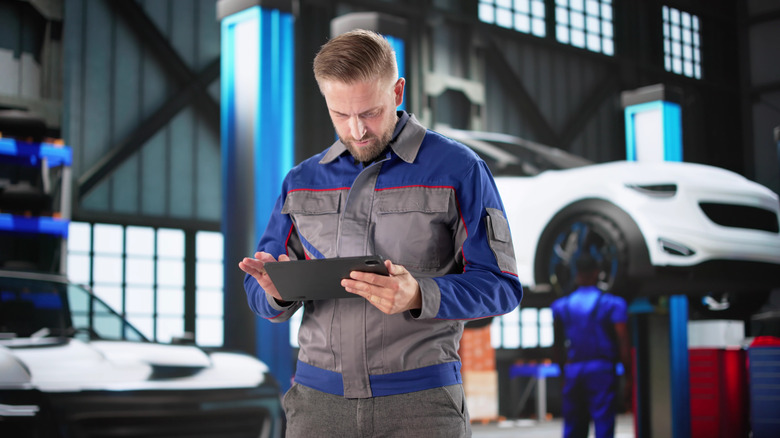
The very nature of a rental car's life on the road demands constant maintenance and routine servicing. A typical driver might be able to get away with putting off an oil change or tire rotation for a few extra weeks, or even months in a pinch. This is a personal decision about your own vehicle, but it increases the risk of breakdowns or other failures in the vehicle's ability to continue driving. That added element of risk is unacceptable in the rental marketplace. A company cannot supply a vehicle for a short-term driver with tires that are going bald or brakes that require replacement.
As such, cars that have spent the first segment of their life on a rental lot will have detailed service reports and a maintenance history that may even be more aggressive than is strictly necessary. You can generally assume an ex-rental car will continue to be roadworthy and perform its duties relatively well long into the future. There isn't a major concern over the need to engage in upkeep tasks shortly after purchasing one of these cars. Obviously, every individual car is unique, and so inspecting the vehicle yourself and bringing it to a mechanic for a once over before signing on the dotted line is always a good idea. But on the whole, you'll largely know the broad strokes of an ex-rental car's history of service requirements and the resulting maintenance schedule.
An endless parade of different drivers can create unexpected wear and tear

Routine maintenance is important for any vehicle, but it isn't the end all be all. Rental cars are sometimes driven by an individual for a day, and on other occasions they're taken away for a lengthy trip that lasts weeks or more. Over the course of even a single year, a car on the rental lot might be driven by hundreds of individuals who each have their own unique driving style and ingrained habits. Some of these are positives, but plenty of driving habits that road users have internalized actually cause damage to vehicles. These include things like riding the brakes or overloading a vehicle's trunk capacity.
Loading up a car with too much gear might be a particularly pointed issue for ex-rentals. With holidaymakers packing into vans and SUVs loaded up with people and suitcases, larger rental cars, specifically, may have had their shocks beaten down and their engines overworked handling additional weight on many occasions. The result of a revolving door of damaging habits can lead to unexpected wear and tear on the vehicle that isn't immediately noticeable to a buyer. It's always a great idea to take a vehicle for a test drive, and this can help you identify potential weaknesses in the brakes, engine power, or elsewhere that may have come about because of other people's driving quirks in the past.
Ex-rentals are often sold at discounted prices

For a car only a few years old, you'll often find prices at least 10% less than a competitive offer for the same, non-rental model. You can also frequently take advantage of integrated rent-to-buy programs offered by major rental agencies. This provides you with a few days of use by paying a daily rental fee. If you choose to purchase the vehicle after the allotted rental period, the fees you've already paid are rolled into the purchasing agreement. On that subject, you'll also often encounter a no-haggle pricing structure that takes the uncertainty out of the shopping experience. Instead of tiptoeing around pitfalls to avoid at the dealership, you'll know exactly what the seller is looking for and can make a direct value judgement to determine if the price is a good fit for your needs.
Big brands tend to want to provide their customers with new cars as often as possible. This means that inventory is constantly cycling and they need to get rid of vehicles that are only a few model years old to make room for new purchases. As a result, rental agencies are heavily incentivized to get rid of their aging stock as quickly as possible to free up physical space in their inventory and capital to make new investments. These cars have yielded solid profits during their time in rotation, and so even a steep price cut is worth it, both financially and logistically.
They may come with more than a few bumps
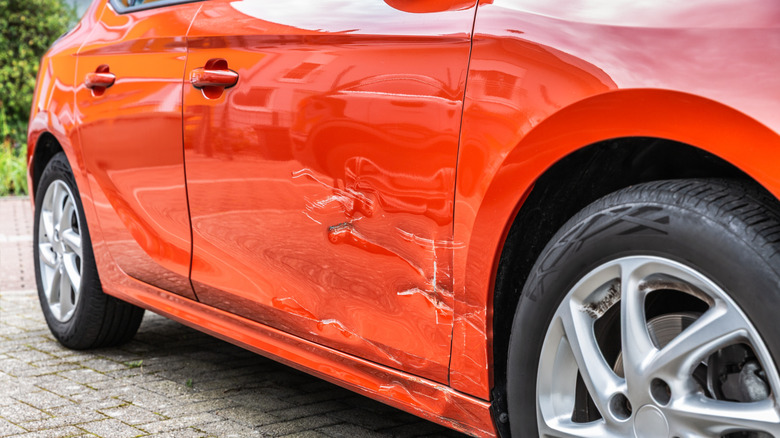
Drivers who sit behind the wheel are typically far less careful with the vehicle than their own personal ride. This is particularly true for drivers who buy the extra insurance, and therefore won't have to pay for any extra dents or dings they may inflict on the vehicle.
This problem might not rear its head in the form of careless driving, since no one wants to find themselves involved in an accident, regardless of the level of consequence they'll experience after the incident. However, pulling into busy parking lots is often accompanied with a more carefree attitude. If you slam your own door off of a parking garage beam, you'll have to live with a dent in your door. Scraping rims, whacking the door off another vehicle, or even parking in a manner that puts the vehicle at greater risk of scrapes from other drivers isn't as big a problem when you're not in your own car. However, as an ex-rental buyer, you'll have to carefully inspect the vehicle for these kinds of cosmetic damages and other issues. Carelessness might not impact a renter in the moment, but it does translate into potential problems down the road for someone who will buy the vehicle once its service to the rental fleet comes to an end.
Certification status and warranty coverage can be a deciding factor

The vehicle might have a few small paint chips or operate with slightly worn tires that will need to be watched, but those issues are minor inconveniences if there's a favorable enough price. The same can't be said of the car's warranty coverage. Some ex-rental vehicles have been driven so much that even after just a few years, their total mileage extends beyond the manufacturer's warranty policy. Others may be nearing that figure. Warranty coverage can be an instrumental tool in delivering long term cost effectiveness beyond the price tag of the vehicle and a powerful comfort-enhancer when it comes to the car's performance and roadworthiness.
The last thing you want to do is invest in a car beyond its warranty window, only to discover a few months later that a key system has failed due to its heavy previous usage. A good way to work around this problem is to purchase an ex-rental vehicle from a dealership or through and agency selling vehicles with additional certification status or extended warranty options, a tool that is still available for used cars. The status of a vehicle's coverage can be the tipping point in one direction or the other, signaling that you're entirely on your own should something go wrong or that you have additional protection over the investment.
Methodology

These points are all at least partially intuitive. Most people understand that rental cars see a lot of use from a variety of different kinds of drivers, for instance. Some of this knowledge comes from drivers' personal experience behind the wheel of a rental car. However, trusted sources like Edmunds and Auto Trader were also consulted to highlight these kinds of potential value-enhancers and pitfalls beyond anecdotes and intuition.