

These Common US Driving Habits Could Get You A Ticket In Canada
We may receive a commission on purchases made from links.
If you're an experienced driver, you likely have a lot of deeply ingrained habits. Many of these come from having driven in the United States for so long. However, U.S. norms tend to be pretty permissive, and it's easy to assume if a maneuver isn't specifically banned, it's generally fine to do. That isn't a good mindset to keep if you're leaving the U.S. to go to Canada.
Bringing those standard American driving habits up to Canada won't just confuse things. You could end up with some seriously hefty, unexpected fines, confiscated gear, and unwanted attention from the police. Canadian laws, especially at the provincial level, follow a much more restrictive way of thinking. While you as an American driver might look for a sign that prohibits something, a Canadian officer could be enforcing a rule that actually requires explicit permission for that exact same action.
This subtle, yet significant, shift in legal viewpoint means what you consider normal operating procedure in places like Florida, Texas, or California could easily be a ticketable offense just a quick drive north. A car customization you rely on every day, or some aggressive move you pull without thinking may be banned by Canadian law, many of which would surprise you.
Using a radar detector
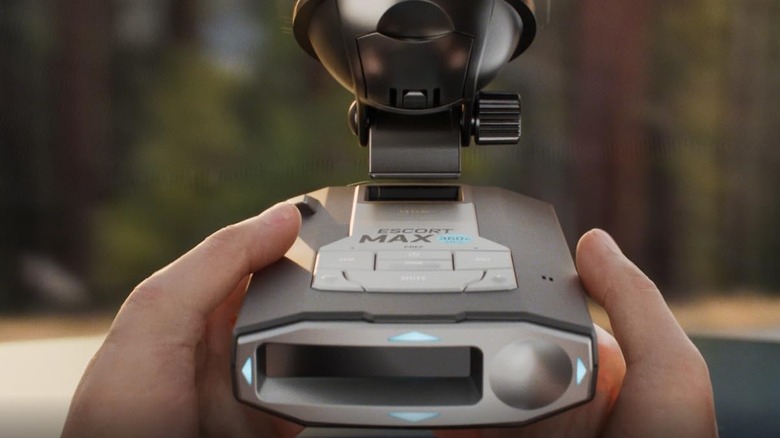
If you're an American driver counting on your radar detector to keep you out of speed traps, you should know that most of Canada has flat-out banned them. If you're heading through Quebec, Ontario, Manitoba, or the Atlantic provinces (New Brunswick, Nova Scotia, Prince Edward Island, Newfoundland and Labrador), just having one of these gadgets in your car can lead to huge fines and device seizure. That means even if it's off, disconnected, or just stashed away in the glovebox, you're still in trouble.
Unlike the US, where these detectors are generally accepted, Canadian law is a confusing mess of provincial rules. It's really easy for someone who hasn't done their research to get caught out. Currently, the only places where these devices are legal for use in private cars are the three western provinces: British Columbia, Alberta, and Saskatchewan. Don't fall for the myth that if it's hidden or off, the police won't find it. They absolutely can.
In provinces with bans, law enforcement uses specialized, complicated technology called Radar Detector Detectors (or RDDs). These RDD systems can sniff out the tiny electromagnetic signal leak that your detector puts out. This alerts the officers immediately, even if your device isn't currently buzzing about a speed trap.
Driving with dark window tints
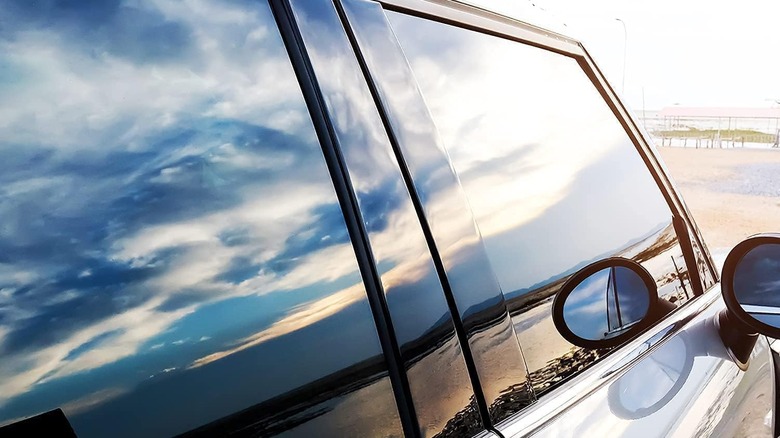
If you're driving up from the United States, you might have customized your vehicle for your home climate, especially if you live in the Sun Belt where battling the heat is just part of daily life. In warm US states like Arizona, Florida, and Nevada, it's totally legal to have dark tint on your front side windows, even if there are limits to how dark they can be. However, even that becomes a legal problem the moment you drive across the border.
Canadian laws are generally much stricter about visibility. They prioritize the ability of police and other people on the road to clearly see inside your car for safety reasons. Most provinces, including British Columbia, Alberta, and Nova Scotia, basically outlawed any aftermarket tint on the front side windows or windshield.
Standard factory glass already transmits about 70% of visible light. This means if you slap almost any aftermarket film onto those front windows, you're instantly pushing your car into illegal territory. This is definitely a major difference compared to the US, where modification rules in many states allow for much darker tints with relatively simple requirements. Basically, that dark tint that is perfectly legal and commonplace back in Las Vegas could easily result in immediate fines or a notice in Vancouver.
Making a U-turn at a traffic light
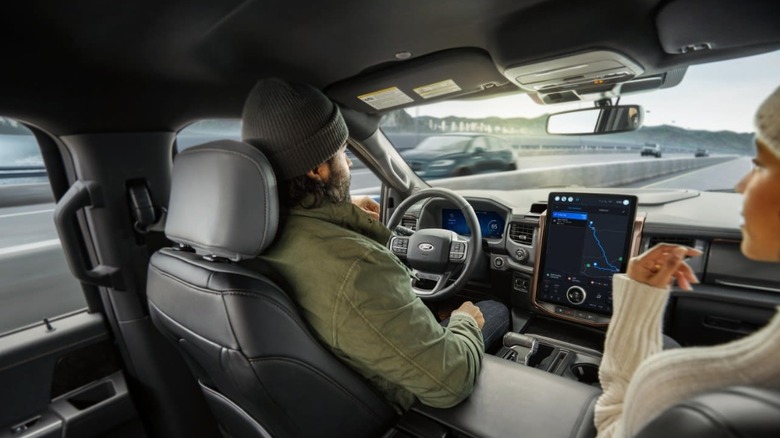
If you mess up a turn in the US, making a quick U-turn at a light is usually no big deal as long as there's enough space. Unless there's a sign specifically telling you not to do so, you should be fine in the US. That "permitted unless prohibited" mindset does not apply north of the border, especially into Western Canada. Just like the possibility of getting in trouble for using a phone map app, the Canadian laws on U-turns are a lot more strict.
Try that move in provinces like Alberta, British Columbia, Saskatchewan, or Manitoba, and you're probably looking at a traffic ticket. U-turns are outright illegal at any intersection with traffic lights unless there's a sign clearly saying you can do it. Keep in mind that this ban only applies when there are traffic control signals involved. You might still be legally okay making a U-turn at a stop sign or an uncontrolled intersection (assuming it's safe, and you aren't blocking anyone), but those traffic lights automatically trigger the default prohibition.
Don't trust your GPS, either. Just because Google Maps says you can do something, does not mean it is legal. You're much better off assuming that you cannot, so just go around the block instead.
Driving on all-season tires in winter
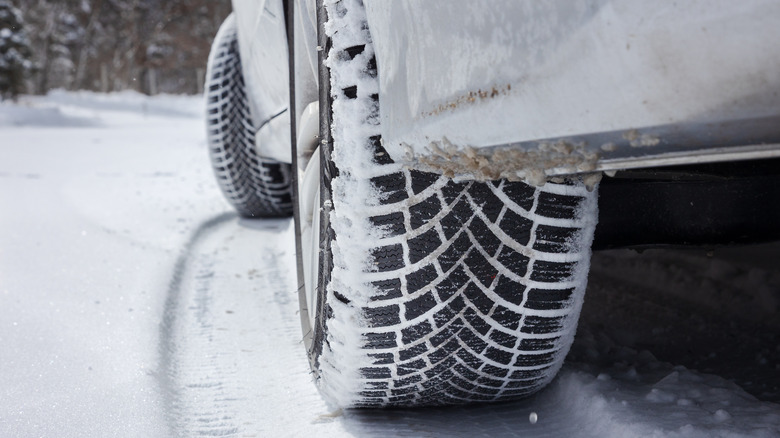
It's not strange to treat All-Season tires as your year-round go-to when you live in some of the warmest states. Anywhere else, and you should probably get winter tires, even if they're not mandatory. However, if you're planning a trip to Quebec during the colder months, you must install winter tires. Quebec is actually the only province that has a winter tire requirement for all passenger vehicles, which includes rentals and even taxis. Between December 1 and March 15, your vehicle absolutely needs tires that show the Alpine symbol, which is the little snowflake tucked inside a three-peak mountain.
Tires only marked with "Mud and Snow" (M+S) won't cut it under Quebec's Highway Safety Code unless they also feature that Alpine pictogram, or you're running studded tires. Even when you travel outside of Quebec, provinces such as British Columbia mandates winter tires or chains on most of their highways, especially the high mountain passes and rural routes, running from October 1 through April 30.
To be fair, BC's regulations are a bit less restrictive than Quebec's; They allow tires with the M+S symbol as long as they have at least 3.5 mm of tread depth. That said, authorities are really pushing for the Alpine symbol because it gives you much better traction.
Entering the intersection on a yellow light
Going through a yellow light isn't always illegal in the U.S. and you're generally able to get by without a ticket if your front bumper makes it past the stop line while it is still yellow. You're good to go, even if the signal turns red while you're still cruising through the intersection. This specific legal approach encourages that driving culture where you just gun it to beat the light. Try taking that habit north into Canada, and you're asking for trouble.
When that signal turns amber (yellow) across the major Canadian provinces, places like British Columbia and Ontario, you must stop your vehicle completely if you can do it safely. As a result, enforcement really comes down to the police officer's judgment. If an officer determines you had plenty of time and distance to brake but decided to floor it through the yellow light anyway, they can definitely ticket you for failing to stop. Basically, you should never try to speed up on yellow instead of stopping, if you want to guarantee a ticket-free trip.