

This State Has The Highest Fees For EVs In 2026
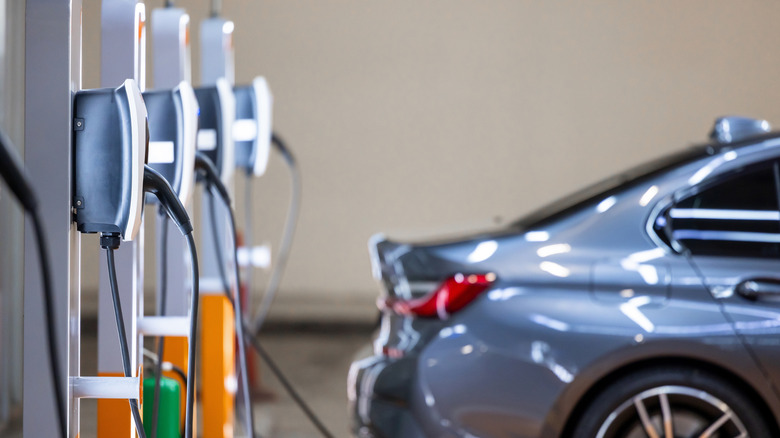
There are still problems associated with EVs, with price being a big one, but there are other costs to consider, such as registration fees. At the time of writing, Michigan imposes the highest annual EV registration fees of any U.S. state. For plug-in hybrids, they've almost doubled from $60 to $113. For EVs, it's a similar leap, from $160 to $267. These figures include the non-indexed fee of $30 for plug-in hybrids and $100 for EVs that weigh less than 8,000 pounds. For vehicles weighing more than that, there's an additional charge that puts the totals up to $183 and $367, respectively. None of these values include the base rate registration fee for all vehicles, 0.006% of the value of the vehicle in question.
The reason for the dramatic increase is that the state has imposed a new piece of legislation, part of a huge statewide effort to revamp the road system. House Bill 4183 was passed in October 2025, including measures aimed at providing revenue for the maintenance and repair of Michigan roads. One change made was an increase in the gas tax, from 31 cents per gallon to 52.4 cents. The balancing factor is that there is no longer a sales tax on said gas, which was 6% in 2025.
This ensures almost all revenue from the gas tax goes directly to the Michigan Transportation Fund, rather than being spread among multiple causes. The state of Michigan emphasizes that "this is not a price increase" in itself, but it is for drivers of hybrids and EVs. That's because, since 2017, the state has imposed an increase to its annual EV and plug-in hybrid registration surcharges of $5 and $2.50 for every cent the fuel tax rises above 19 cents — hence the huge increase to kick off 2026.
The possible impact on Michigan's green goals and the development of its EV initiative
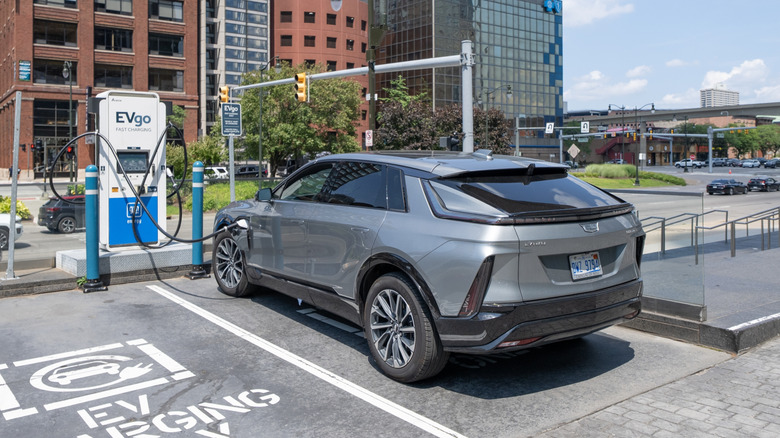
Michigan has ambitious goals for EV adoption, with Governor Gretchen Whitmer hoping that there will be 2 million or more EVs on the state's roads before the end of the decade. However, this increased cost for registering an EV seems to be counterproductive when it comes to encouraging drivers to choose one. Charles Griffith of the Ecology Center writes in Planet Detroit that "Michigan has a proud legacy as the auto capital of the world, and our future depends on leading the shift to clean mobility." For Griffith, though, the cost for the state's road development project is landing disproportionately on the doorsteps of those families who choose EVs with the intent to be "part of the solution." Michigan gas station prices dropping below $2 in January 2026 may have made that decision harder too.
Some Michigan lawmakers, naturally, take a rather different view. They state that the measure was necessary to avoid sticking non-EV buyers with an even higher gas tax. As Representative Tom Kunse put it to Bridge Michigan, "the goal was not to nick or punish anyone," but it was important to "look at the math" and ensure that the funding for the roadworks is provided by those who use and rely upon the roads, regardless of what they drive. It's a balancing act with which it was impossible to please everyone, as with any rate hike. Nonetheless, the true extent of the impact on Michigan's broader EV adoption remains to be seen.